
Food Metal Detectors
A food metal detector screens products for ferrous, non-ferrous, and stainless steel contamination before they leave the plant. MIQI builds four families of food grade metal detection equipment: the MQ-MD-C conveyor detector with eight aperture heights from 100 to 400 mm and ferrous sensitivity from Φ0.6 mm; the MQ-AF-D aluminum-foil detector that inspects foil-packed products using a magnetic-field method, detecting magnetic spheres from Φ0.6 mm at 26 m/min; the MQ-MC gravity-fall metal separator for powders and pellets, with ferrous detection down to 0.1-0.2 mm and throughput from 250 to 5,000 kg/h; and the MQ-MCL4530L2 metal detector checkweigher combo, which pairs Fe 0.6-1.2 mm detection with ±0.3-1 g checkweighing in a single frame. All machines use 304 stainless construction, with touch operation, belt-stop plus audible-visual alarm as standard, and automatic reject mechanisms optional. Hygienic design and exportable inspection records may support a facility's documented HACCP or GMP procedures; they are not machine certification. As an inline metal detector manufacturer selling factory-direct, MIQI configures aperture size, conveyor dimensions, and reject type to the product rather than forcing the product into a standard tunnel.
A food metal detector is an inspection device that uses a balanced electromagnetic coil system to find metal contaminants, ferrous, non-ferrous, and stainless steel, inside food products as they pass through its aperture. When metal disturbs the field, the detector alarms and either stops the belt or triggers a reject device to remove the contaminated pack. Sensitivity is stated as the smallest certified test-sphere diameter reliably detected, and it depends on aperture size: smaller apertures detect smaller metal.
Food Metal Detector Models
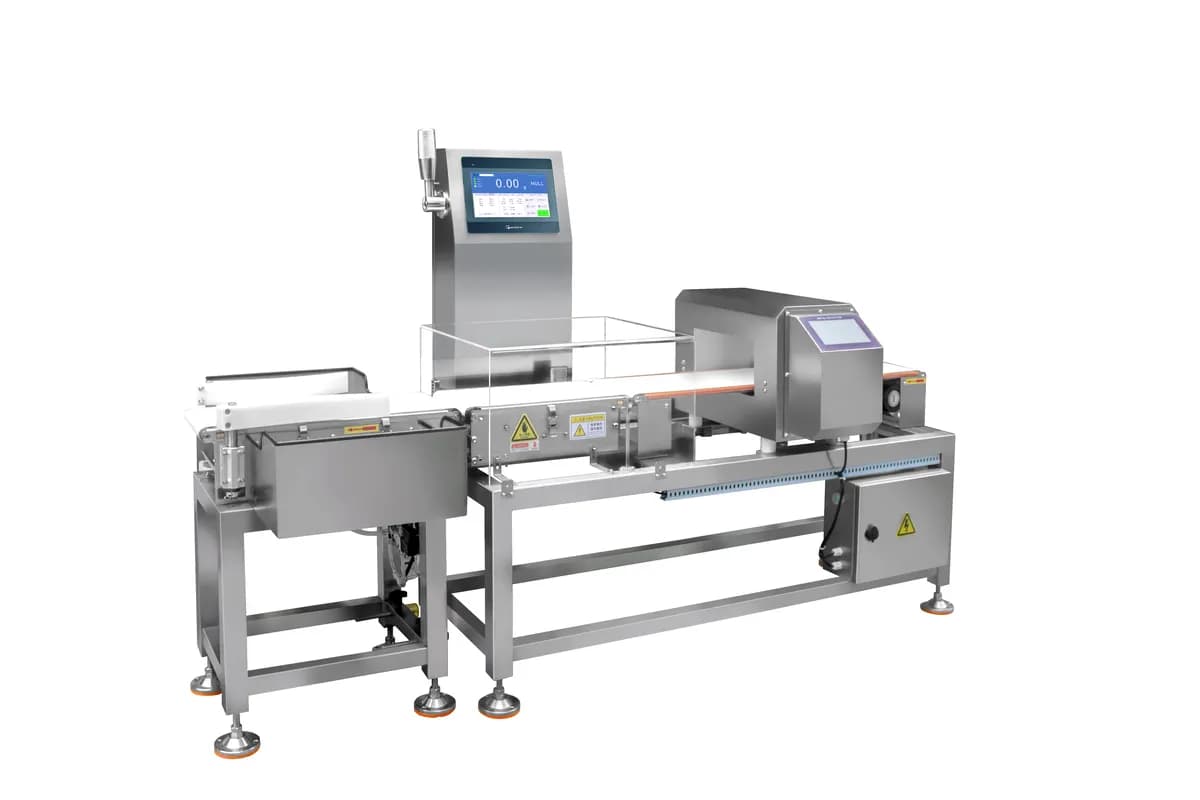
Combined Metal Detector and Checkweigher
- Weighing range: 1-2000g
- Weighing accuracy: ±0.3-1g
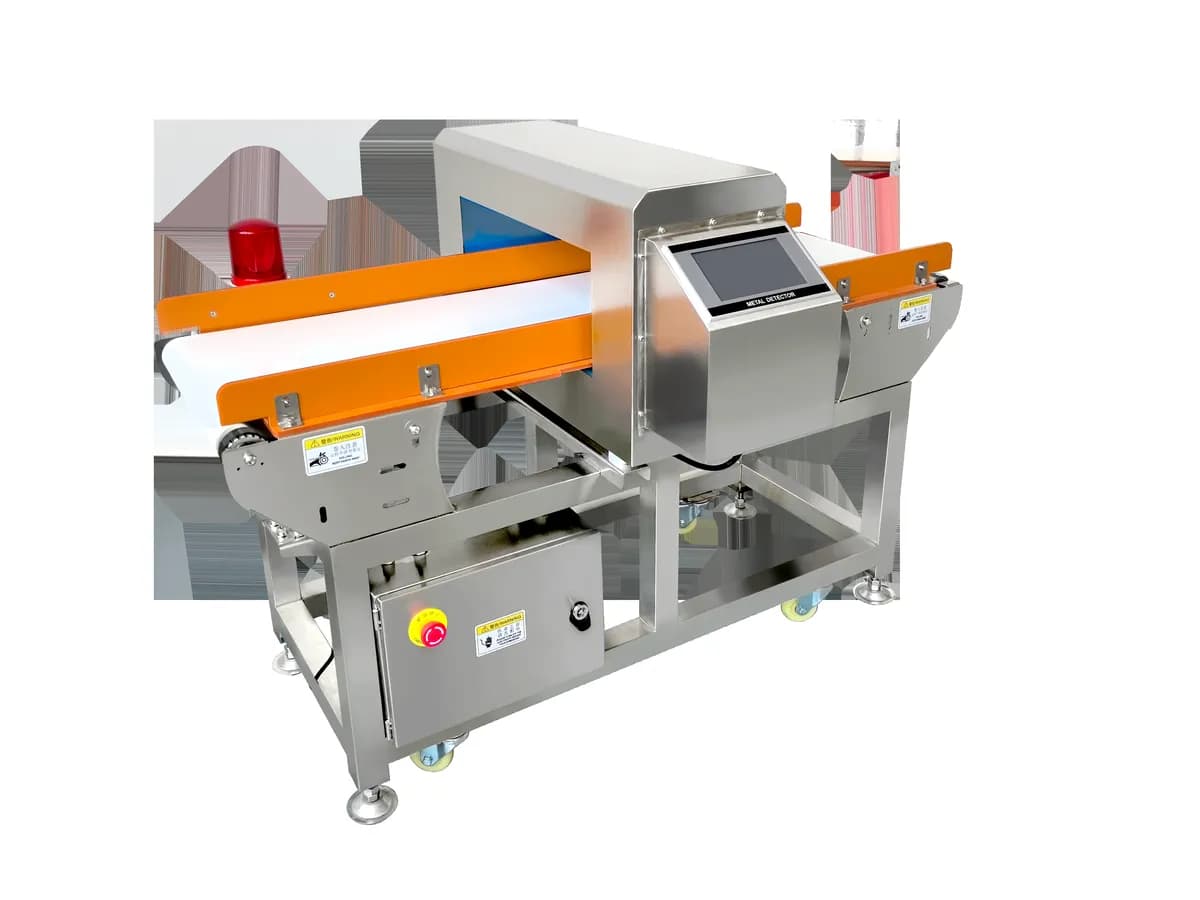
Metal Detector
View Specs & Price →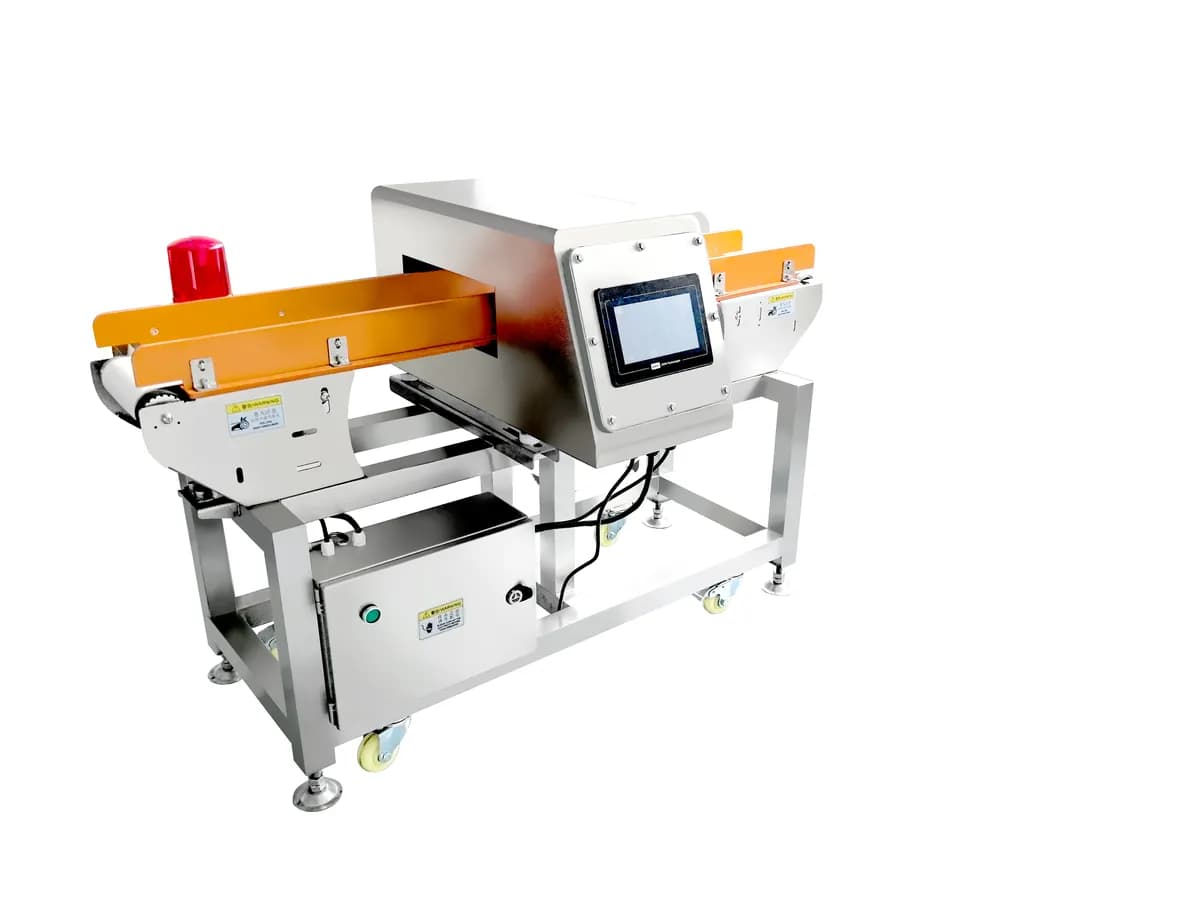
Aluminum Foil Metal Detector
View Specs & Price →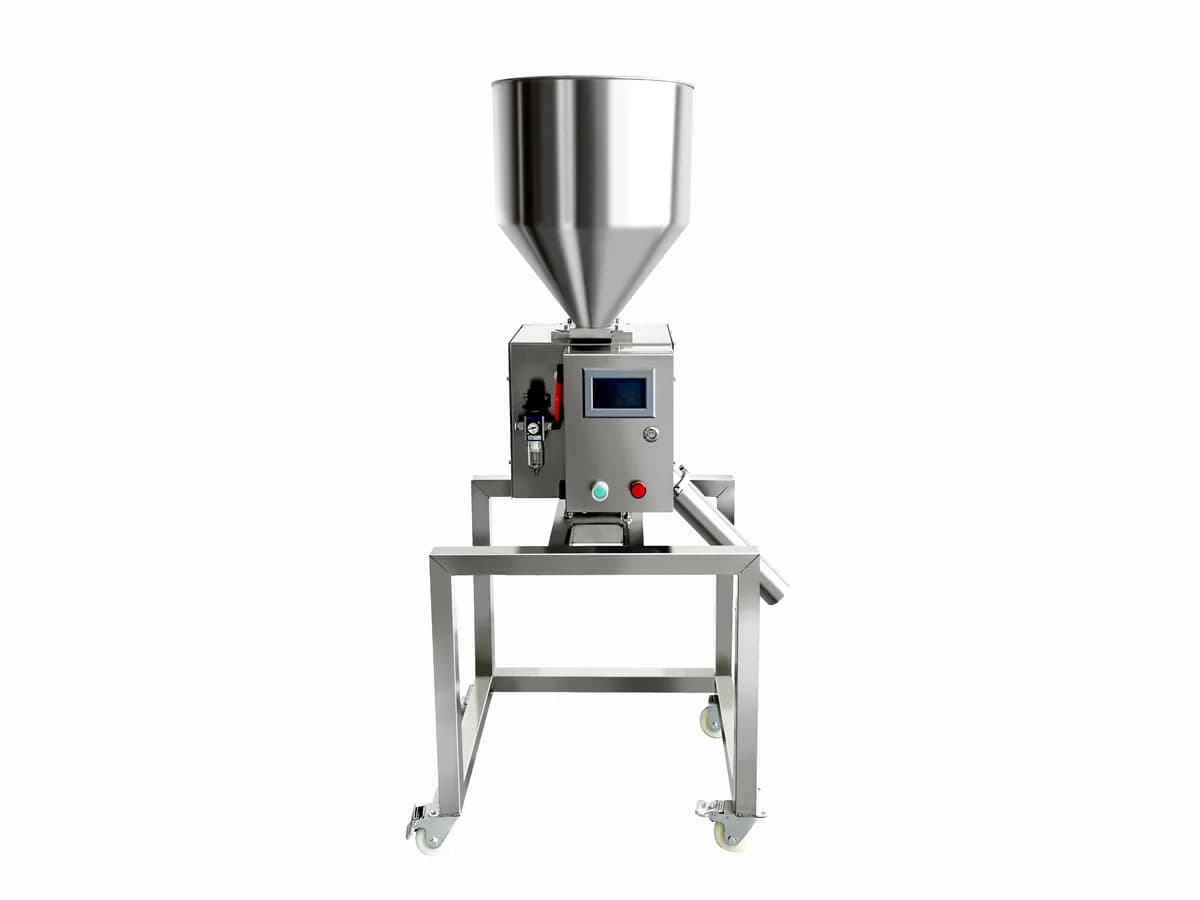
Metal Separator
- Ferrous (Fe) detection accuracy: MQ-MC-25:0.1~0.2mm; MQ-MC-30:0.2~0.3mm; MQ-MC-50:0.3mm; MQ-MC-70:0.5mm; MQ-MC-100:0.8mm
Food Metal Detector Model Comparison
| Model | Type | Fe Sensitivity | SUS Sensitivity | Throughput / Speed |
|---|---|---|---|---|
| MQ-MD-C | Conveyor metal detector | Φ0.6 mm and up (100 mm aperture; scales with height to 400 mm) | Φ1.2 mm and up | Aperture heights 100-400 mm, width 400 mm std. |
| MQ-MCL4530L2 | Metal detector + checkweigher combo | Φ0.6-1.2 mm | Φ1.2-2.0 mm | Belt 5-28 m/min; weighing 1-2000 g at ±0.3-1 g |
| MQ-AF-D | Aluminum-foil package detector | Magnetic sphere Φ0.6 mm (3008 spec) | Φ2.5 mm (3008 spec) | 26 m/min, products up to 5 kg |
| MQ-MC | Gravity metal separator | 0.1-0.2 mm (MC-25) | 0.2 mm (MC-25) | 250-5,000 kg/h by model |
How a Food Metal Detector Works
The balanced coil field
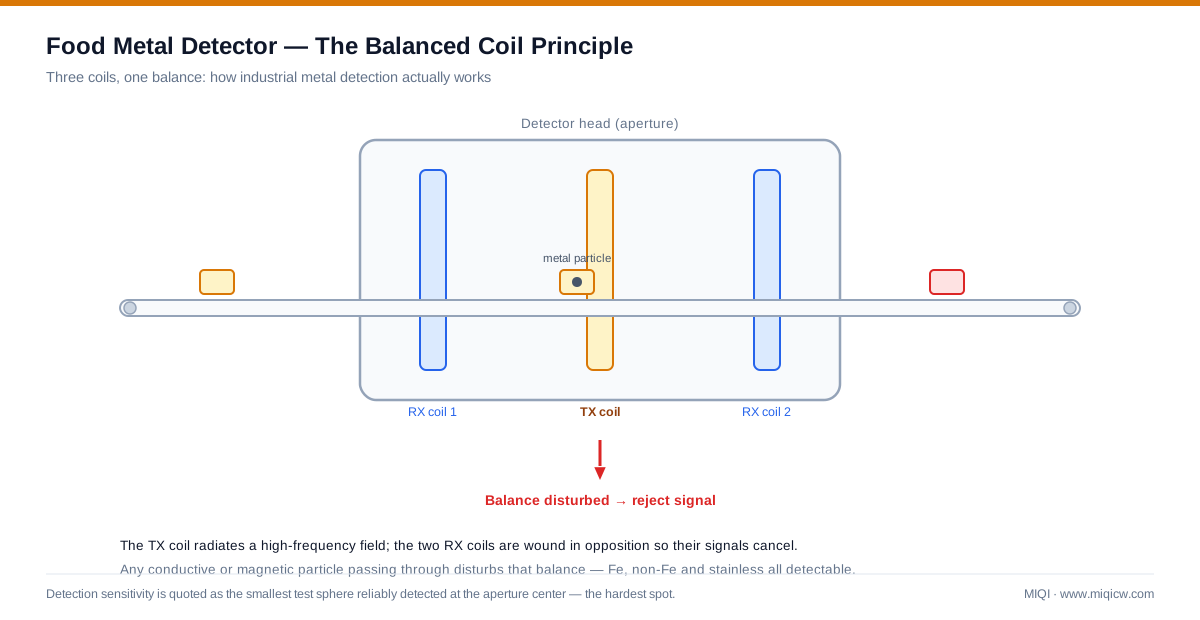
Inside the detector head, a transmitter coil driven at high frequency sits between two receiver coils wound in opposition. With nothing in the aperture, the voltages induced in the two receivers cancel exactly, producing a null signal. This balanced-coil arrangement is the core of the working principle: the detector is not measuring a field strength but listening for any disturbance to a precisely balanced state.
Disturbance and phase discrimination
When product passes through, both the product and any metal in it disturb the field. Conductive and magnetic materials shift the signal in characteristically different phase angles: ferrous metal is magnetic and conductive, non-ferrous metal conductive only, and wet or salty products produce their own product effect. The detector learns the product's baseline signal so that genuine metal stands out against it.
Detection and classification
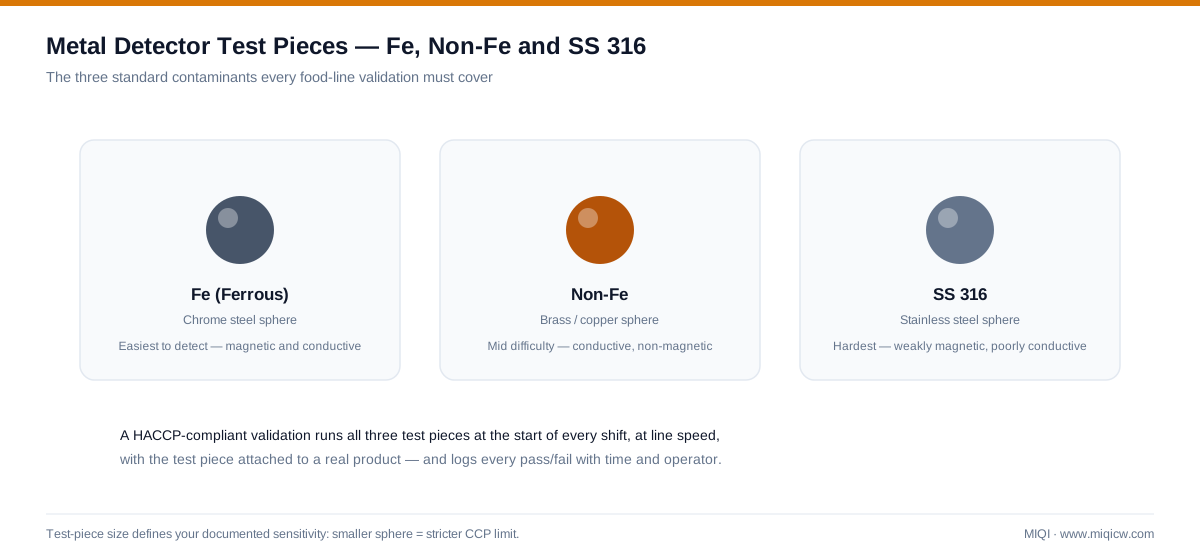
The controller continuously compares the received signal against the learned product envelope. A disturbance exceeding the threshold is classified as metal, and sensitivity settings determine how small a disturbance triggers detection. Ratings are stated per metal type because each behaves differently: on the MQ-MD-C at a 100 mm aperture, that is Φ0.6 mm ferrous, Φ1.2 mm non-ferrous, and Φ1.2 mm stainless steel.
Alarm and rejection
On detection, the standard response is an immediate belt stop with audible and visual alarm, so the contaminated pack can be removed and quarantined. With an optional reject mechanism, push rod, slide, or air jet depending on pack format, the machine diverts the pack automatically and keeps running. The gravity-fall MQ-MC separator instead fires a pneumatic flap within an adjustable 0.3-5 s window to divert contaminated powder from the product stream.
Food Metal Detector Price & Quote Factors
Food metal detector price depends on aperture width and height, achievable sensitivity with the actual product, conveyor or free-fall construction, belt and hygiene requirements, reject mechanism, confirmation sensors and validation documentation. Product effect can force a different frequency or aperture decision, so quotations should follow a real-product test. MIQI does not treat an empty-aperture brochure value as a guaranteed production result.
Food Metal Detector Selection Topics
Food Processing Metal Detector
Food processing metal detection must be tested with the actual food, packaging, aperture and throughput. Compare conveyor, combined checkweighing, gravity-flow and documented foil-pack configurations against the process requirement.
Conveyor, Tunnel and Gravity-Fall Systems
An industrial metal detector conveyor or tunnel metal detector inspects a spaced product through an aperture. A free fall metal detector or gravity fall metal detector inspects suitable powders or granules in a vertical product stream. They are different machine architectures.
Metal Detector Aperture and Sensitivity
The smallest achievable test sphere depends strongly on aperture, product effect, frequency, position and environment. Choose the smallest practical opening, then validate ferrous, non-ferrous and stainless-steel challenges with representative product.
Manufacturer, Price and Product Trial
Food metal detector price depends on aperture, product effect, sensitivity target, conveyor, reject and validation scope. When comparing a food metal detector for sale, ask the food metal detector manufacturer to demonstrate proposed test pieces inside the real product—not only in an empty aperture.
How to Choose a Metal Detector
The types of metal detectors in this catalogue solve different flows: conveyor aperture, checkweigher combination, ferrous in foil metal detector and gravity separator. A heavy duty metal detector or non-standard industrial metal detector machine needs project review for product mass, aperture and handling.
Portable Wands Are Outside This Catalogue
Portable wands and handheld food-industry scanners are not documented MIQI products. For the listed systems, compare conveyor inspection, combination machines and gravity-flow handling.
Food Metal Detection Applications
Confectionery and snacks
Conveyor detection of bagged and boxed snacks for wire, blade, and machine-wear fragments, with the MQ-MD-C aperture height chosen just above pack height to maximize sensitivity.
Meat, poultry, and seafood
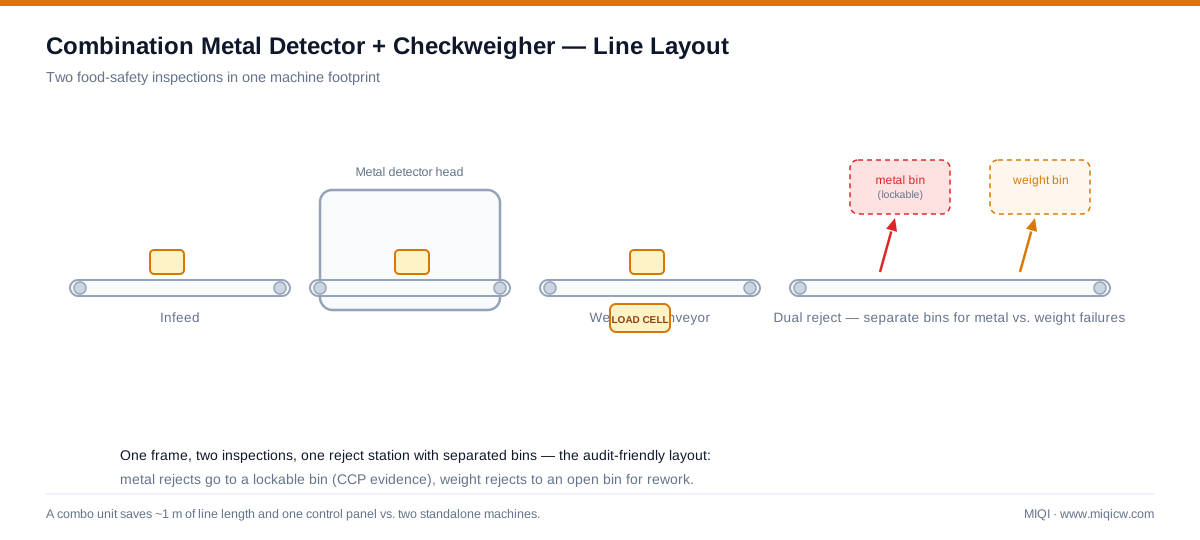
Detection of broken needles, hooks, and blade chips at millimeter level; the MQ-MCL4530L2 combo simultaneously verifies pack weight at ±0.3-1 g, saving a full machine position on the line.
Bakery, flour, and powders
The MQ-MC gravity separator inspects free-falling powders and granules at up to 5,000 kg/h, catching ferrous particles from 0.1-0.2 mm before mixing or packing.
Foil-packed and metallized products
Standard detectors are blinded by aluminum foil; the MQ-AF-D uses a magnetic detection method to find magnetic contaminants from Φ0.6 mm inside foil bags and lidded trays.
Pharmaceuticals and nutraceuticals
Tablet, capsule, and sachet lines use small-aperture detection for maximum sensitivity, with 304 stainless construction and exportable records supporting GMP and HACCP documentation.
Plastics and chemical pellets
Metal separators protect extruders and injection molds by pulling tramp metal from pellet streams, with detection accuracy per model from 0.1 mm ferrous.
Related Inspection Equipment
Buyer Guides & Engineering Answers
Testing, Sensitivity & Validation
Use test pieces, worst-case product positions and reject confirmation.
Metal Detector vs X-Ray
Choose the technology from contaminant, product and package.
Metal Detection: CCP or PRP?
Connect equipment checks to the facility hazard-control plan.
Equipment in a Halal Assurance Programme
Separate materials, cleaning and plant assurance from contaminant detection.
Frequently Asked Questions
How should metal detector sensitivity settings be chosen?+
Choose sensitivity by testing the specified ferrous, non-ferrous and stainless-steel samples with the actual product, package, aperture and line conditions. Product effect, position, orientation and speed influence detection. Challenge the least favourable validated positions and confirm physical rejection as well as the alarm. A smaller practical aperture can improve sensitivity, but an empty-aperture rating is not a production guarantee.
What test pieces are used to verify a food metal detector?+
Use controlled and identifiable ferrous, non-ferrous and stainless-steel test pieces in or on a representative product. Challenge the least favourable validated position and confirm both detection and physical rejection. Achievable sizes depend on aperture, product effect, frequency, pack orientation and line conditions; stainless steel is commonly more difficult, but no universal ranking should replace a real-product test.
How is metal detection validated as a CCP under HACCP?+
A facility hazard analysis determines whether metal detection is a CCP or another control measure. Validation establishes that the selected system and procedure can control the defined hazard under worst-case conditions. Routine verification then challenges the detector and reject system at intervals set by the plant quality plan, risk, customer requirements and applicable rules. There is no responsible one-size-fits-all testing interval.
Can a metal detector inspect products in aluminum foil packaging?+
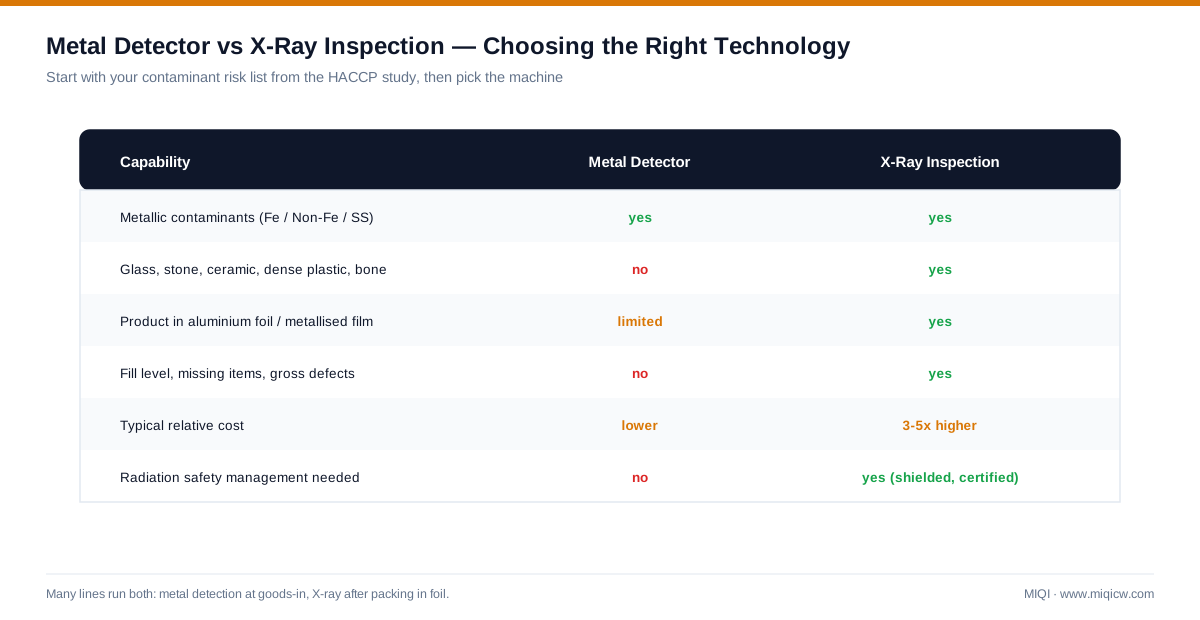
Aluminum foil can mask contaminants in conventional balanced-coil metal detection. A documented ferrous-in-foil configuration such as MQ-AF-D targets suitable magnetic contamination, while X-ray may detect contaminants with sufficient contrast through foil packaging. Neither method detects every contaminant. Select the technology from the actual material, size, product and package, then test representative challenges.
What are the benefits of a metal detector checkweigher combo?+
MQ-MCL4530L2 combines metal detection and checkweighing in one platform. An integrated layout may reduce handling and interface work, but confirm the actual footprint, belt rate, reject arrangement and records in the quotation. Detection performance and weight accuracy must each be tested with the product; a shared frame does not by itself prove a common data record or a particular reject configuration.
Ship us your product — free on-machine accuracy test with video proof
Free sample testing · OEM & custom design · 2-year warranty · Worldwide shipping