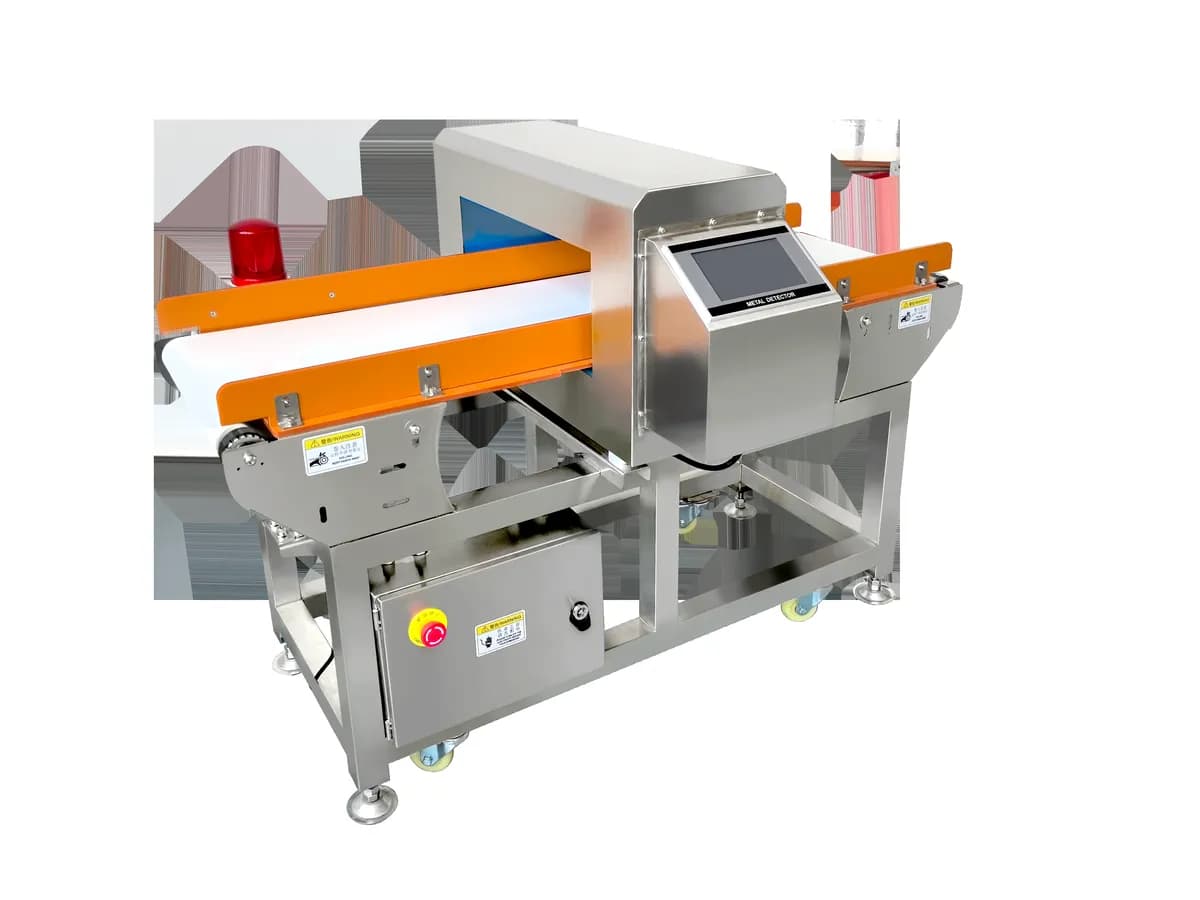
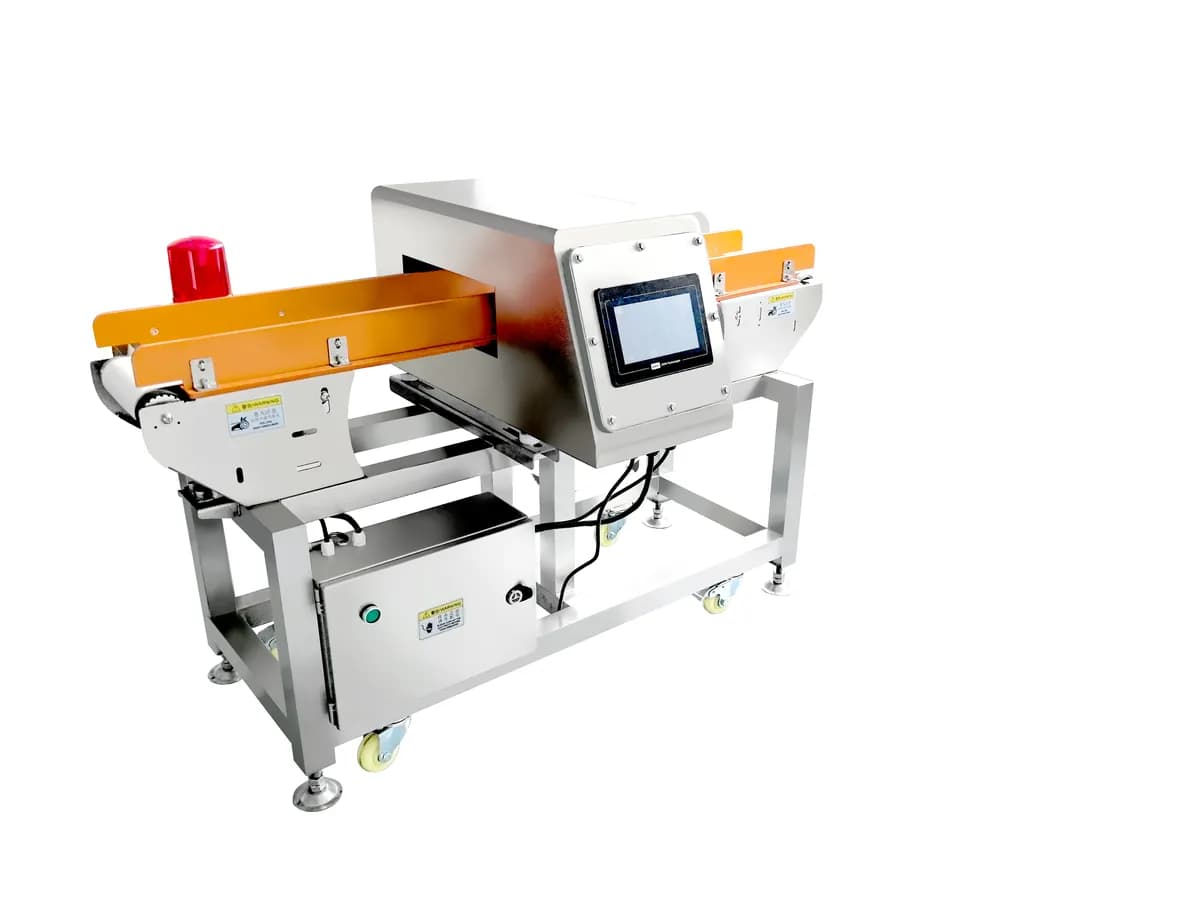
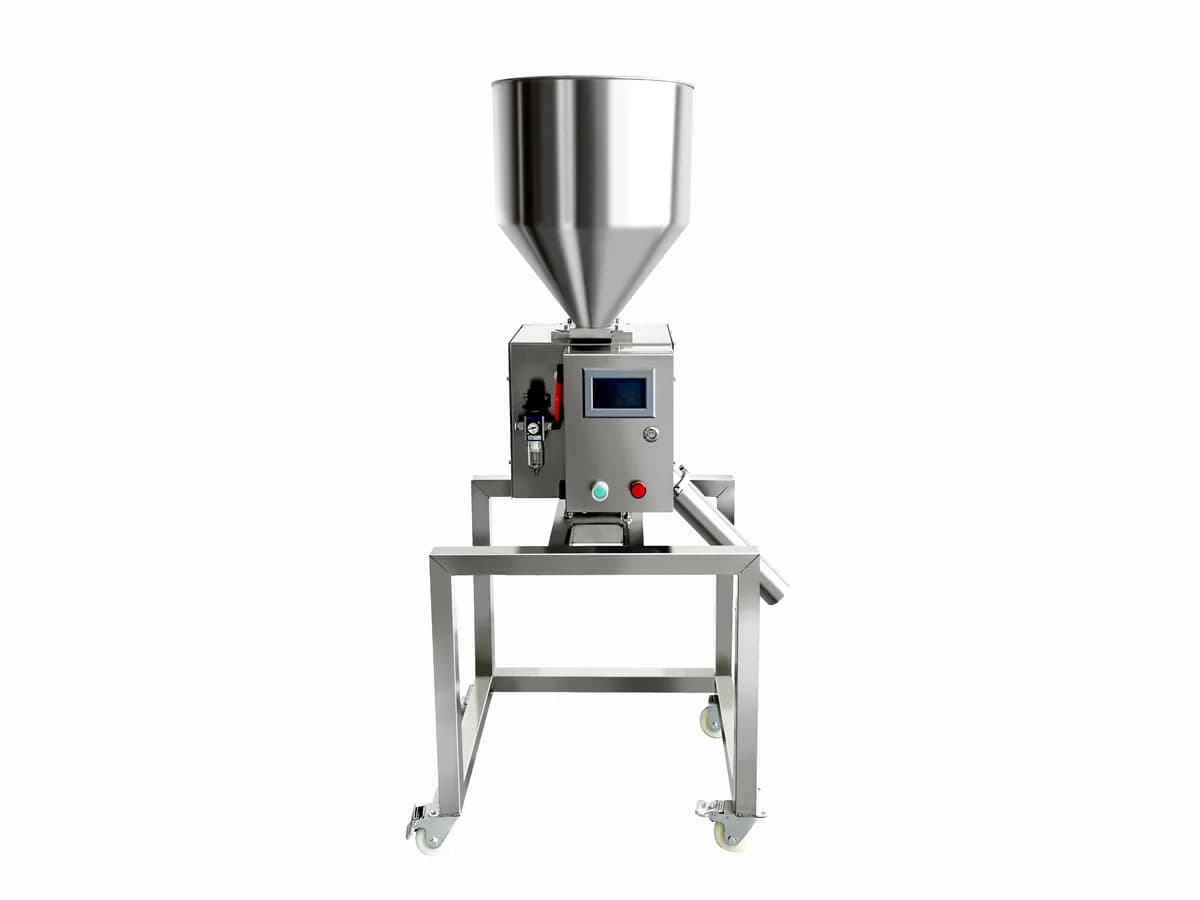
Combined Metal Detector and Checkweigher
Metal detection + checkweighing in one machine: Fe detection from 0.6mm, 1-2000g weighing accuracy from ±0.3g — free up a full machine's worth of line space
Combined Metal Detector and Checkweigher (MQ-MCL4530L2) — range 1-2000g, accuracy ±0.3-1g. Factory-direct from Guangdong, China. OEM & custom available.
Typical applications: Toilet paper rolls, sanitary napkins, wet wipes, and other daily-care products
Key Features
- ✓Automatic self-diagnosis and fault alerts at startup effectively prevent invalid inspections
- ✓Built-in report statistics; reports can be generated in Excel format with real-time data export via USB drive
- ✓Highly integrated system combining metal detection and weight inspection, saving space and simplifying the production line
- ✓Efficient automation: automatically inspects, classifies, and rejects non-conforming products
- ✓Equipped with hazard alerts, emergency stop button, and protective guards
Why Choose MQ-MCL4530L2
2-in-1 combo saves line space
An electromagnetic-induction metal detector and a digital load cell are tightly integrated on a single stainless-steel frame, so every product passes through metal detection and weight verification in one run. Compared with installing two separate machines, you save one conveyor section and one operator station, and wiring, commissioning and maintenance are all done just once — a visibly simpler line layout.
Missing pieces caught at 0.1g resolution
With 0.1g display resolution, a 1-2000g weighing range and ±0.3-1g accuracy, the gram difference caused by one or two missing pieces in count-packed products like sanitary pads or wet wipes falls squarely within detection range. Short-count packs are rejected right on the line — no waiting for a customer complaint to find out.
Broken needles and blade chips detected at millimeter level
Empty-conveyor sensitivity: Fe 0.6-1.2mm, non-ferrous 0.8-1.5mm, stainless steel SUS 1.2-2.0mm. Metal debris from chipped die-cutting blades or worn machinery is identified by the electromagnetic-induction aperture at millimeter scale and automatically rejected, stopping foreign metal before it leaves the factory — meeting the foreign-body control requirements of major FMCG factory audits.
100 product presets — no re-tuning at changeover
Up to 100 product recipes can retain approved settings for repeat orders. Before each changeover, confirm the selected product, target weight, speed and rejection settings and run reference packs. A saved recipe reduces re-entry; it does not by itself prevent mis-selection or remove the need for verification.
Auto reports, plug-and-go USB export
Built-in report statistics generate inspection data directly in EXCEL format, exportable in real time via USB stick. Batch pass rates and rejection records are always on hand for review and archiving — let the data speak during customer audits or quality traceability, with no manual logbooks to fill in.
Power-on self-check, no blind running
Every startup runs an automatic fault check with on-screen prompts. If a sensor or the rejection mechanism is abnormal, the machine alarms first instead of running impaired and letting defective packs slip through. Combined with hazard alerts, an emergency stop button and safety guards, operators can work safely from day one.
Problems It Solves for You
Buying a metal detector and a checkweigher separately means two machines occupying two conveyor sections — tissue and sanitary pad packing lines are long enough already, the floor can't fit them, and two systems mean double the training and maintenance
Integrated metal detection + checkweighing design: one machine and one conveyor section handle both inspections, running off a single AC220V supply — saving floor space and maintenance workload
Sanitary pads and wet wipes are packed by piece count; when equipment occasionally drops one or two pieces, manual spot checks simply can't catch it, and short packs reach retail shelves triggering complaints or even delisting
Full-range 1-2000g in-line weighing of every pack, with 0.1g display resolution and ±0.3-1g accuracy — the gram deviation from missing pieces is identified in-line, and a pusher or slide-type rejector automatically removes short-count packs
Metal chips from worn slitting knives and sealing dies get into toilet rolls and wet wipes; export orders and key-account audits have zero tolerance for metal contamination, and one finding means the whole batch is returned
The electromagnetic-induction aperture reaches empty-conveyor sensitivity of Fe 0.6mm and SUS 1.2mm — millimeter-scale metal debris is detected in-line and auto-rejected, with EXCEL-exportable records serving as traceability evidence
QA demands monthly pass-rate reports, but line data is logged by hand — omissions and errors are common, and when tracing a batch the complete records are nowhere to be found
Built-in report statistics generate data in EXCEL format in real time, with plug-and-export USB output — complete batch records on file, ready to pull up instantly for audits and traceability
Technical Specifications
| Product model | MQ-MCL4530L2 |
|---|---|
| Display division | 0.1g |
| Weighing range | 1-2000g |
| Weighing accuracy | ±0.3-1g |
| Metal-detection channel size | H 120mm*W 300mm |
| Suitable product size | L≤350mm; W≤300mm; H≤100mm |
| Rejection method | Pusher or slide reject (optional) |
| Detection method | Electromagnetic induction / digital weighing sensor |
| Detection sensitivity | Fe:0.6-1.2mm、Not Fe:0.8-1.5mm、Sus:1.2-2.0mm |
| Stored recipes | 100 recipes |
| Conveyor speed | 5-28 m/min |
| Power supply | AC220V±10% |
| Machine material | Stainless steel 304 |
| Data transmission | USB data export |
| Weighing section size | L 450mm*W 230mm |
Functions in Detail
Rejection: pusher or slide type, matched to your product
Two rejection mechanisms come as standard options: pusher type and slide type. Packs with some weight and rigidity — toilet rolls, diapers — suit the pusher type for direct force and precise placement; soft, lightweight bags like wet wipes and face masks can take the slide type for gentle rejection that won't damage packaging. Tell us your product format when ordering and the factory configures accordingly.
Detection principle: electromagnetic induction + digital weighing, two independent systems
The metal detection stage uses electromagnetic induction with an aperture of H 120mm×W 300mm — disturbances to the magnetic field as products pass are analyzed in real time to judge metal content. The weighing stage uses a digital load cell on an L 450mm×W 230mm platform, delivering dynamic readings at 0.1g resolution. Each system triggers rejection independently without interfering with the other.
Data management: EXCEL reports with real-time USB export
A built-in statistics module automatically tallies total inspected, passed and rejected counts per recipe, generating reports directly in EXCEL format — just plug a USB stick into the front panel to export in real time. QA gets a print-ready electronic ledger with no host software required and no manual transcription.
Safety: self-check + emergency stop + guarding
Automatic fault detection runs at every startup with abnormalities flagged on screen, preventing invalid inspection from an impaired machine. During operation the machine provides hazard alerts, carries an emergency stop button, and shields the rejection zone with safety guards so operators clearing jams never touch moving parts — in line with FMCG plant safety management requirements.
Build and installation: stainless steel 304, AC220V plug-and-play
The housing is stainless steel 304, resistant to cleaning-agent wipe-downs and humid FMCG workshop conditions without corroding. Power is single-phase AC220V±10%, connecting straight into standard workshop circuits with no three-phase rework. Belt speed adjusts from 5-28 m/min to synchronize with upstream packing and downstream cartoning machines for in-line operation.
Industries & Application Scenarios
In-line inspection at the end of roll and facial tissue packing lines: weight verification confirms roll length and sheet count are on spec while simultaneously detecting metal debris from worn slitting blades. Inspectable size L≤350mm, H≤100mm covers standard multi-pack formats.
Per-pack weighing after packaging, with one-touch switching across day/night variants via 100 stored recipes. Short-count packs are rejected in-line while the metal detection aperture intercepts debris from embossing rollers and cutters — meeting brand-owner audit requirements.
In-line checkweighing on wet wipe lines: weight deviations from insufficient lotion dosing or missing sheets are captured at 0.1g resolution, and the stainless steel 304 body withstands workshop humidity and routine wipe-down cleaning.
Count-based per-pack weighing for diapers, with the 1-2000g range covering trial packs through jumbo packs. Short packs are auto-rejected, and inspection data exports via USB for e-commerce platform and retail supplier audits.
Double-check bagged products like face masks and cotton towels before shipment — metal contaminants and net content verified in a single pass. The H120mm×W300mm detection aperture suits mainstream flat bagged packaging.
Up to 100 product recipes can retain approved settings for repeat orders. Before each changeover, confirm the selected product, target weight, speed and rejection settings and run reference packs. A saved recipe reduces re-entry; it does not by itself prevent mis-selection or remove the need for verification.
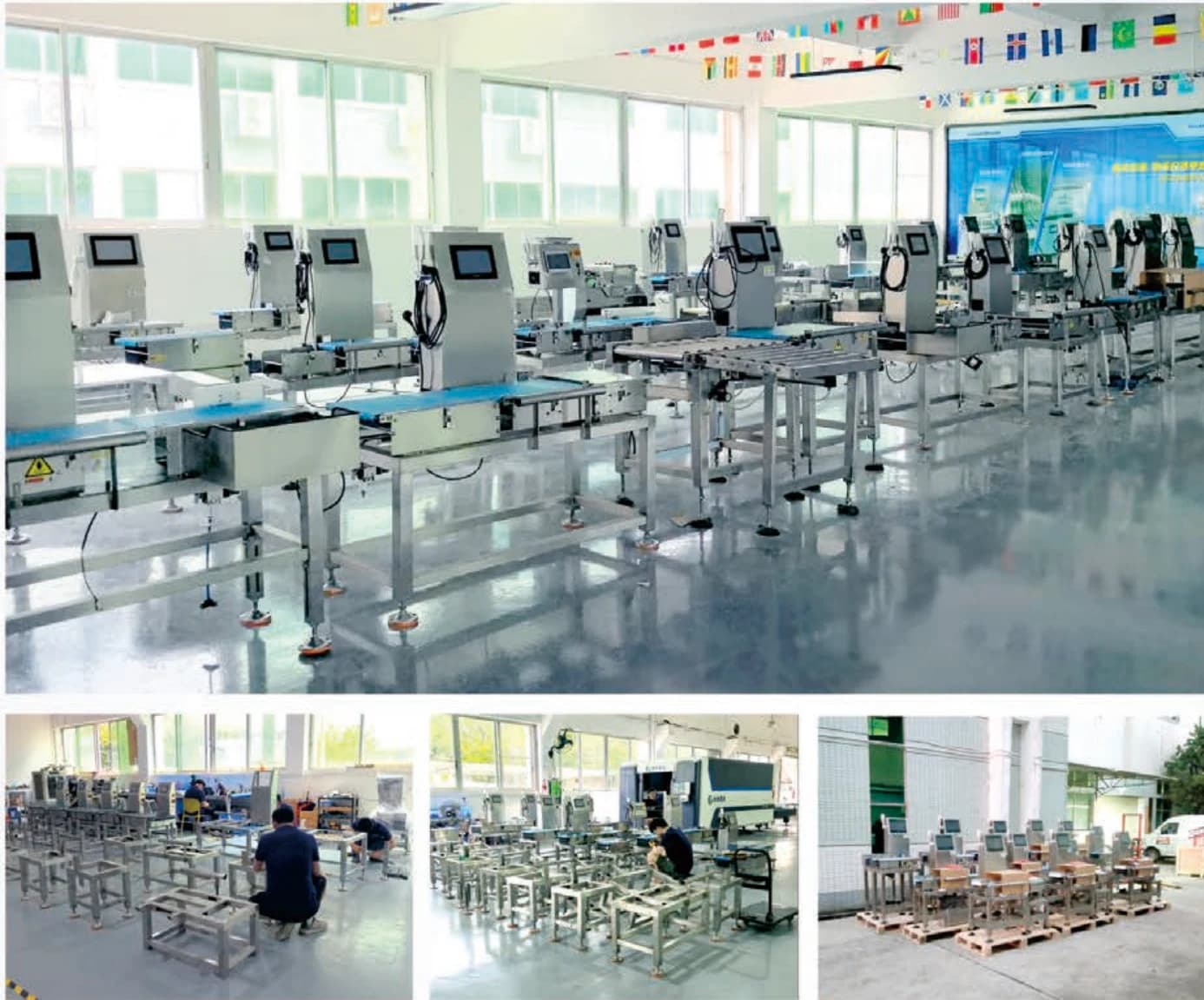
Own Factory · Seeing Is Believing
Guangdong Miqi designs, builds and tests every machine in-house — each unit is bench-tested before shipment. Free sample testing, on-site factory visits and live video of the running machine are all welcome.
Compare this model with other configurations in food metal detection systems.
Further reading
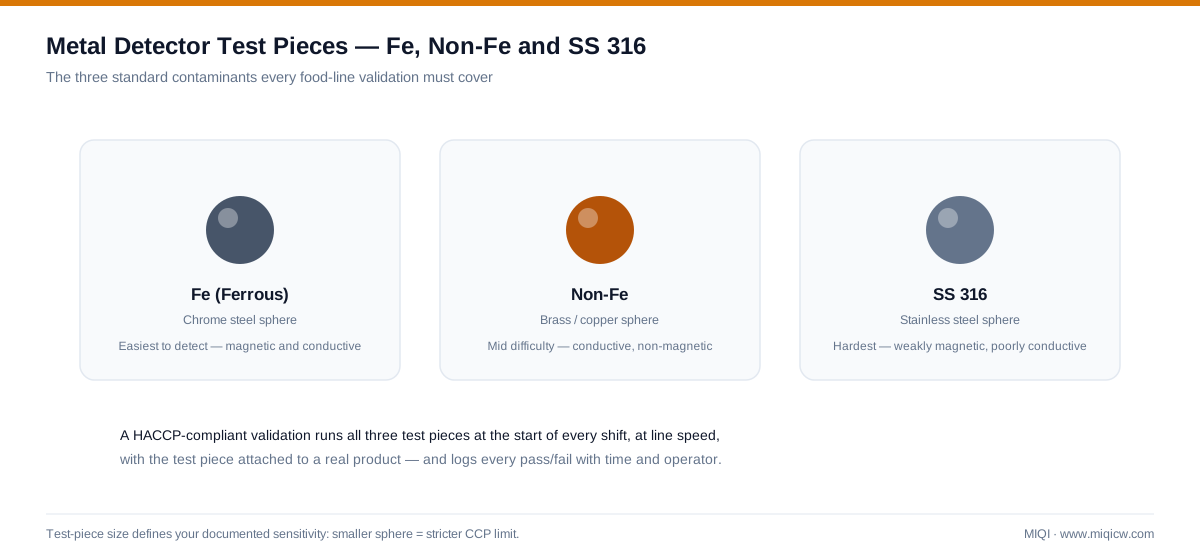
Food Metal Detector Testing, Sensitivity and Validation: A Line-Side Guide
A meaningful food metal detector test uses certified ferrous, non-ferrous and stainless-steel test pieces in the actual product, at the least favourable position, and confirms both detection and rejection. This guide separates routine verification from validation and explains product effect.
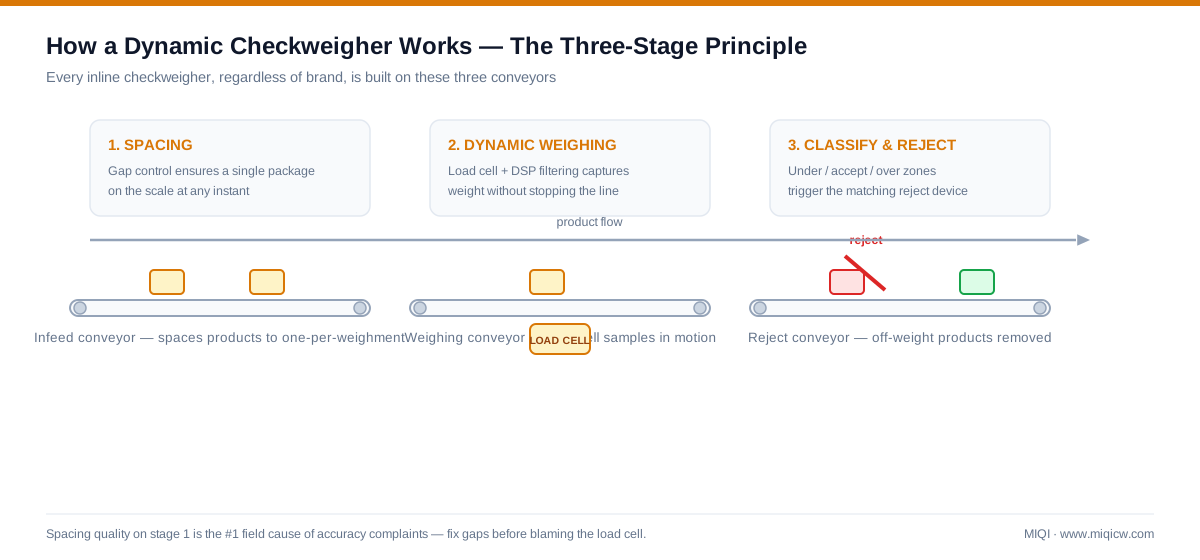
How Does a Checkweigher Work? Infeed, Dynamic Weighing and Automatic Rejection
A dynamic checkweigher weighs every moving pack, compares the filtered result with recipe limits and removes or records exceptions. This engineering guide explains the complete three-stage process, the load-cell signal chain and the line conditions that determine repeatability.
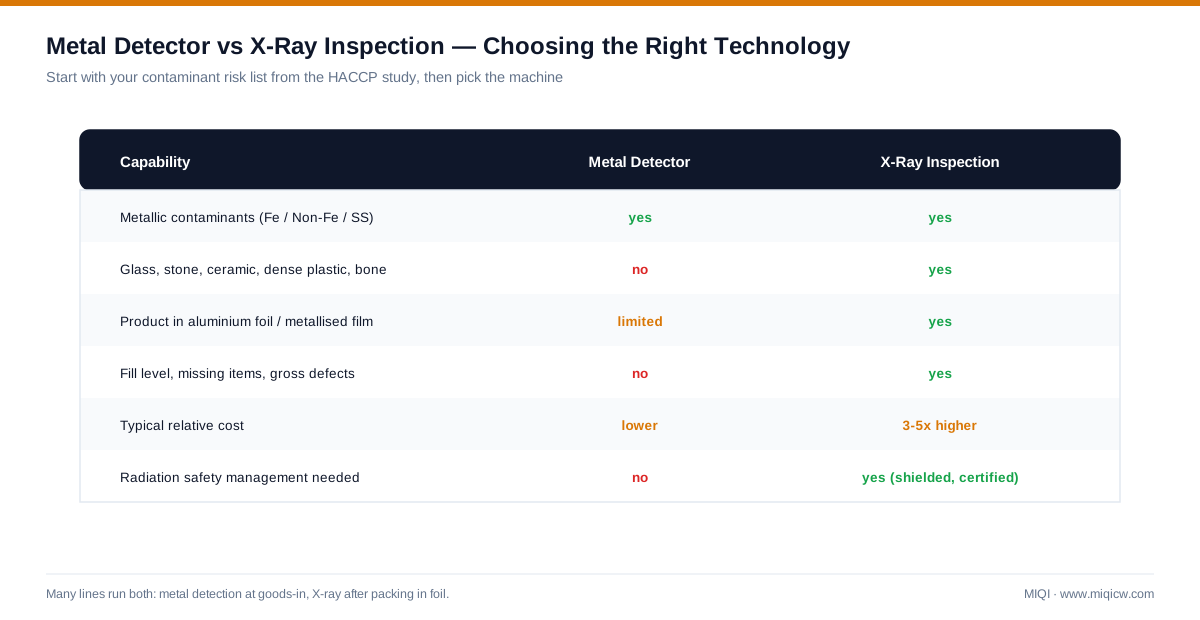
Metal Detector vs X-Ray Inspection: Which Food Inspection System Fits?
Metal detection is highly effective for metallic contaminants, while X-ray inspection responds to density contrast and may find glass, stone, ceramic and some dense plastics as well as metal. Packaging, product effect, contaminant risk, product thickness and required secondary checks decide the better technology.
More related guides
- Indonesia's 17 October 2026 Halal Deadline: What It Actually Means for Your Inspection and Weighing Equipment
- No, Your Checkweigher Is Not "FSMA 204 Compliant" — Here's the Regulation That Actually Applies
- Is Metal Detection a CCP or a PRP? The Question Every Quality Manager Asks and No Equipment Vendor Answers
Frequently Asked Questions
What is the price of Combined Metal Detector and Checkweigher (MQ-MCL4530L2)?+
Pricing depends on the weighing range, rejection method, conveyor dimensions and selected options. Send the product weight, dimensions and line speed for a factory-direct quotation.
Does MIQI export Metal Detection worldwide?+
Yes. MIQI ships worldwide with export packing, operating documents, configurable voltage and remote commissioning support. OEM branding and application-specific engineering are available.
Tell Us About Your Product
Share your product weight range, dimensions and line speed — our engineer replies within 24 hours with model recommendation and quotation.