Indonesia's 17 October 2026 Halal Deadline: What It Actually Means for Your Inspection and Weighing Equipment
Prepare for Indonesia’s October 2026 halal phase with a product-category check, recognised certification route and documented contact materials, cleaning and segregation. A weighing or inspection machine alone does not certify the food produced on a line.
A checkweigher or metal detector does not by itself establish halal certification for the food made on the line. Do not assume that no equipment or material certificate can exist: verify any claim’s issuing body, scope and recognition. For MIQI equipment, obtain the available material and cleaning information and have the halal auditor assess its role in the actual process. No MIQI halal-equipment certification is claimed here.
For a line that also needs metallic-contaminant inspection, compare food metal detection systems and review Is Metal Detection a CCP or a PRP? The Question Every Quality Manager Asks and No Equipment Vendor Answers. Contaminant detection, cleanability and the site's halal assurance procedures remain separate requirements to document.
What changes after the 17 October 2026 transition
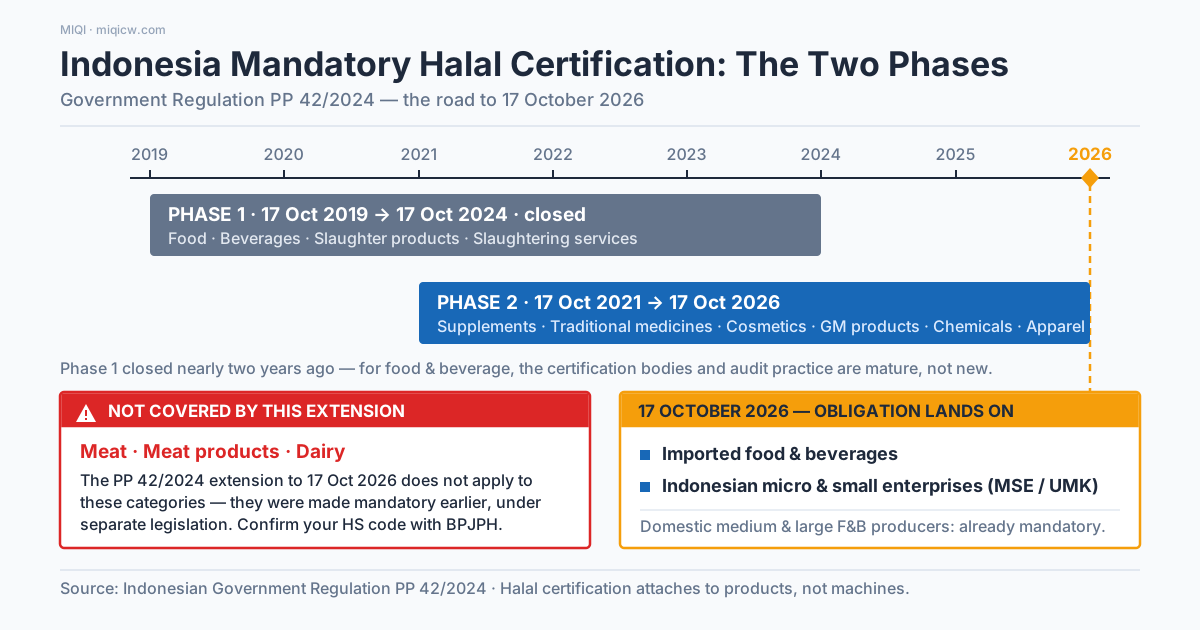
BPJPH identifies 17 October 2026 as the end of a transition and 18 October 2026 as the start of the next mandatory phase for the specified product groups, including relevant imported products. Scope depends on product category and business status; domestic medium and large food businesses had an earlier phase. Confirm the category and current import procedure with BPJPH and the importer.
Two groups are covered by that date. The first is imported food and beverages — which is you, if you are an exporter shipping finished consumer product into Indonesia. The second is Indonesia's own micro and small enterprises (MSE / UMK) in food and beverage. Domestic medium and large food and beverage producers were already required to comply before this; the 2026 date is not their starting gun. If your Indonesian customer is a large local manufacturer and they tell you they are "waiting for October 2026," that statement deserves a follow-up question.
The phase structure behind the date
The stages are category-specific and overlap. Use BPJPH’s current category list and the applicable provisions of PP 42/2024; do not treat every product, business size and imported item as sharing a single two-phase calendar.
Earlier phases for domestic food businesses do not automatically determine a foreign product’s deadline. Establish the operator, product category and certificate route before scheduling engineering changes.
Meat and dairy: confirm category-specific import requirements
Do not rely on a blanket statement that all imported meat and dairy are excluded from the October 2026 phase. These products may also have animal-health, slaughterhouse or other import requirements. The sources reviewed here do not establish a universal exemption or a single earlier date for every such product. Confirm the actual HS code, origin, processing and certification requirements with BPJPH and the competent import authority.
Record the authority’s written answer against the product code and retain the supporting source. Resolve a category-specific question before relying on an equipment supplier’s general guidance.
Misconception vs. fact: "we need halal-certified equipment"
A buyer may ask whether the line or the checkweigher needs halal certification. Clarify whether the request concerns the food, a material, the production process or a specific equipment certificate before preparing the evidence.
A checkweigher or metal detector does not by itself establish halal certification for the food made on the line. Do not assume that no equipment or material certificate can exist: verify any claim’s issuing body, scope and recognition. For MIQI equipment, obtain the available material and cleaning information and have the halal auditor assess its role in the actual process. No MIQI halal-equipment certification is claimed here.
Ask what the buyer means by halal-certified equipment. The request may concern a certificate’s scope, contact materials, the manufacturing process or contamination controls. Equipment is one potential contamination pathway; the auditor should identify the evidence required for this product and process rather than assuming that a machine label settles the issue.
Translate the buyer’s requirement into evidence: certificate scope where applicable, material declarations, cleaning controls and documented segregation. The auditor determines what evidence the actual certified process needs.
Where your equipment genuinely enters the file
Think of it in four buckets, in rough order of how often they cause trouble.
1. Product-contact materials
Identify contact materials in belts, seals, guides and chutes and request the available supplier declarations. Stainless steel grade alone does not resolve all process or contamination questions; assess lubricants, coatings, cleaning agents and shared-line use as well.
2. Lubricants and greases in and around the food zone
This is the one exporters forget until it bites. Lubricants in the food-contact zone are a legitimate line of inquiry, and "it's food-grade" is an answer to a different question than "what is it derived from." Ask your equipment supplier which lubricants are specified for the food zone, and get the manufacturer's declaration for each one. If the answer is a shrug, that is information too.
3. Cleaning and cleanability
If a machine cannot be cleaned to a demonstrable standard, no declaration saves it. This is where physical design stops being a spec-sheet line and becomes a compliance asset: open frames, minimal horizontal ledges, tool-free removal of belts and guides, drainable surfaces, IP-rated housings that survive an actual washdown rather than a wipe. When you are comparing two checkweighers and one of them requires a spanner and twenty minutes to strip the conveyor, that difference shows up every single changeover for the life of the machine.
4. Segregation and records on shared lines
Shared-line arrangements must be accepted under the applicable halal assurance rules. Do not assume time separation plus cleaning is always sufficient for halal and non-halal production. Ask the auditor which facilities must be separate and which cleaning or changeover procedure is acceptable; recipe and operator logs support, but do not replace, that decision.
Foreign certificates, MRAs, and the BPJPH registration step
If your product is already halal certified in your own country, that certificate is not automatically portable. A foreign halal certificate can be used in Indonesia only where the issuing body has a mutual recognition agreement (MRA) with BPJPH, and the certificate must additionally be registered with BPJPH. If there is no MRA covering your issuing body, you are applying through the Indonesian process regardless of what is already on your wall.
That means the first question in any Indonesia project is not "do we have a halal certificate" but "is our issuing body inside an MRA with BPJPH, and is our certificate registered." Those are two separate yes/no answers, and both have to be yes.
Registration and foreign-certificate conformity procedures can change. Check the current BPJPH process, including Regulation 4/2026 and applicable registration instructions, instead of relying on an unverified claim about apostille removal.
Exemptions: the non-halal declaration and the positive list
Non-halal disclosure requirements and exclusions from certification are separate matters. Do not assume that every fresh or minimally processed food is exempt because an ingredient appears on a positive list. Confirm whether an exemption concerns a material, a finished product or a service and obtain the applicable written basis.
We would mark the exemption detail as moderately confident rather than settled. If your product sits near an exemption boundary — lightly processed, single-ingredient, minimally handled — that is precisely the case where you want a written position from BPJPH or an Indonesian consultant rather than a judgement call from your export desk. Boundary cases are where an article like this one stops being useful.
A checklist you can actually hand to your engineering team
Work it in this order. The sequence matters, because steps 1 and 2 can invalidate everything after them.
1. Confirm the actual product category, HS code, business status and import conditions. Ask the competent authority for the applicable date and requirements rather than assuming a common date for all foods.
2. Confirm your certificate pathway. Does your existing halal issuing body have an MRA with BPJPH? Is your certificate registered with BPJPH? Two questions, two written answers.
3. Inventory every product-contact material on the line. Belts, guides, chutes, seals, gaskets, scrapers. One row per item: part number, material, supplier, declaration on file yes/no.
4. Inventory every lubricant and grease specified for the food zone. One row per item, manufacturer declaration attached.
5. Write down the cleaning procedure for each machine, including the strip-down, and time it. If a procedure has never been timed, it does not exist.
6. Map your shared-line risk. Which SKUs share which machines? What runs before what? Where is the changeover clean, and how is it recorded?
7. Pull the records your line can already produce. Recipe logs, operator authority levels, rejection records, weight records. You will need to show that a claim about what ran when is checkable.
8. Close the gaps in equipment, then in paperwork. In that order. Paperwork that describes a machine you don't have is the definition of a failed audit.
Where equipment choice actually moves the needle
Only after the steps above does the hardware conversation make sense — which is why we put it here rather than at the top.
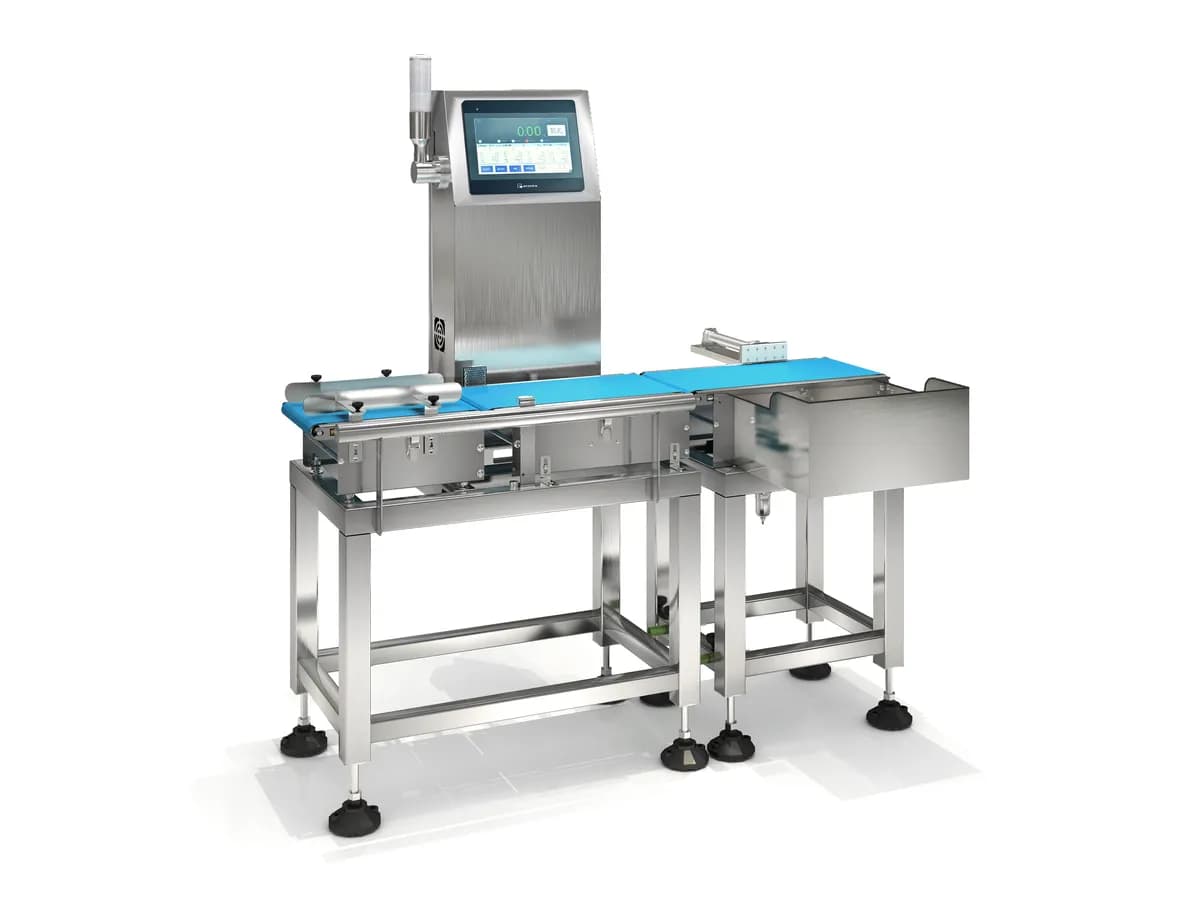
For end-of-line weight verification on a shared line, the MQ-CW4523L3 checkweigher is our common recommendation for food and beverage: a 304 stainless build, recipe storage so changeovers are selected rather than improvised, and tiered operator authority so the person who can change a limit is not the person who runs the belt. Those are the features that turn a changeover claim into a record.
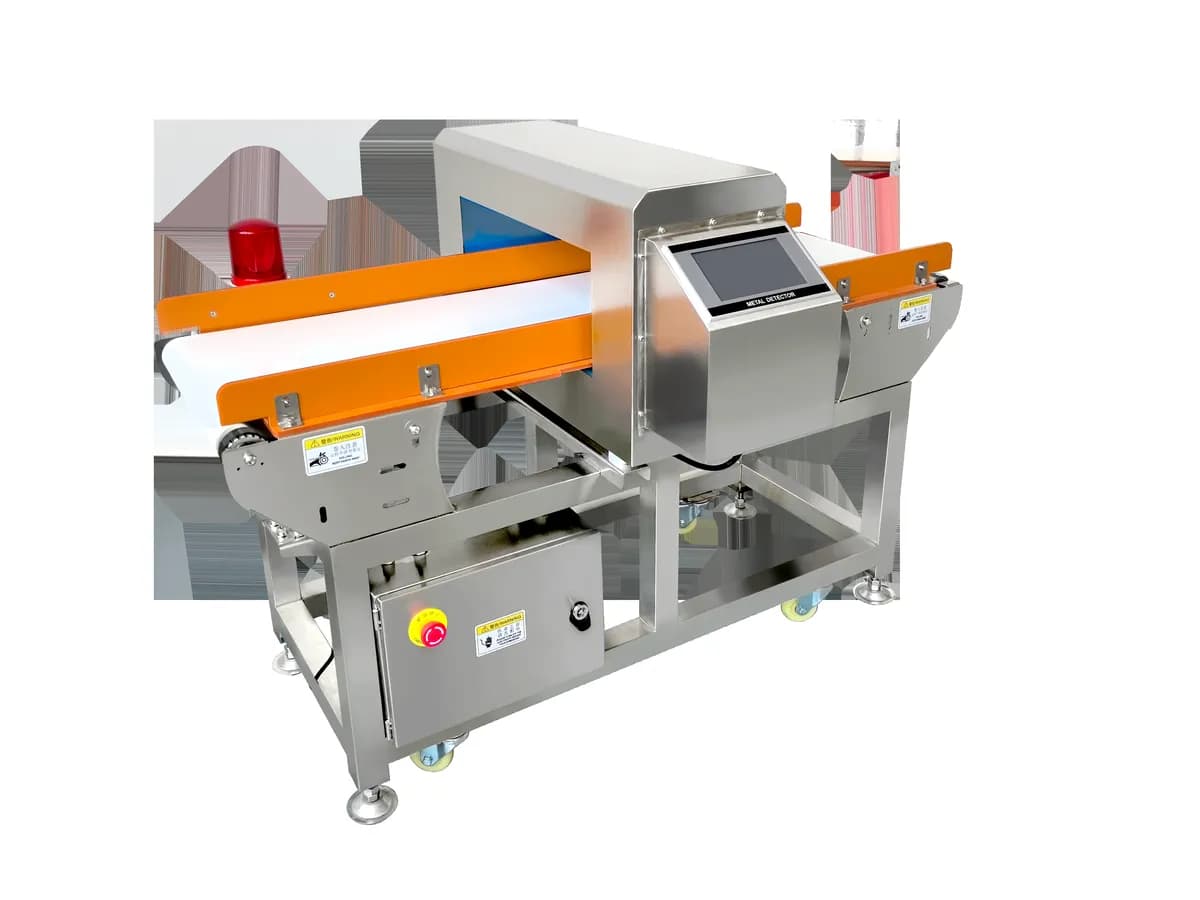
For metal contamination, the MQ-MD-C metal detector series covers standard and non-standard builds — relevant here because halal-driven line layouts often force awkward geometry, and a detector that has to be shoehorned in is a detector that gets bypassed.
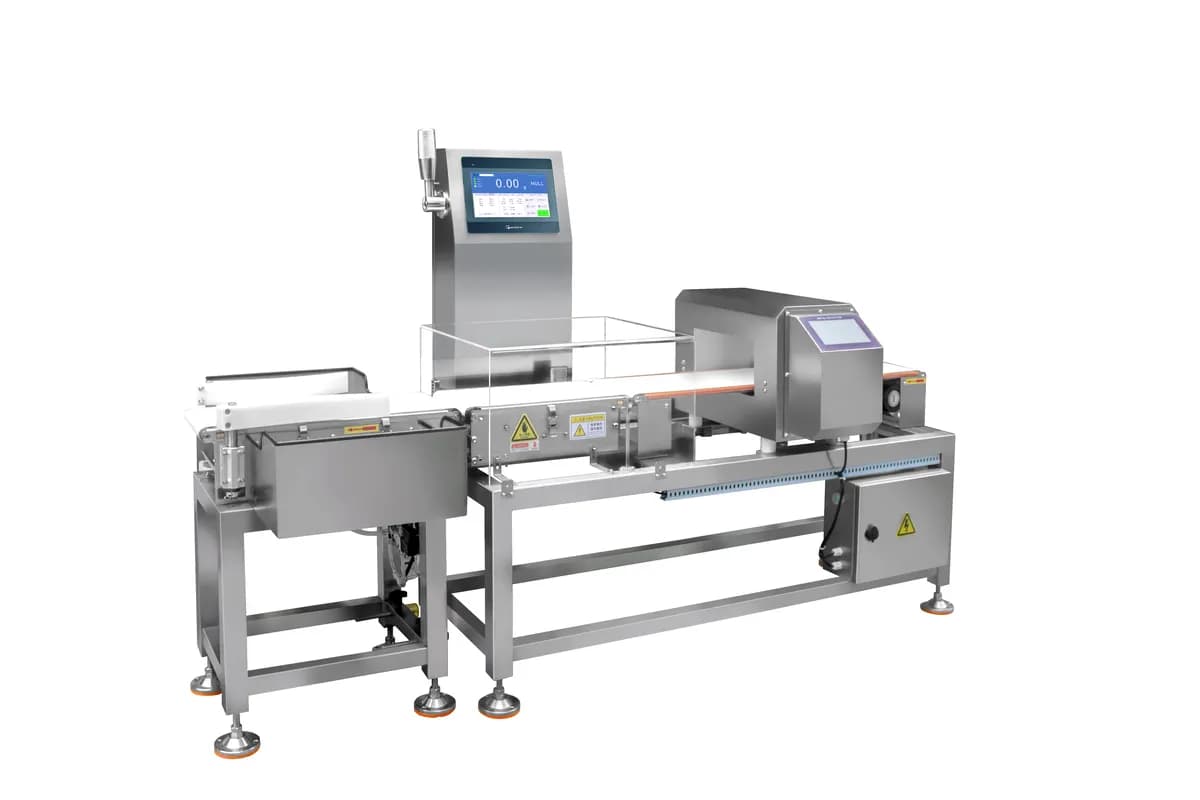
Where floor space is the constraint — which it usually is once you add a segregation buffer to an existing line — the MQ-MCL4530L2 combines metal detection and checkweighing in a single frame. One frame is also one cleaning procedure and one set of contact materials to declare, which is a compliance benefit people rarely count.
One honest note, since this whole article is about not overclaiming: Miqi is a source factory with nine product series and forty-four models, and we support free sample testing and non-standard customisation. We do not currently hold CE or ISO 9001, and we would rather tell you that here than have you find out during a vendor audit. If those marks are a hard requirement in your approval process, say so early and we will tell you straight whether we are a fit.
The short version
Prepare the product-specific certification route and the evidence that supports its process. The October transition is not a universal certificate for machines or a universal exemption for meat and dairy. Contact materials, cleaning, facility separation and traceable records should be reviewed against the actual BPJPH and auditor requirements.
If you want a second engineering opinion on a specific line layout, or you want to test your actual product on our equipment before committing, message Engineer Cai on WhatsApp at +86 152 1890 9599 or email 897874196@qq.com. Send us the product, the throughput, and the constraint you are up against. We will tell you what we would do, including when the answer is that you don't need to buy anything from us.