
Metal Detector
All-metal detector catching ferrous spheres from Φ0.6mm, eight aperture heights matched to your product, belt-stop alarm on detection, and a hygienic SUS304 stainless body
Metal Detector (MQ-MD-C). Factory-direct from Guangdong, China. OEM & custom available.
Typical applications: Candy and snacks, bottled health supplements and vitamins, vacuum-packed foods
Key Features
- ✓Full detection of ferrous, copper, aluminum, stainless steel, and other metal contaminants
- ✓High-speed inspection at meters per minute with a false alarm rate below 0.1%
- ✓Flexible conveyor and rejection system configurations for demanding waterproof, explosion-proof, dust-proof, and vibration-resistant environments
- ✓Touchscreen with one-key self-learning for fast startup without manual tuning; multi-language interface
- ✓SUS304 mirror-finish stainless steel body with crevice-free quick-release clamps
- ✓Product parameter memory for seamless changeover across multi-product lines
Why Choose MQ-MD-C
Honest, tiered sensitivity ratings
Sensitivity is tied directly to aperture height, so we rate it honestly across eight tiers: at a 100mm aperture, ferrous from Φ0.6mm and non-ferrous from Φ1.2mm; at 400mm, ferrous from Φ3.0mm. Match your product height against the chart and the real detection capability is clear at a glance — no games with "lab-condition" numbers.
Stainless steel contaminants can't escape
Chipped blades and broken sieve wires are usually 304 stainless — weakly magnetic with a faint signal, the toughest catch in metal detection. This machine detects SUS304 spheres from Φ1.2mm at the 100mm aperture, with full coverage of ferrous, copper, aluminum and stainless steel — no blind spots for contamination.
False-reject rate below 0.1%
False alarms wear a line down faster than misses — every alarm stops the belt, so operators keep dialing sensitivity down until the machine is just decoration. We hold false rejects under 0.1%, and one-touch auto-learning suppresses product effect, so salty or moist products run stably at full sensitivity with no compromise.
Stop on detection, every pack accounted for
When metal is detected, the conveyor stops automatically with a buzzer alarm and the suspect pack stays right at the detection point — nothing contaminated flows downstream. Lines that must run non-stop can add an optional reject mechanism that automatically kicks out suspect packs without breaking the production takt.
One-touch learning for fast changeovers
No factory technician needed for a new product: run a few packs through, the machine learns the product effect automatically and stores it in the parameter library — next time, recall the saved parameters and start the line. Touch-key input (touchscreen upgradable) with multi-language UI; an ordinary operator works independently within a day.
Mirror-finish 304 body that passes audits
Full SUS304 mirror-finish stainless body with a crevice-reduced clamp construction designed for easier washdown and wipe-down. This hygienic construction can support a facility's documented HACCP or GMP cleaning procedures, but it is not HACCP, GMP or CAS machine certification.
Problems It Solves for You
Export audits require metal contamination to be set as a CCP critical control point, but manual visual checks and magnet bars produce no detection records — you get written up with non-conformities right at the audit
In-line all-metal detection from Φ0.6mm ferrous (100mm aperture) with full 304 stainless construction and traceable inspection records. A facility's hazard analysis determines whether this step is a CCP or another control measure; the machine itself is not HACCP, GMP or CAS certified.
A cutter blade chips or a sieve wire snaps on the floor, stainless fragments end up inside vacuum packs, the customer opens a bag and complains — one penalty wipes out a month's profit
Sensitivity is specifically calibrated for weakly magnetic 304 stainless: Φ1.2mm stainless spheres are detected at the 100mm aperture, so blade chips and broken wires — the most frequent contaminants — are intercepted before shipment.
The old detector cried wolf on every salty or moist product; operators got fed up and kept lowering sensitivity until the machine existed in name only — you only found out after an incident
False-reject rate <0.1%, with one-touch auto-learning that memorizes each product's material effect — sensitivity never has to be sacrificed to keep the line quiet, and the machine genuinely stays on duty year-round.
One line runs a dozen-plus SKUs; every changeover means re-tuning and half an hour waiting for the machine to stabilize — capacity burned on switching
Product parameter memory: learn each SKU once and it is archived permanently. At changeover, recall the parameters and run immediately — seamless switching for multi-product lines.
Technical Specifications
| Product model | Standard model: MQ-MD-C; custom configuration: MQ-MD-C |
|---|---|
| Detection channel width (mm) | Standard: 400 mm; Customizable: 500 mm |
| Detection channel height (mm) | 100; 120; 150; 200; 250; 300; 350; 400 |
| Ferrous (Fe) ball sensitivity (Φmm) | 100:≥0.6; 120:≥0.8; 150:≥1.0; 200:≥1.2; 250:≥1.5; 300:≥2.0; 350:≥2.5; 400:≥3.0 |
| Non-ferrous ball sensitivity (Φmm) | 100:≥1.2; 120:≥1.2; 150:≥1.5; 200:≥1.5; 250:≥2.5; 300:≥3.0; 350:≥4.0; 400:≥4.5 |
| Stainless-steel (SUS) ball sensitivity (Φmm) | 100:≥1.2; 120:≥1.5; 150:≥2.0; 200:≥2.0; 250:≥2.5; 300:≥3.0; 350:≥4.0; 400:≥4.5 |
| Alarm method | Automatic stop and buzzer alarm when metal is detected; reject mechanism optional |
| Operating method | Button input; touchscreen optional |
| Machine material | 304 stainless steel; hygienic design intended to support facility HACCP and GMP procedures |
| Power supply | AC 200 V ±10%, 50/60 Hz; AC 110 V or AC 380 V available as custom options |
Functions in Detail
Alarm and rejection options
Standard configuration is stop-on-detection: when metal is found, the conveyor halts with a buzzer alarm and the operator removes the suspect pack for review — ideal for low- to medium-speed lines and strict sample-retention traceability. High-volume lines that cannot stop can add an optional reject mechanism that automatically ejects suspect packs while the main line keeps running.
Aperture selection and customization
The standard aperture is 400mm wide with eight height options: 100/120/150/200/250/300/350/400mm; 500mm and custom sizes are available for extra-wide products. The selection rule: keep the aperture as close to the product as possible — the lower the aperture, the higher the sensitivity, down to Φ0.6mm ferrous at the 100mm tier. Send your product dimensions and we will recommend the right configuration.
Operation and parameter management
Touch-key input, upgradable to a touchscreen, with a multi-language interface. New products go through one-touch auto-learning: run a few real packs, the machine records the product effect and saves it as that SKU's parameter set. Later changeovers simply recall the stored parameters and start the line — no repeated tuning, no capacity lost to switching.
Cleaning and hygienic design
Full SUS304 mirror-finish stainless body with a crevice-reduced clamp construction designed to reduce residue traps and simplify routine cleaning. Hygienic construction can support a facility's documented HACCP or GMP procedures; it is not machine certification. Waterproof, dustproof, anti-vibration and explosion-protection options must be confirmed for the ordered configuration and environment.
Power supply and line integration
Standard power is AC200V±10%, 50-60Hz; AC110V, AC380V and other voltage standards can be specified for export equipment or special plants. The machine slots into your existing conveyor line as an independent section, with the conveyor and reject systems adapted flexibly to your line height and takt — retrofitting an old line requires no major rebuild.
Industries & Application Scenarios
Candy and puffed snacks pass through in full cartons or single packs after packaging; a 100-150mm low-aperture configuration exploits the Φ0.6-1.0mm ferrous sensitivity to intercept metal wear debris shed along the production line.
Bottled and canned supplements pass through upright; choose a 120-200mm aperture tier to match bottle height, detecting ferrous from Φ0.8-1.2mm to keep tooling debris from tableting and filling out of pharma-grade product.
Flat vacuum packs of meat and braised products can run through a 100mm aperture to use the highest sensitivity tier; an optional waterproof body suits cold, wet washdown rooms.
Bread and pastries are inspected after packaging, intercepting iron and stainless debris from worn blades and mixing paddles in kneading and cutting; one-touch auto-learning handles frequent multi-flavor changeovers.
Bagged powders and dried or roasted goods show strong product effect; auto-learning suppresses the product signal, maintaining detection of non-ferrous metals like copper and aluminum from Φ1.2mm while holding false rejects under 0.1%.
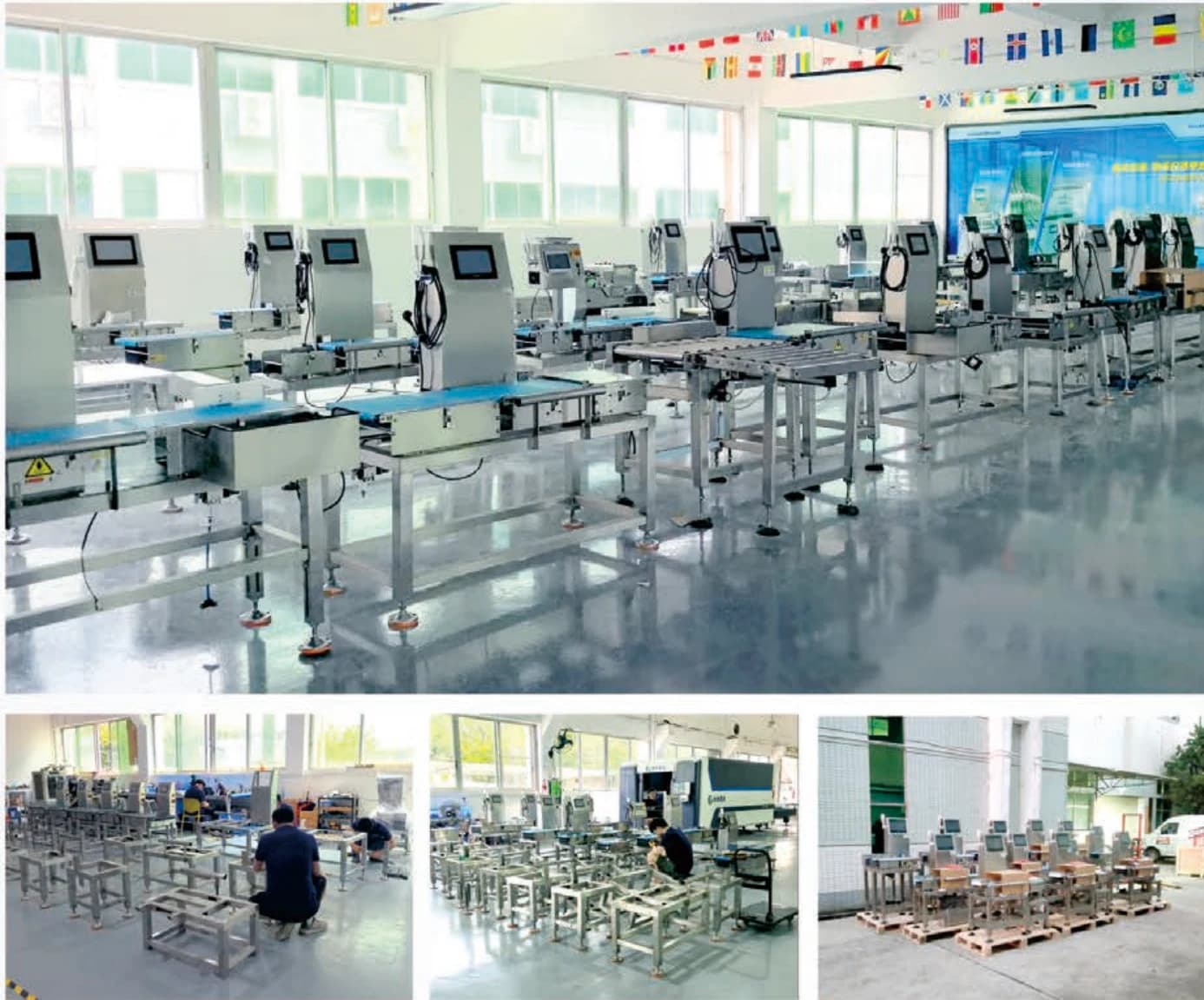
Own Factory · Seeing Is Believing
Guangdong Miqi designs, builds and tests every machine in-house — each unit is bench-tested before shipment. Free sample testing, on-site factory visits and live video of the running machine are all welcome.
Compare this model with other configurations in food metal detection systems.
Further reading
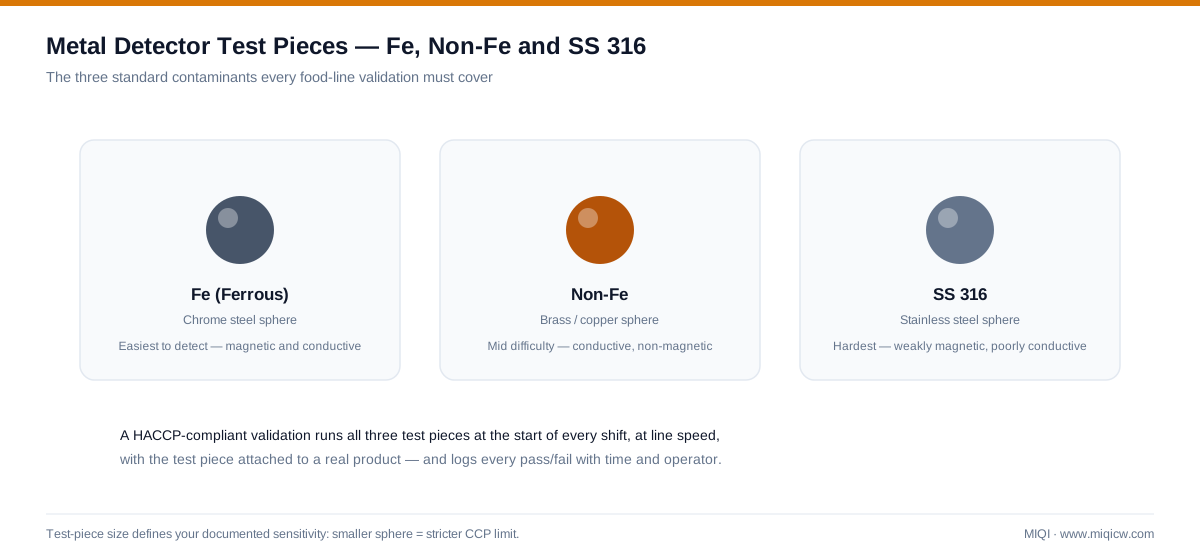
Food Metal Detector Testing, Sensitivity and Validation: A Line-Side Guide
A meaningful food metal detector test uses certified ferrous, non-ferrous and stainless-steel test pieces in the actual product, at the least favourable position, and confirms both detection and rejection. This guide separates routine verification from validation and explains product effect.
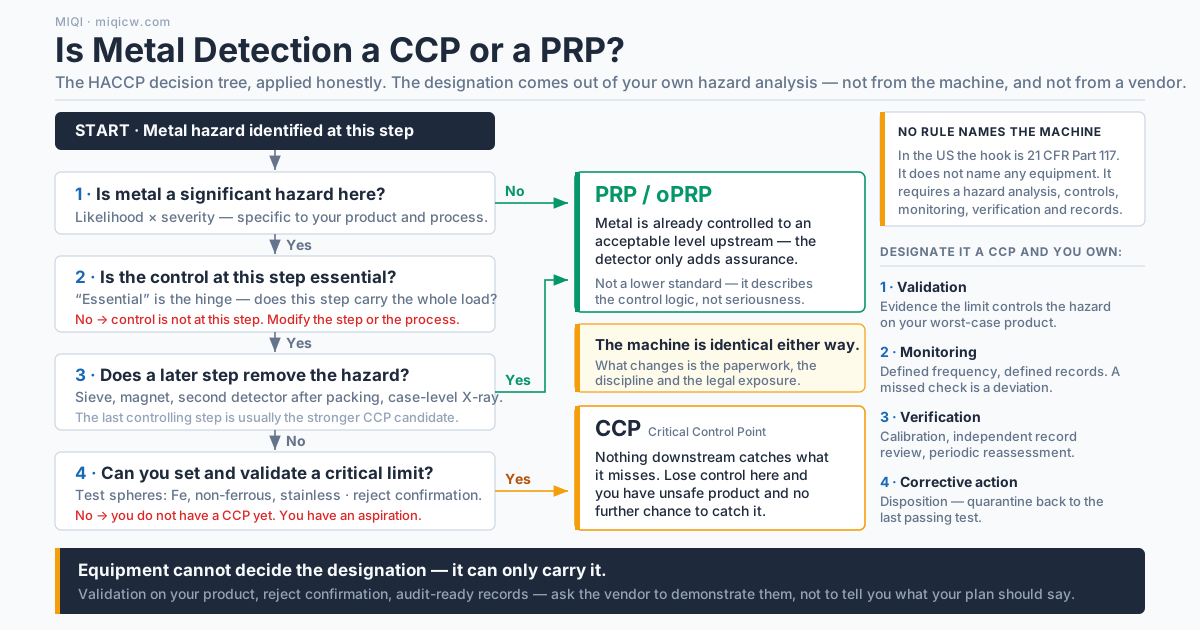
Is Metal Detection a CCP or a PRP? The Question Every Quality Manager Asks and No Equipment Vendor Answers
Metal detection can serve different roles in a documented food-safety system. Use hazard analysis, validated control limits and the applicable HACCP or food-safety standard to distinguish CCP, PRP and operational PRP responsibilities before selecting a detector and reject configuration.
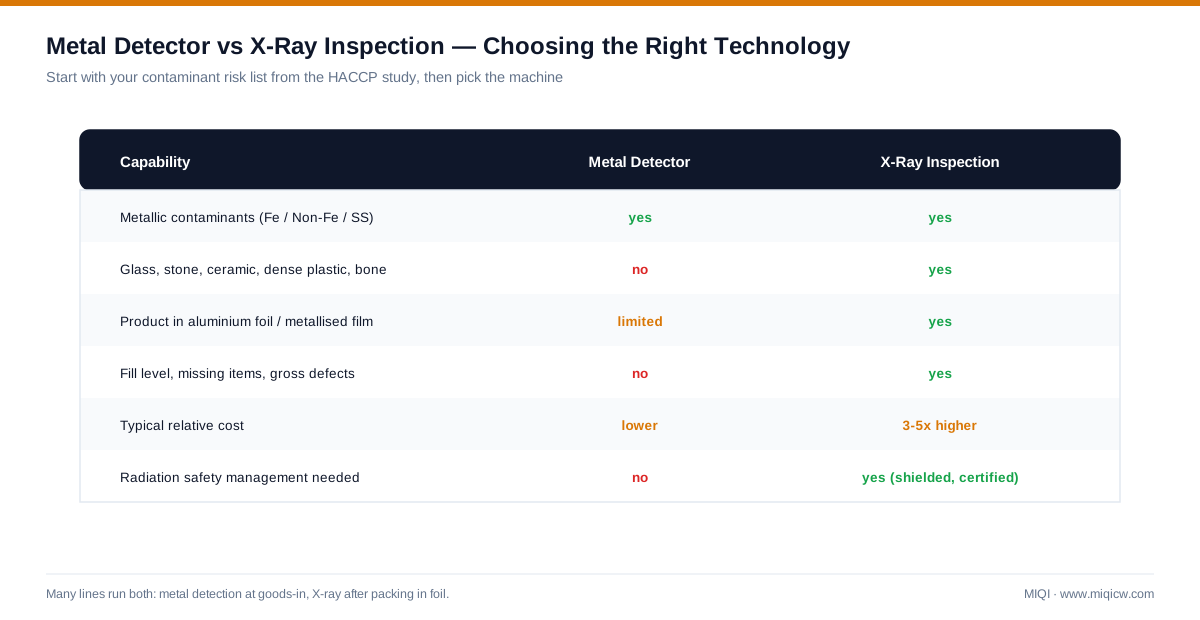
Metal Detector vs X-Ray Inspection: Which Food Inspection System Fits?
Metal detection is highly effective for metallic contaminants, while X-ray inspection responds to density contrast and may find glass, stone, ceramic and some dense plastics as well as metal. Packaging, product effect, contaminant risk, product thickness and required secondary checks decide the better technology.
Frequently Asked Questions
What is the price of Metal Detector (MQ-MD-C)?+
Pricing depends on the weighing range, rejection method, conveyor dimensions and selected options. Send the product weight, dimensions and line speed for a factory-direct quotation.
Does MIQI export Metal Detection worldwide?+
Yes. MIQI ships worldwide with export packing, operating documents, configurable voltage and remote commissioning support. OEM branding and application-specific engineering are available.
Tell Us About Your Product
Share your product weight range, dimensions and line speed — our engineer replies within 24 hours with model recommendation and quotation.
Related Models
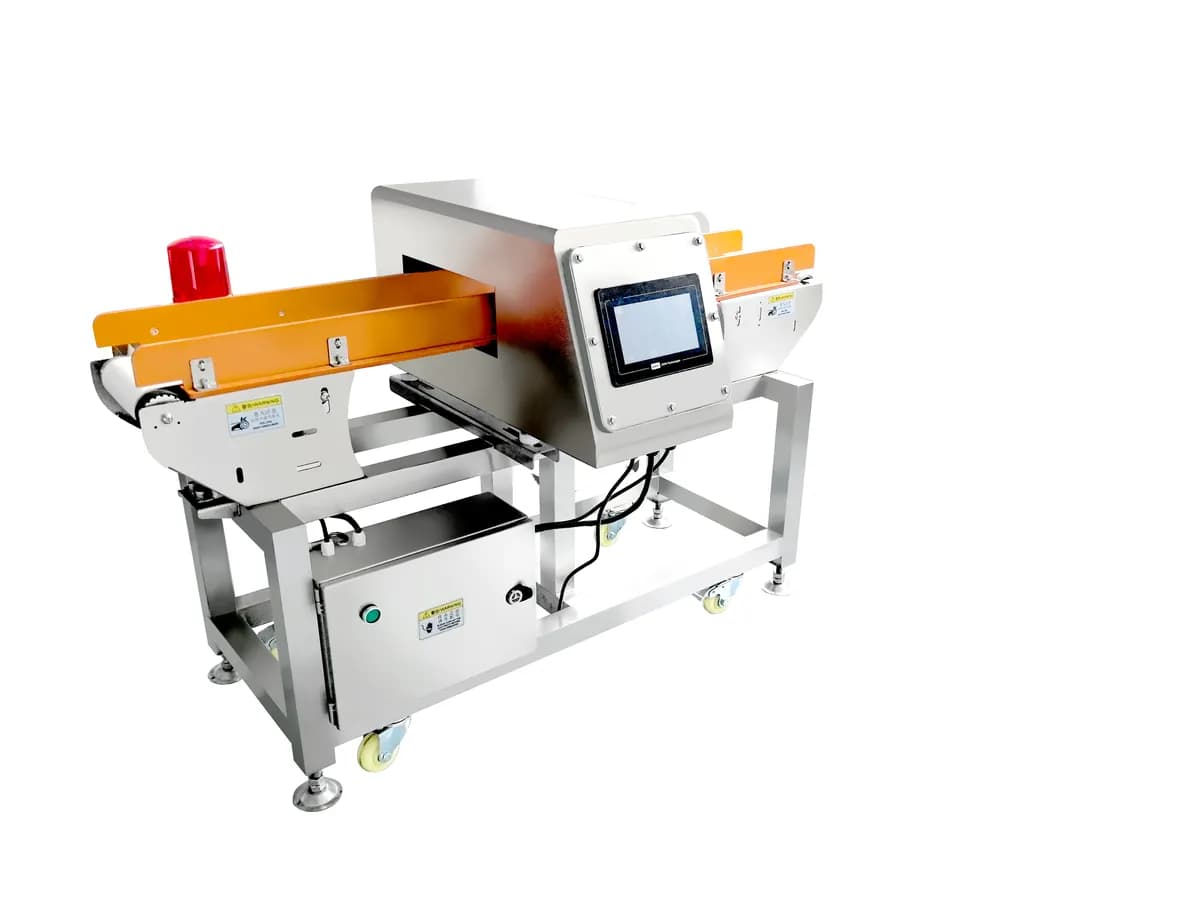
Aluminum Foil Metal Detector
View Specs & Price →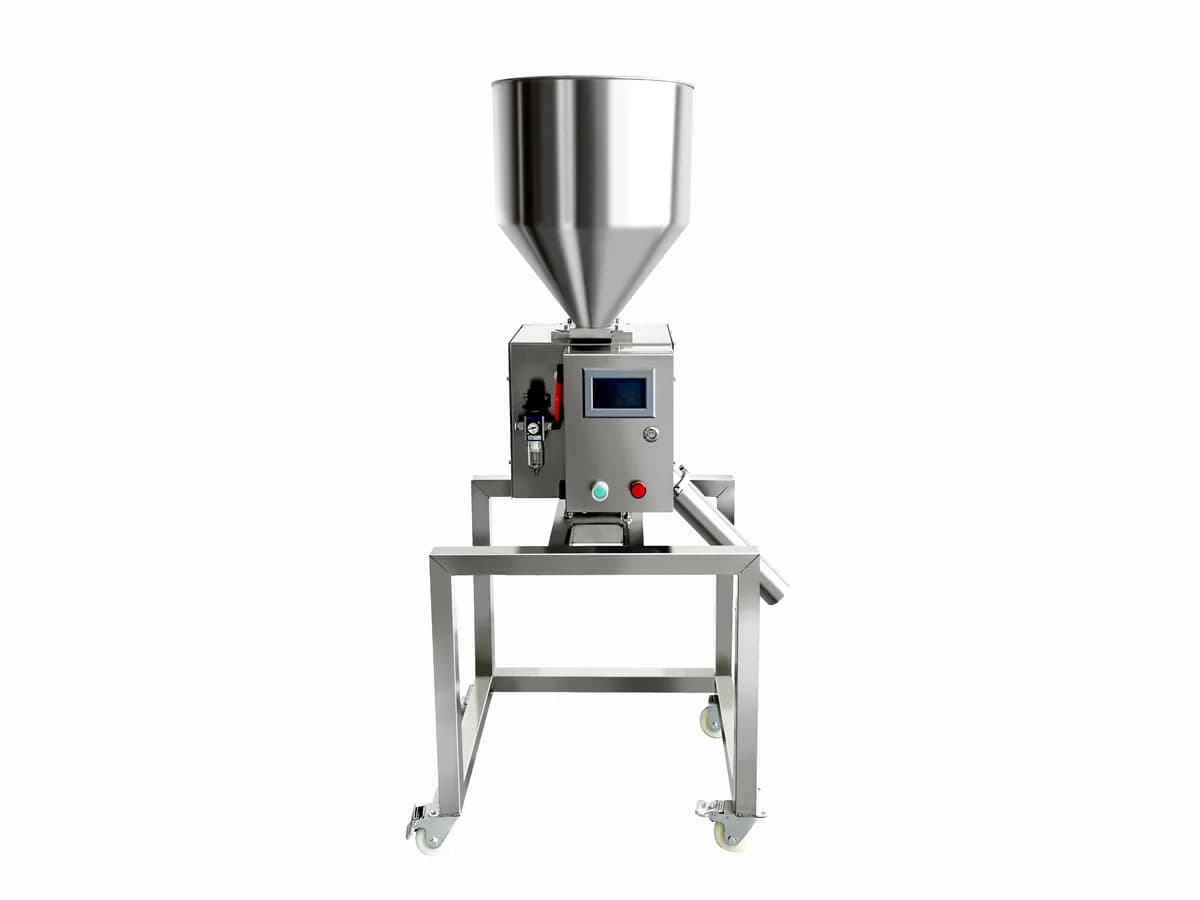
Metal Separator
- Ferrous (Fe) detection accuracy: MQ-MC-25:0.1~0.2mm; MQ-MC-30:0.2~0.3mm; MQ-MC-50:0.3mm; MQ-MC-70:0.5mm; MQ-MC-100:0.8mm
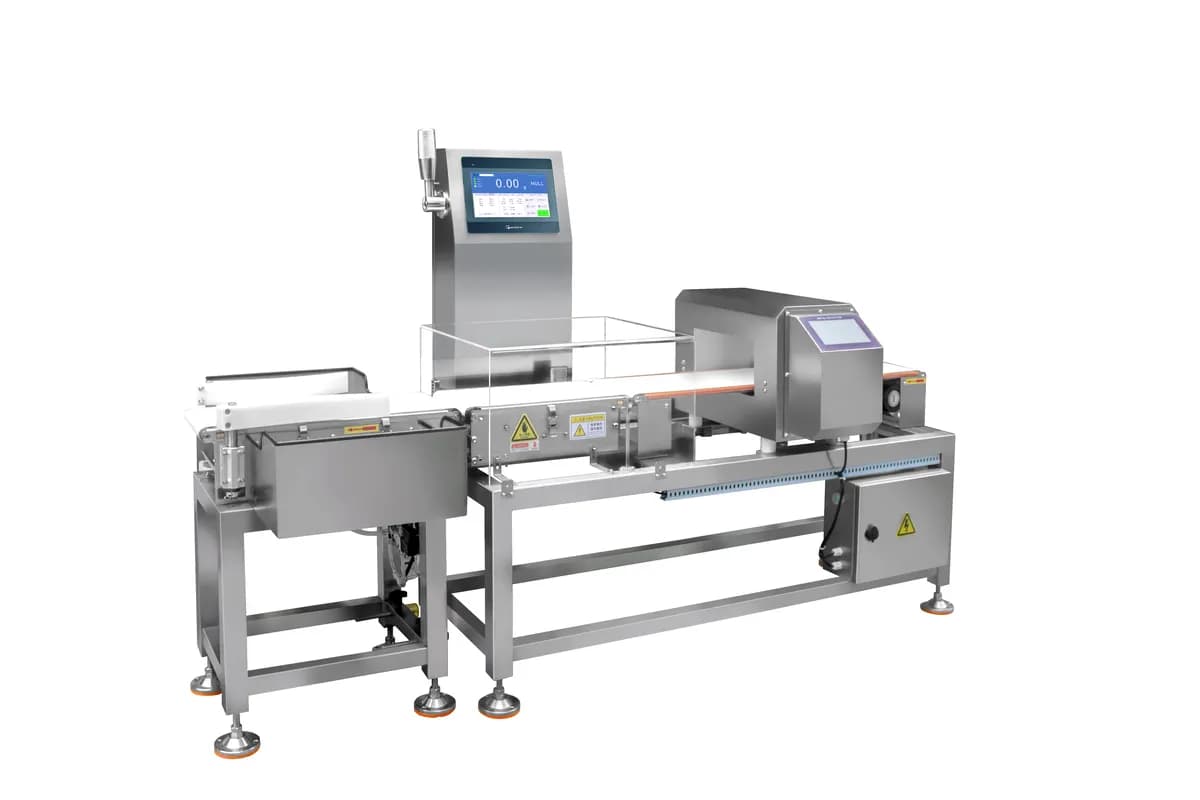
Combined Metal Detector and Checkweigher
- Weighing range: 1-2000g
- Weighing accuracy: ±0.3-1g