
Forward-Reverse Sorting Scales
These compact dynamic sorting scales use the weighing belt itself to route a product forward or backward after the weight decision. The MQ-CW3523T1 covers 1-1,000 g at ±0.02-0.1 g and up to 35 packs/min; the MQ-CW3016F05 covers 1-500 g at ±0.06-1 g and up to 70 packs/min. They suit small parts, traditional Chinese medicine pouches and packaged goods where a compact accept/reject or under/target/over workflow is needed without a pneumatic pusher. For fish, poultry, seafood and other true multi-grade applications, use the separate multi-outlet weight sorter range.
A forward-reverse sorting scale is a dynamic checkweighing system whose conveyor changes direction after weighing. Based on the active recipe and weight limits, the belt sends a product to the designated discharge path. It is a compact alternative to a pusher or air-blast rejector for suitable products and speeds. It is not the same as a multi-grade weight sorter, which sends every item to one of several weight-class outlets.
Forward-Reverse Sorting Scale Models
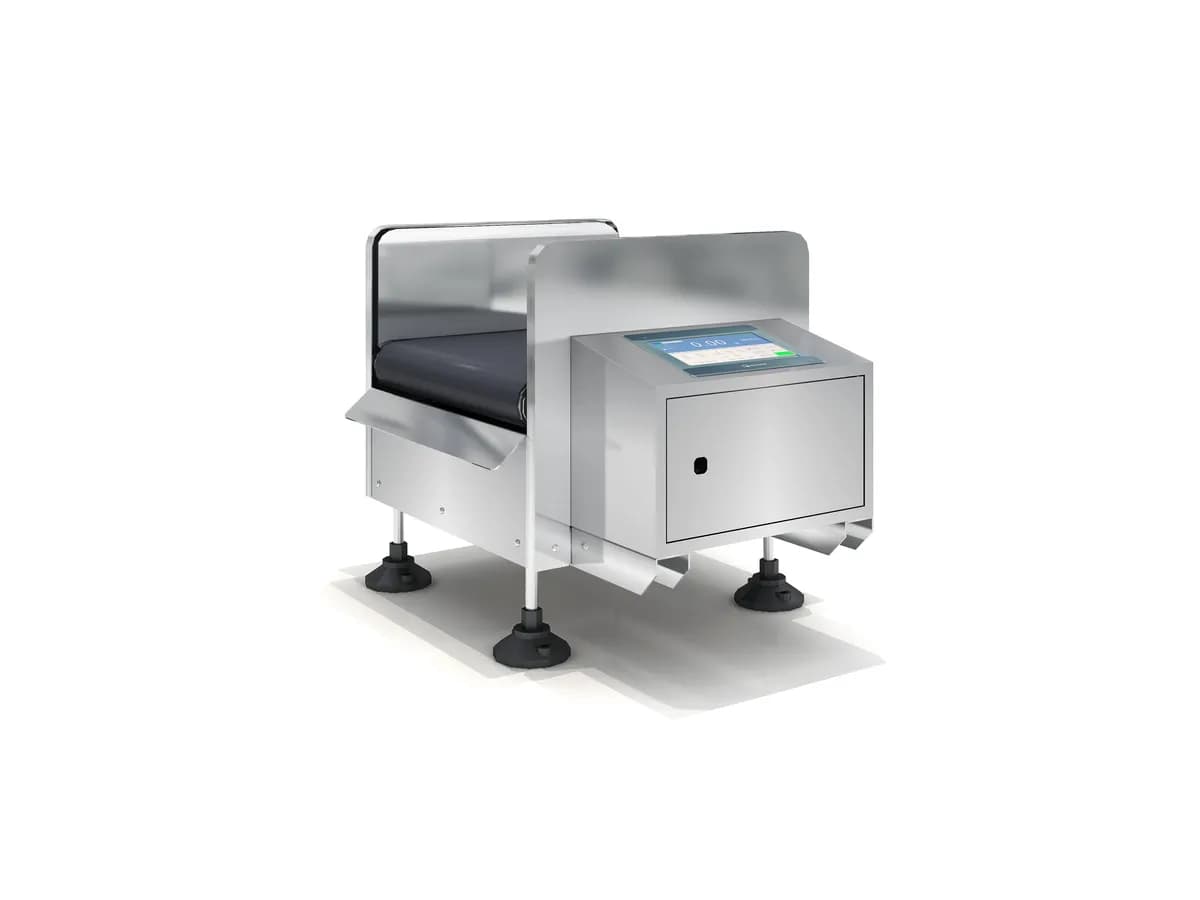
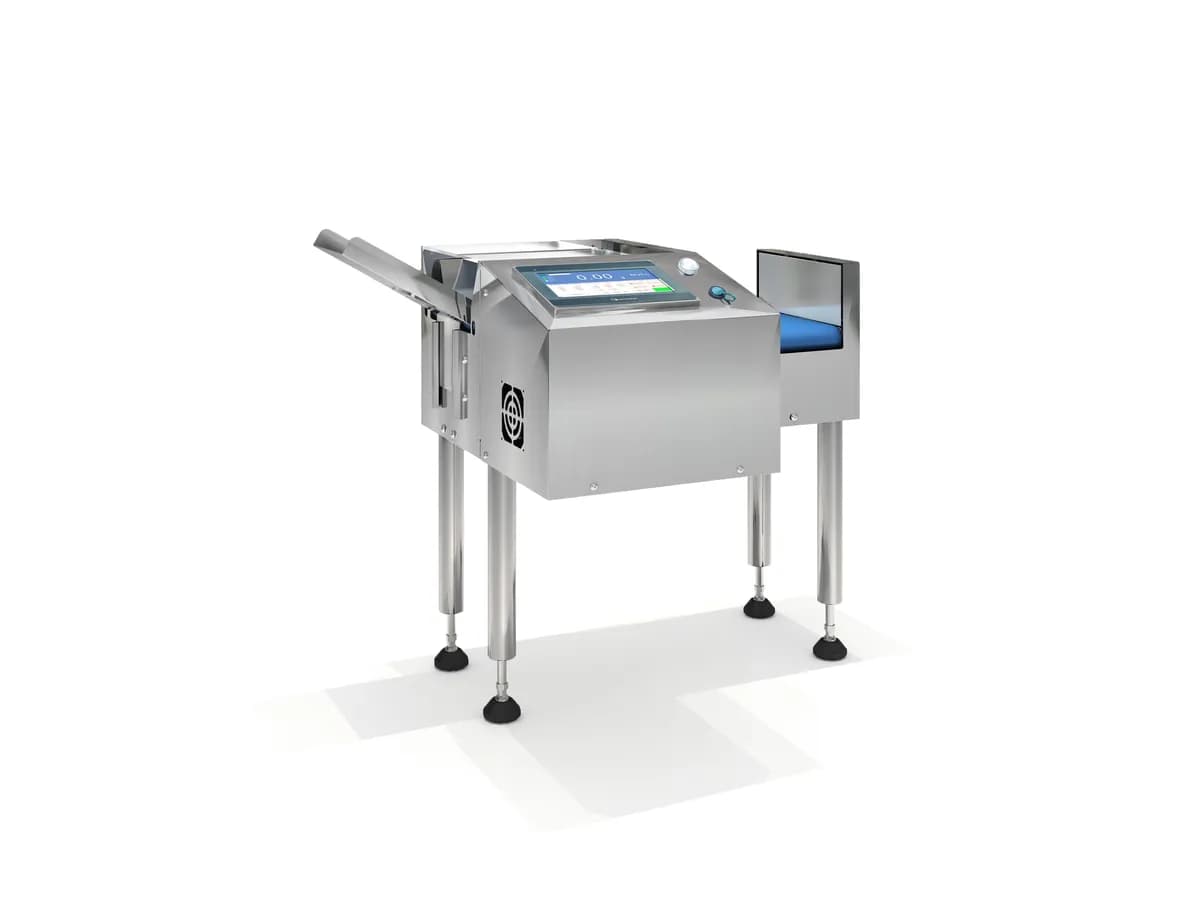
Forward-Reverse Scale Comparison
| Model | Weighing Range | Accuracy | Max Speed | Sorting Method |
|---|---|---|---|---|
| MQ-CW3523T1 | 1-1000 g | ±0.02-0.1 g | 35 packs/min | Forward/reverse belt, 1-2 sorting sections |
| MQ-CW3016F05 | 1-500 g | ±0.06-1 g | 70 packs/min | Forward/reverse belt, 2 sorting sections |
How Forward-Reverse Sorting Works
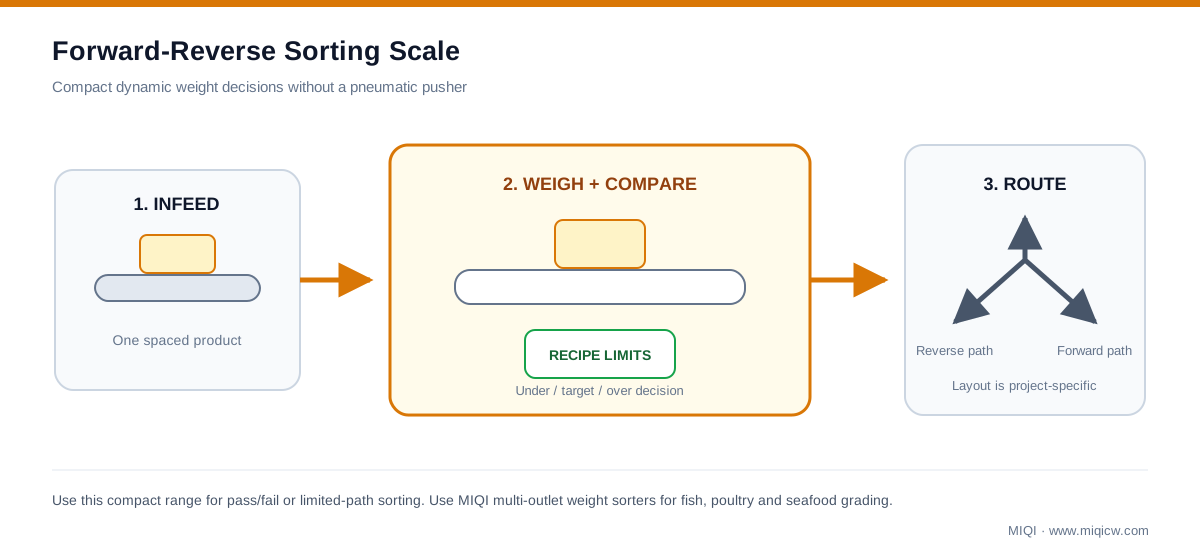
Space the incoming packs
Keep one intended pack on the weighing section and leave clearance for its complete discharge before the next arrival.
Measure and classify
Compare the dynamic result with the active target and tolerance limits. Separate the weight decision from the physical number of available outlets.
Discharge by belt direction
The agreed control sequence runs the conveyor forward or backward to the selected path. Verify transfer height, catch position and product stability.
Prove the full motion cycle
Test repeated reversals, consecutive rejects, blocked discharge and the upstream response. Rated belt speed alone does not define finished throughput.
Sorting Scale Price Factors
Forward-reverse sorting scale price depends on weighing range, accuracy target, pack dimensions, required line speed, number of discharge paths and optional data, printing or code-reading functions. Because belt reversal changes the motion cycle, the correct specification must be verified with the real product and spacing. MIQI provides a configuration quote after sample and throughput review rather than using an unsupported universal price.
Forward-Reverse Sorter Selection
Limited paths or multiple weight grades?
Use this family for suitable forward/backward discharge layouts. A product requiring several distinct weight-class collection points belongs in the multi-outlet weight-grading range.
Belt reversal or a pusher?
Belt direction avoids a side-impact pusher at the sorting point, but reversal occupies time and discharge space. Compare both arrangements with actual pack stability and line rate.
Product size and transfer clearance
Check pack footprint against the weighing section, overhang, center of gravity and receiving container. A product within the weight range may still be unsuitable for the transfer.
What happens when the next pack arrives?
Agree upstream hold/release, minimum spacing and the response to a blocked outlet. Confirm that a reversed pack cannot collide with the following product.
Forward-Reverse Sorting Applications
Small hardware and kit verification
The system uses total weight to separate complete sets from packs with missing or extra small components.
Herbal and medicine pouches
MQ-CW3016F05 is documented for traditional Chinese medicine decoction-piece packs requiring rapid weight screening.
Light packaged goods
Underweight, target and overweight decisions can be routed through a compact conveyor arrangement.
Lines without compressed air
The weighing belt provides the diverting movement, avoiding a pneumatic pusher at the sorting point.
Delicate or unstable packs
A product trial determines whether controlled belt direction is gentler and more reliable than a side-impact rejector.
Related Weight Sorting Equipment
Frequently Asked Questions
How does a forward-reverse sorting scale work?+
The product is weighed dynamically, the controller compares the result with the selected recipe limits, and the weighing conveyor then runs in the programmed direction to discharge the product. The exact outlet arrangement is designed around the line layout and product flow.
Is a forward-reverse sorter a food grading machine?+
It can route a limited set of weight decisions through the configured discharge arrangement. Several independently collected weight grades require a multi-outlet weight sorter. Choose by required collection paths, product handling and throughput.
Why use belt reversal instead of a pusher?+
Belt reversal can remove the need for compressed air and a side-impact mechanism. It may suit compact layouts or products that should not be struck by a pusher. Speed, product stability and discharge clearance must be confirmed with samples.
Which model is more suitable for very small packs?+
MQ-CW3016F05 covers 1-500 g at up to 70 packs/min, while MQ-CW3523T1 covers 1-1,000 g at up to 35 packs/min with a finer stated accuracy range. The right choice depends on pack footprint, target tolerance and real line conditions.
Can underweight, acceptable and overweight mean three outlets?+
Not automatically. Three software decisions do not establish three physical discharge paths. Confirm the belt sections, directions and receiving layout in the machine drawing.
How should throughput be verified?+
Run representative products with the agreed spacing and include repeated direction changes, consecutive rejects and outlet-full conditions. Evaluate completed packs per minute and stable transfers.
Ship us your product — free on-machine accuracy test with video proof
Free sample testing · OEM & custom design · 2-year warranty · Worldwide shipping