Is Metal Detection a CCP or a PRP? The Question Every Quality Manager Asks and No Equipment Vendor Answers
Metal detection can serve different roles in a documented food-safety system. Use hazard analysis, validated control limits and the applicable HACCP or food-safety standard to distinguish CCP, PRP and operational PRP responsibilities before selecting a detector and reject configuration.
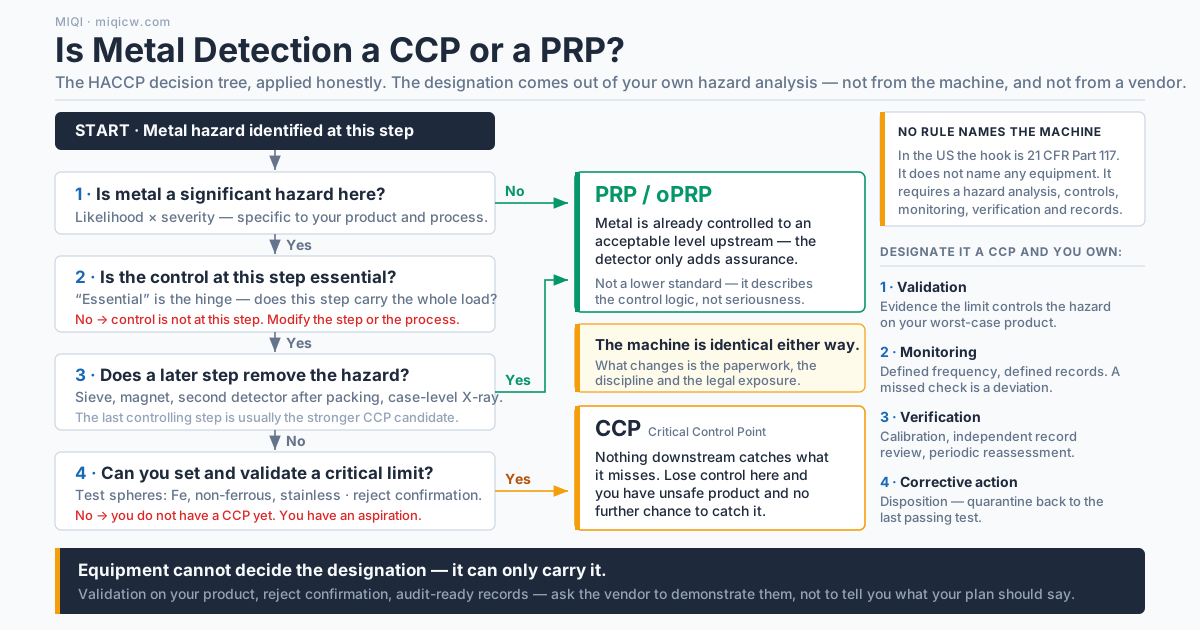
The designation comes from the site’s hazard analysis and the applicable food-safety system, not from the detector model. Where control at a step is essential to prevent or reduce a significant hazard to an acceptable level, the HACCP team assesses it as a possible CCP using its decision method. An oPRP is an ISO 22000 concept with its own categorisation criteria; it is not simply a lower-risk name for any extra detector. Neither being the last machine nor having an upstream control determines the answer alone.
The facility hazard analysis determines the control classification. Once metallic-contaminant inspection is justified, compare food metal detection systems and use Food Metal Detector Testing, Sensitivity and Validation: A Line-Side Guide to define challenges, reject confirmation and records for the installed line.
Why this question refuses to die
The same detector can play different roles in different documented food-safety systems. Start with the facility’s process flow and hazard analysis, then use the definitions and decision method of the applicable standard. A discussion forum or a vendor article is not an authority for your plant’s classification.
Equipment suppliers can describe performance, rejection functions and records. The food-safety team remains responsible for selecting and validating the control and documenting its classification.
CCP, PRP, oPRP: three words that are not interchangeable
A prerequisite program is the baseline hygienic and operational condition that makes safe food production possible at all: sanitation, pest control, glass and brittle plastic policies, preventive maintenance, supplier approval, employee practices. PRPs are not targeted at one specific significant hazard at one specific step. They hold the whole environment at an acceptable level.
A CCP is a step where an essential control measure addresses a significant food-safety hazard. Its identification follows the hazard analysis and the applicable decision method. A CCP need not simply be the last machine on the line; effective measures at different steps may work together.
Operational PRP is a classification used in systems such as ISO 22000. Do not define it simply as a control whose failure cannot make food unsafe, or distinguish it from a CCP only by whether monitoring is observational. Use the adopted standard’s categorisation method and documented control criteria; scheme-specific requirements need their current authoritative text.
Notice that all three definitions are about your process. None of them is about a machine. This is the entire source of the confusion: buyers ask a question about equipment, and the answer lives in a document they wrote themselves.
Common misconceptions versus fact
In the United States, 21 CFR 117.80(c)(8) requires adequate measures against metal or other extraneous material. Part 117 also addresses equipment and process conditions. These provisions do not universally require a particular detector on every food line; the applicable controls depend on the facility, product and hazard analysis.
Misconception: "Our certification scheme says the metal detector must be a CCP." Fact: certification standards are copyright documents, and most of what circulates online is third-party paraphrase of clauses people have not read in the original. Do not let a supplier — including us — tell you what your scheme's clause says. Buy the standard, read the clause, and ask your certification body in writing how they interpret it for your product category. That written answer is worth more than any vendor's opinion.
Misconception: "If we call it a PRP, we are lowering our standard." Fact: designation is a description of the control logic, not a measure of seriousness. A misdesignated CCP is arguably worse than an honest PRP, because a CCP that you cannot validate, cannot hold to a critical limit, and cannot defend under audit becomes a documented failure to control a CCP — a far more serious finding than a well-run prerequisite program.
Misconception: "The detector rejects metal, so it eliminates the hazard." Fact: a metal detector does not eliminate metal. It detects and diverts. It reduces the probability that contaminated product reaches the consumer, subject to sensitivity, orientation effects, product effect, and the reliability of the reject mechanism. If your CCP narrative claims elimination, an auditor who knows the physics will take it apart.
A supplier cannot designate your plant’s CCP from a catalogue. Ask for the evidence needed by your food-safety team: tested sensitivity, product effect, reject confirmation and available record functions. Agree on the configuration before using it in a control plan.
Walking the decision logic honestly
The classic HACCP decision tree is a sequence of questions applied to a step, after the hazard analysis has already been done. Applied to metal detection, it goes roughly like this.
Is metal a significant hazard for this product and process?
Significance is a function of likelihood and severity, and both are specific to you. A plant that grinds, mills, cuts, sieves, or runs product past wear surfaces has a different metal risk profile than a plant that receives sealed intermediates and only fills them. Raw material history matters. Incident history matters. Maintenance regime matters. If your hazard analysis cannot honestly call metal a significant hazard, the detector is not a CCP no matter how expensive it was.
Is there a control measure at this step, and is it essential?
Assess whether a later step actually controls the same hazard to the required level. A magnet, sieve, second detector or X-ray system is not automatically an equivalent safeguard. More than one step may be essential; document the evidence and interaction rather than automatically assigning only the last step.
Can you set and measure a critical limit?
Critical limits must be validated and may be measurable or observable under Codex guidance. For detection, define the test-piece material and size, product presentation, accepted detection/rejection result and monitoring procedure. Monitoring frequency and corrective actions are related controls, not automatically the critical limit itself.
What happens when it fails?
A failed check needs a predefined response: restore control, identify potentially affected product, determine the investigation window and disposition, and document release criteria. Holding product after a failed test does not by itself prove that the step is a CCP; classification still follows the hazard analysis and adopted standard.
What the designation actually costs you
Designating metal detection as a CCP is not a label. It commits you to validation — documented evidence that the chosen critical limit actually controls the hazard for your product, in your packaging, at your line speed and orientation. It commits you to monitoring at a defined frequency with defined records, and to the discipline that a missed check is a deviation, not an inconvenience. It commits you to verification: calibration, independent review of records, periodic reassessment. And it commits you to corrective action and product disposition when a test fails.
Every one of those obligations lands on the equipment. Not because a regulation names the machine, but because your own plan does. That is the honest link between this decision and equipment selection, and it is the only link worth making.
A checklist you can actually use
1. Write down the product, the process step, and the metal hazard you believe exists — with a stated source (raw material, wear part, maintenance, human).
2. Decide significance explicitly: likelihood and severity, with your reasoning and your evidence. Sign and date it.
3. Map every control for metal in the flow: magnets, sieves, filters, detectors, X-ray, visual. Mark which is last.
4. Ask whether any step after the detector removes metal. If none does, the CCP case is strong. If one does, justify which step you designate.
5. State a critical limit you can measure and defend — test piece sizes per metal type, test frequency, pass criteria, reject verification.
6. Prove you can validate that limit on your worst-case product presentation, not on a convenient one.
7. Define monitoring: who, how often, what record, what happens if a check is missed.
8. Define corrective action and disposition: quarantine back to the last passing test, investigation, release criteria.
9. Define verification: calibration, record review, reassessment trigger.
10. Ask your certification body, in writing, how they interpret their clause for your category. Keep the reply on file.
11. Only after all of the above, look at equipment. Ask the vendor to demonstrate the capabilities your plan requires — not to tell you what your plan should say.
Where equipment capability meets your decision
Once you know what your plan demands, equipment selection stops being a brochure exercise and becomes a specification exercise. If your plan calls for validation on a difficult product presentation, you need to test on your product, not a demo product. If your plan calls for reject confirmation, the reject and its confirmation must be part of the machine, not a promise. If your plan calls for records, the machine has to produce them in a form your auditor accepts.
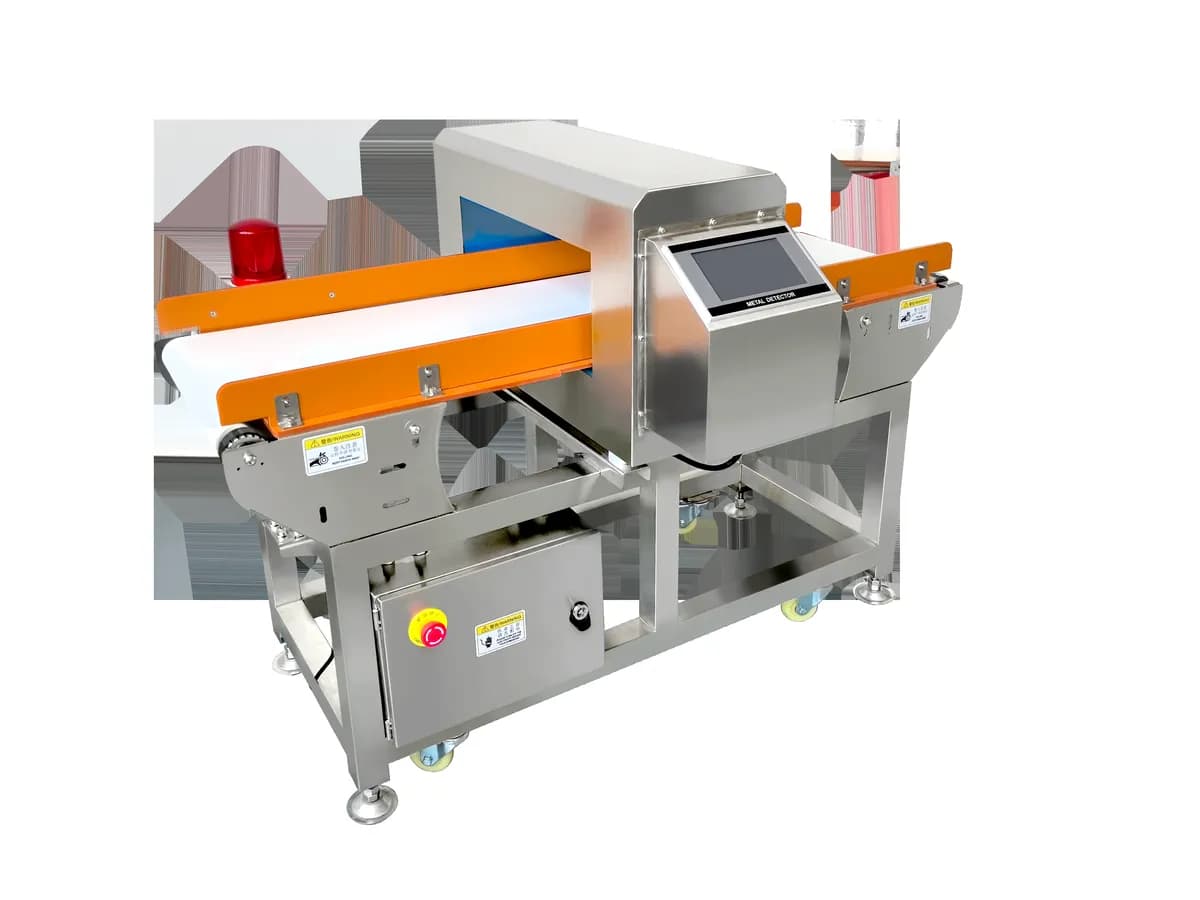
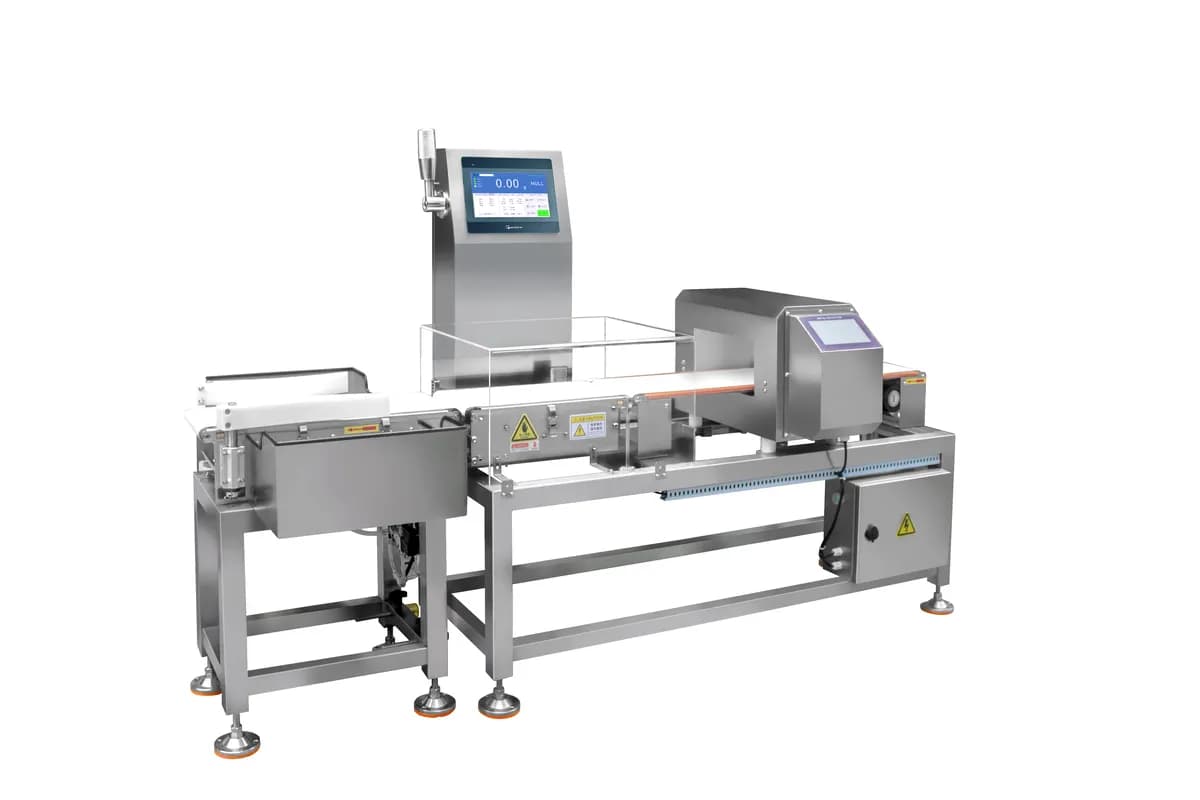
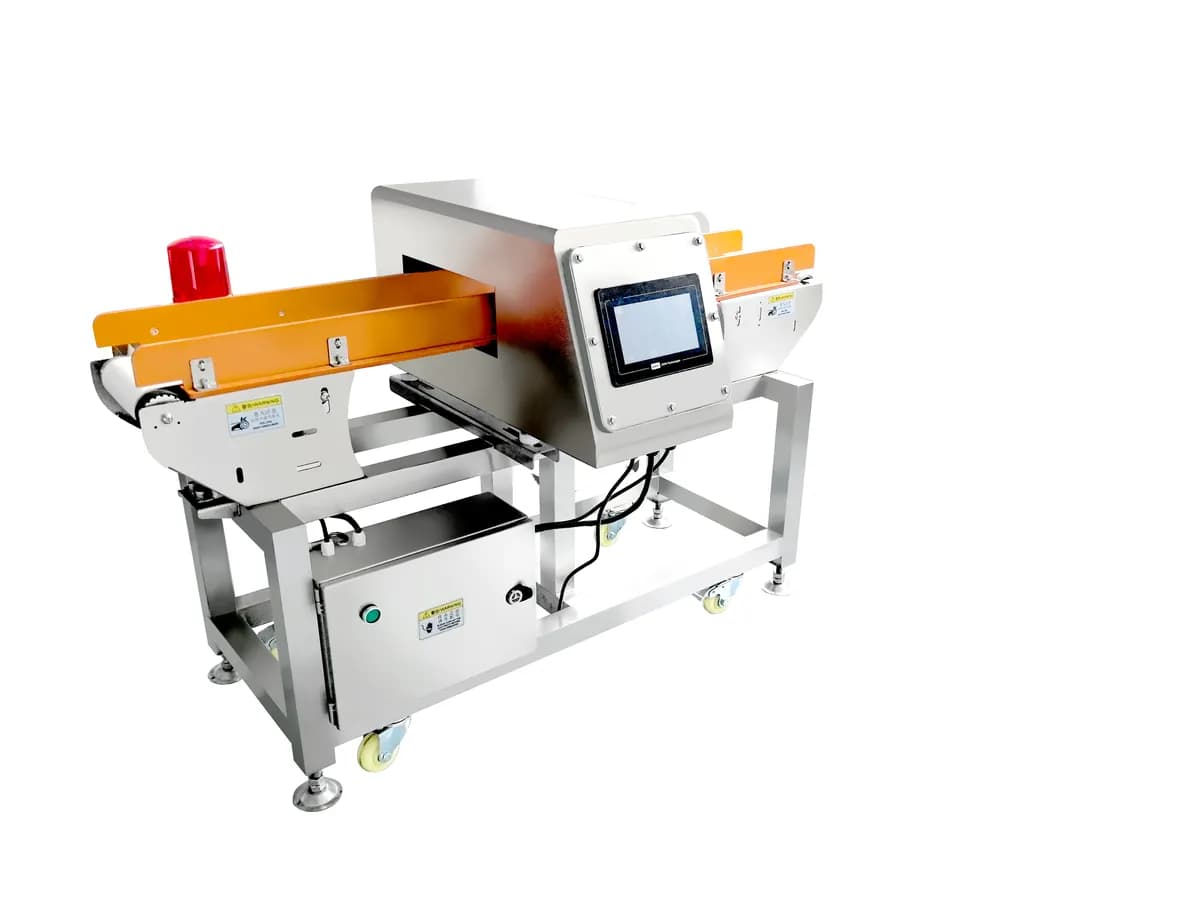
At MIQI we build metal detection to that brief rather than to a slogan. The MQ-MD-C series covers standard and non-standard custom configurations, because plans differ and lines differ. The MQ-AF-D series is built specifically for aluminium-foil packaging, which is the case where a general-purpose detector's physics work against you and an honest conversation about limits matters most. The MQ-MCL4530L2 is a combined metal detection and checkweighing unit, for lines where a single station has to serve both a metal control step and net-content control. We are a source factory, we support free sample testing on your actual product, and we build non-standard configurations. For transparency: MIQI has not yet obtained CE or ISO 9001 certification, and we will not imply otherwise — ask us for what we can demonstrate, and judge us on the test results.
The uncomfortable conclusion
If you came here hoping a vendor would tell you "yes, it's a CCP, here's the machine," we have disappointed you on purpose. The designation is yours. It is the output of a hazard analysis only you can perform, on a process only you know, defended to an auditor only you will face. What a vendor can honestly do is make sure that whichever way you decide, the equipment can carry the obligations you have written for it — and tell you plainly when it cannot.
If you want to talk through what your plan actually requires from the hardware, before anyone quotes you a price: WhatsApp +86 152 1890 9599, or email 897874196@qq.com. Send us your product and your line conditions and we will test it. Engineer Cai, MIQI.