Metal Separator
Free-fall metal separator: Fe detection down to 0.1mm, throughput up to 5000kg/h — the metal gatekeeper for granular materials
Metal Separator (MQ-MC) — accuracy 25. Factory-direct from Guangdong, China. OEM & custom available.
Typical applications: Grains and nuts, pharmaceutical tablets and capsules, plastic pellets for injection molding; interfaces with upstream and downstream equipment such as injection molding and packaging machines
Key Features
- ✓High-sensitivity anti-interference probe detects 100% of 0.3mm all-metal contaminants (ferrous, stainless steel, etc.) with real-time signal strength visualization
- ✓Adapts to new materials in seconds; stores 200 parameter sets with no recalibration required at material changeover
- ✓LCD display with physical keys, 1500 inspection data records, and 5-level user access management
- ✓Integrates into production lines or runs standalone; standard stand and discharge hopper, customization supported
- ✓Optional automatic feeding system enables fully automatic separation of metal contaminants
- ✓Prevents metal contaminants from entering downstream equipment; interfaces with injection molding machines, packaging machines, and more
Why Choose MQ-MC
Even 0.1mm iron chips can't escape the probe
Small-aperture models detect ferrous contaminants down to 0.1~0.2mm and stainless steel from 0.2mm. Stainless fragments and broken needles that magnet bars can't hold are still caught by the electromagnetic induction probe. Signal strength is visualized in real time — how big the contaminant is and how close it sits to the threshold, you see it on screen instead of guessing.
Five apertures sized to your throughput
Five feed apertures from Φ25 to Φ100 cover throughputs from 250kg/h to 3000~5000kg/h: a Φ25 unit is enough beside a small injection molding machine, while a Φ100 handles central feeding systems and high-output pelletizing lines. Smaller apertures deliver higher sensitivity — balance capacity against precision when selecting, and never pay for range you won't use.
0.3~5s adjustable reject, less good product lost
Rejection is driven by compressed air, with reject time continuously adjustable from 0.3 to 5 seconds: shorten it for fast-flowing material to avoid ejecting too much good product; lengthen it for sticky, slow-falling material to make sure contaminants are removed completely. Reject volume stays under control and waste losses come down.
200 recipes — no recalibration at changeover
Different materials have different electromagnetic signatures, and the traditional fix is a skilled technician recalibrating the machine at every changeover. This unit stores 200 material parameter sets — simply recall the recipe number when switching products and adapt in seconds. High-mix, low-volume workshops no longer wait around for machine tuning.
1500 records + 5-level access, fully traceable
The LCD display with physical buttons stays easy to operate even with gloves on. The machine auto-logs 1500 detection records under 5 levels of operator and management access — who changed which parameter, how much each batch rejected, it is all on file and undeniable. When customer audits or system certifications ask for detection records, pull them up on the spot.
-10℃ to 80℃: hot or cold material, no waiting
With a working temperature range of -10℃ to +80℃, hot pellets fresh from the dryer and low-temperature material out of cold storage pass straight through — no waiting for the material to cool. Power is 220V and air supply 3~6Bar: plug into your existing workshop utilities and run.
Problems It Solves for You
Broken blades and screws hidden in recycled regrind get into the injection molding machine and score the screw and barrel — one repair plus downtime losses runs into tens of thousands
Mounted directly above the injection machine's feed inlet, the unit inspects material as it free-falls; 0.1~0.5mm metal contaminants are ejected by the compressed-air separation valve before they ever reach the screw, protecting downstream equipment.
Food and pharma plants relying on magnet bars alone catch the iron but let stainless mesh fragments and broken 304 wire pass straight through — customers find metal in finished goods, triggering complaints, fines and full-batch recalls
The electromagnetic induction probe detects both ferrous and stainless steel, with SUS sensitivity from 0.2mm on small-aperture models — closing the stainless gap that magnet bars leave open and completing your metal defense line.
Frequent changeovers between granular materials mean recalibrating sensitivity every single time — half an hour of waiting, and only with an experienced technician on hand
With 200 stored material recipes, changeover is simply recalling a number and starting up. No dependence on individual expertise — changeover waiting drops from half an hour to seconds.
Customer audits demand metal detection records, but handwritten logbooks are full of missed and back-filled entries — no continuous data available on audit day, and a nonconformity gets raised
The machine automatically retains 1500 detection records under 5-level access control that prevents tampering. Pull the original records directly during the audit and keep the traceability chain fully intact.
Technical Specifications
| Product model | MQ-MC-25; MQ-MC-30; MQ-MC-50; MQ-MC-70; MQ-MC-100 |
|---|---|
| Cutting diameter | MQ-MC-25:Φ25mm; MQ-MC-30:Φ30mm; MQ-MC-50:Φ50mm; MQ-MC-70:Φ70mm; MQ-MC-100:Φ100mm |
| Material throughput | MQ-MC-25:250KG/Hr; MQ-MC-30:300~400KG/Hr; MQ-MC-50:700~800KG/Hr; MQ-MC-70:1000~1500KG/Hr; MQ-MC-100:3000~5000KG/Hr |
| Power supply | 220V,50/60Hz |
| Compressed-air pressure | 3Bar~6Bar |
| Operating temperature | -10℃~+80℃ |
| Discharge time | Adjustable from 0.3-5 seconds |
| Discharge mode | Free fall |
| Ferrous (Fe) detection accuracy | MQ-MC-25:0.1~0.2mm; MQ-MC-30:0.2~0.3mm; MQ-MC-50:0.3mm; MQ-MC-70:0.5mm; MQ-MC-100:0.8mm |
| Stainless-steel (SUS) detection accuracy | MQ-MC-25:0.2mm; MQ-MC-30:0.3~0.4mm; MQ-MC-50:0.5~0.6mm; MQ-MC-70:0.8~1.0mm; MQ-MC-100:0.8~1.0mm |
Functions in Detail
Detection & Rejection Principle
Material free-falls through a ring probe — no conveyor, no powered parts, a simple structure with few failure points. When metal is detected, a separation valve driven by 3~6Bar compressed air diverts the contaminant along with a small amount of material into the reject port; reject time is adjustable from 0.3~5s, while good material continues falling straight through to downstream equipment without interrupting production.
Five-Model Selection Guide
Φ25 aperture: 250kg/h throughput, Fe sensitivity 0.1~0.2mm; Φ30: 300~400kg/h, Fe 0.2~0.3mm; Φ50: 700~800kg/h, Fe 0.3mm; Φ70: 1000~1500kg/h, Fe 0.5mm; Φ100: 3000~5000kg/h, Fe 0.8mm. Higher throughput calls for a larger aperture; for sensitivity-critical materials, size down to the smaller aperture.
Parameters & Data Management
LCD screen with physical buttons — more reliable than a touchscreen in dusty, oily environments. Stores 200 material recipes for instant recall at changeover; auto-logs 1500 detection records under 5-level access control, so operators, shift leaders and engineers each work within their own level. Every parameter change and rejection event is fully traceable, satisfying factory audit requirements.
Installation & Line Integration
Supplied as standard with a stand and feed hopper, it works freestanding or embedded in an existing line. Paired with an automatic feeding system, feeding, detection and separation run fully unattended. The outlet connects directly to injection machines, packing machines and other equipment — match the aperture to your line piping and it installs ready to run. Custom builds are available for non-standard conditions.
Environment & Utility Requirements
Working temperature -10℃~+80℃ — hot pellets straight from the dryer need no cooling before passing through, and low-temperature workshops run just as well. The anti-interference probe design keeps sensitivity stable even near motors and variable-frequency drives. Power is single-phase 220V 50/60Hz with a 3~6Bar air supply — ordinary workshop utilities require no modification to install.
Industries & Application Scenarios
Installed above the injection machine hopper to inspect virgin and recycled regrind material before feeding, ejecting broken needles and blade fragments to prevent screw and barrel damage. Integrates with central feeding systems and automatic loaders.
For high-output pelletizing lines, choose the Φ70 or Φ100 model with 1000~5000kg/h throughput as the final metal check on finished pellets between pelletizing and packing — preventing contaminated product from shipping and being returned by downstream customers.
Rice, beans, nuts and other bulk raw materials fed by elevator free-fall through the unit, which removes wire, nuts and bolts picked up during harvesting and conveying. The outlet sits ahead of the packing machine and connects directly to the packaging line.
Tablets and capsules pass through a small-aperture model before filling or counting; the listed Fe and SUS sensitivity depends on the selected aperture and test conditions. Retained detection data can support the facility's documented GMP traceability procedures.
Sugar, salt and seasoning granules are inspected before filling and packing, with reject time tuned to material flowability — removing contaminants cleanly without dragging out good product. Pairs with vertical form-fill-seal and premade-pouch machines as an inline defense.
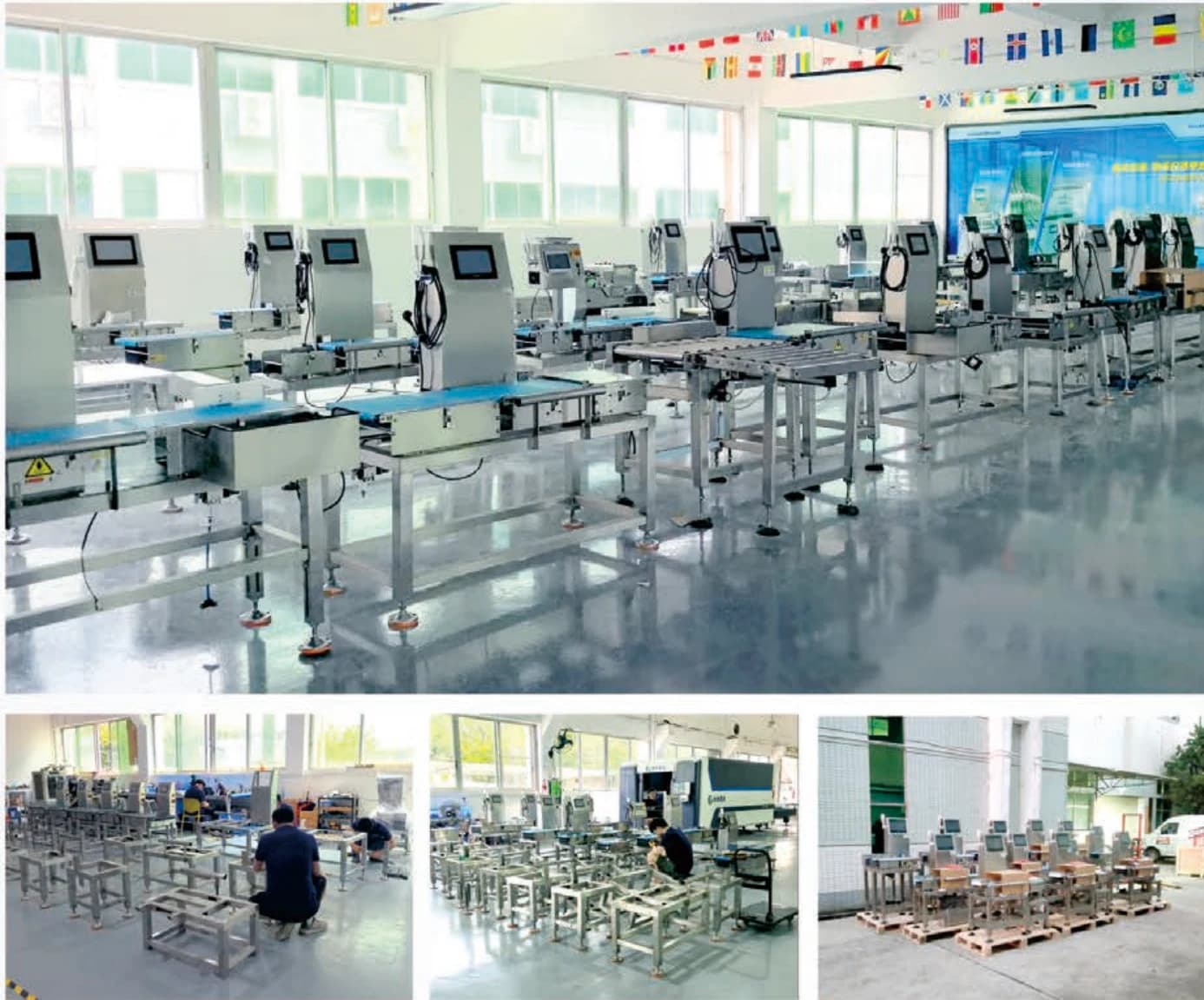
Own Factory · Seeing Is Believing
Guangdong Miqi designs, builds and tests every machine in-house — each unit is bench-tested before shipment. Free sample testing, on-site factory visits and live video of the running machine are all welcome.
Compare this model with other configurations in food metal detection systems.
Further reading
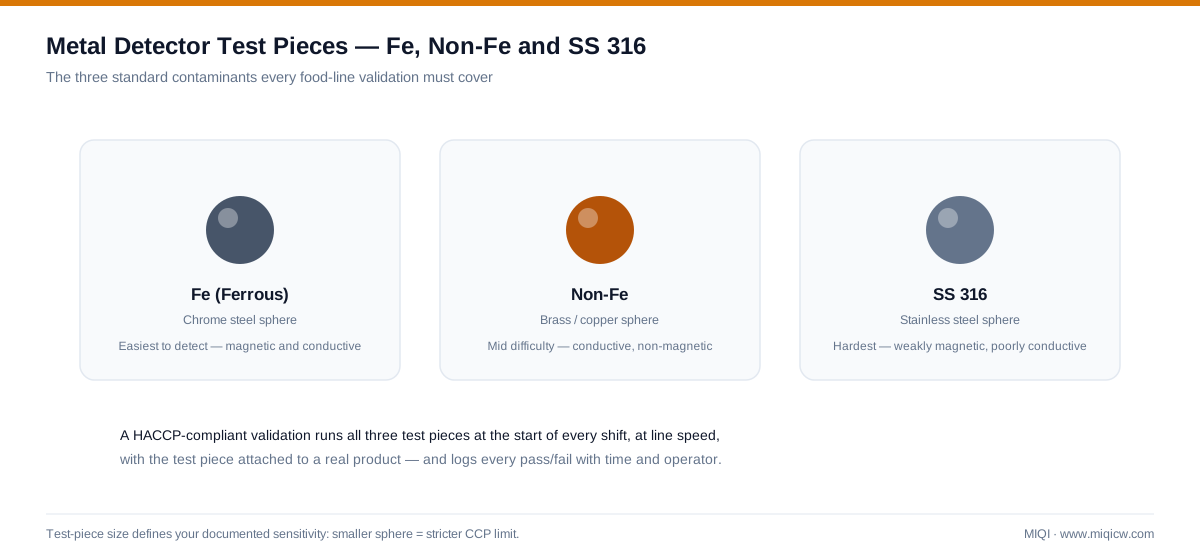
Food Metal Detector Testing, Sensitivity and Validation: A Line-Side Guide
A meaningful food metal detector test uses certified ferrous, non-ferrous and stainless-steel test pieces in the actual product, at the least favourable position, and confirms both detection and rejection. This guide separates routine verification from validation and explains product effect.
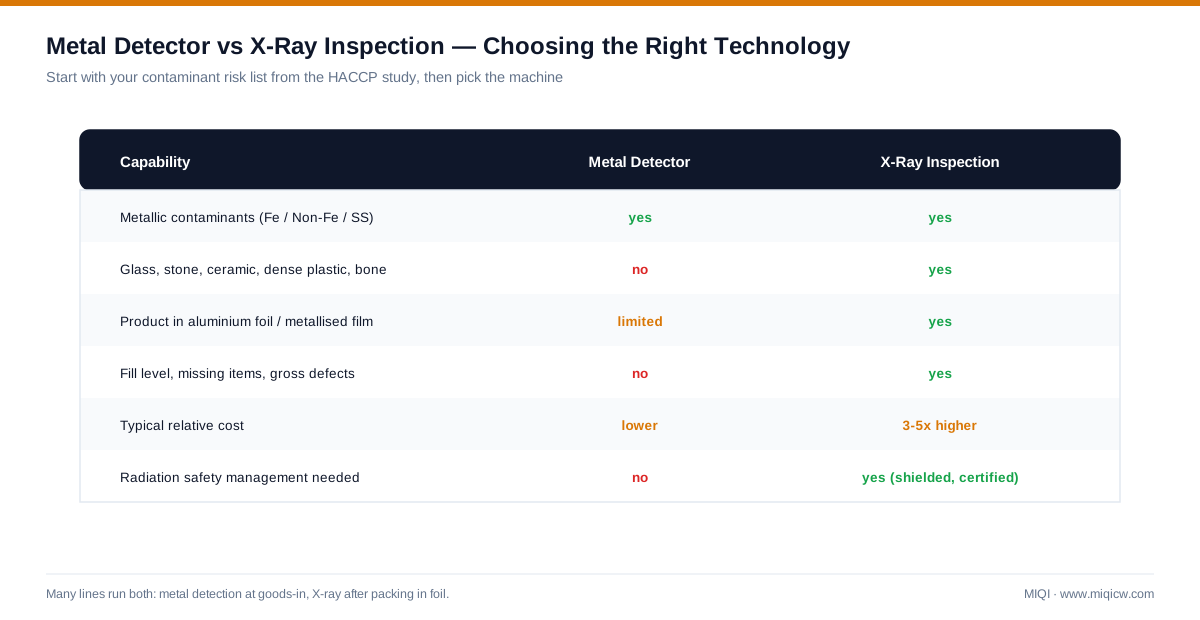
Metal Detector vs X-Ray Inspection: Which Food Inspection System Fits?
Metal detection is highly effective for metallic contaminants, while X-ray inspection responds to density contrast and may find glass, stone, ceramic and some dense plastics as well as metal. Packaging, product effect, contaminant risk, product thickness and required secondary checks decide the better technology.
Frequently Asked Questions
What is the price of Metal Separator (MQ-MC)?+
Pricing depends on the weighing range, rejection method, conveyor dimensions and selected options. Send the product weight, dimensions and line speed for a factory-direct quotation.
Does MIQI export Metal Detection worldwide?+
Yes. MIQI ships worldwide with export packing, operating documents, configurable voltage and remote commissioning support. OEM branding and application-specific engineering are available.
Tell Us About Your Product
Share your product weight range, dimensions and line speed — our engineer replies within 24 hours with model recommendation and quotation.