
Checkweigher Machines
A checkweigher machine weighs every product moving down a production line and automatically rejects any pack that falls outside its weight tolerance. MIQI manufactures 11 standard dynamic checkweigher models covering a working range from 0.1 g stick packs to 80 kg appliance cartons, with dynamic accuracy starting at ±0.02 g on the multi-lane MQ-CWP6 and belt speeds adjustable from 5 to 90 m/min. Every inline checkweigher ships with a 304 stainless steel frame (carton models in painted carbon steel), 100 stored product recipes, USB data export, and a choice of reject mechanisms: air blast, push rod, swing arm, drop-flap, or flip plate. Because MIQI builds the conveyor checkweigher, load-cell platform, and control system in its own Guangdong factory, buyers deal directly with the manufacturer for configuration changes such as belt width, reject type, three-stage sorting, or integration with metal detectors, labelers, and inkjet coders. Typical deployments run in food, pharmaceutical, e-commerce, and printing plants across more than 30 export markets.
A checkweigher is an automated conveyor scale that weighs each item in motion, compares the result against preset weight limits, and rejects out-of-tolerance products without stopping the line. Unlike a static bench scale, a dynamic checkweigher captures the weight signal in a fraction of a second while the product crosses a load-cell-mounted belt, then classifies the pack as under, accept, or over. Checkweighers are used for 100% net-content inspection, missing-component detection, and completeness checks at speeds that manual sampling cannot match.
Dynamic Checkweigher Models
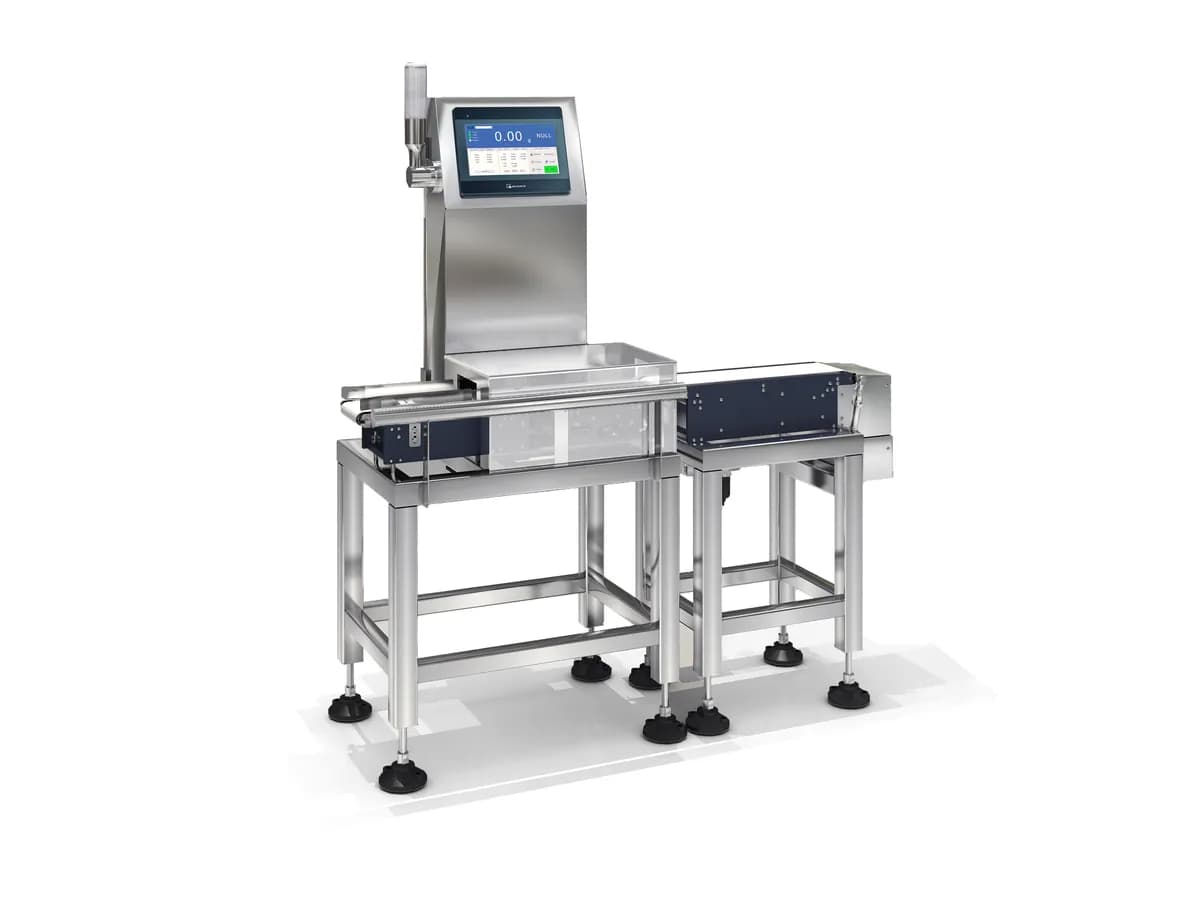
High-Precision Tablet Checkweigher
- Weighing range: 1-1000g
- Weighing accuracy: ±0.03-0.1g
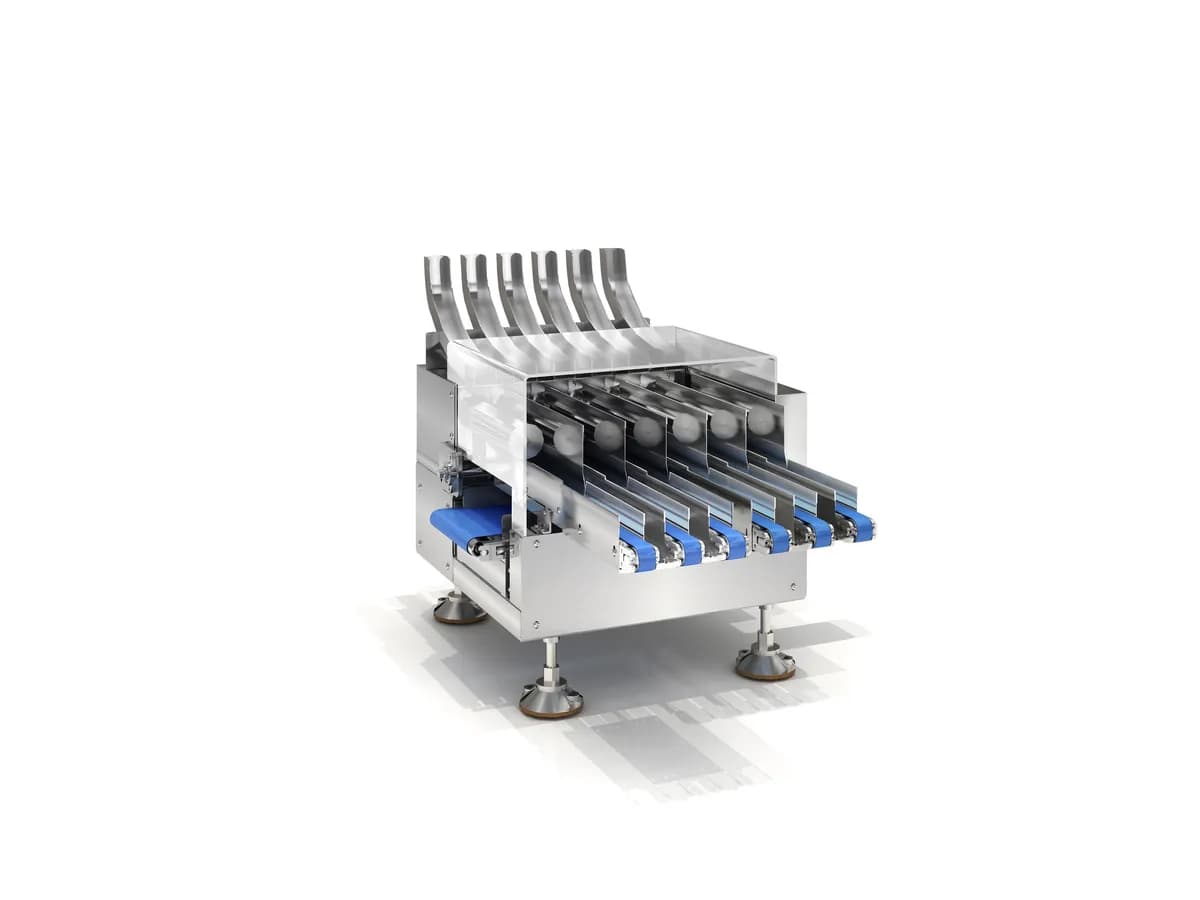
High-Precision Multi-Lane Checkweigher
- Weighing range: 0.1-100g
- Weighing accuracy: ±0.02-0.05g
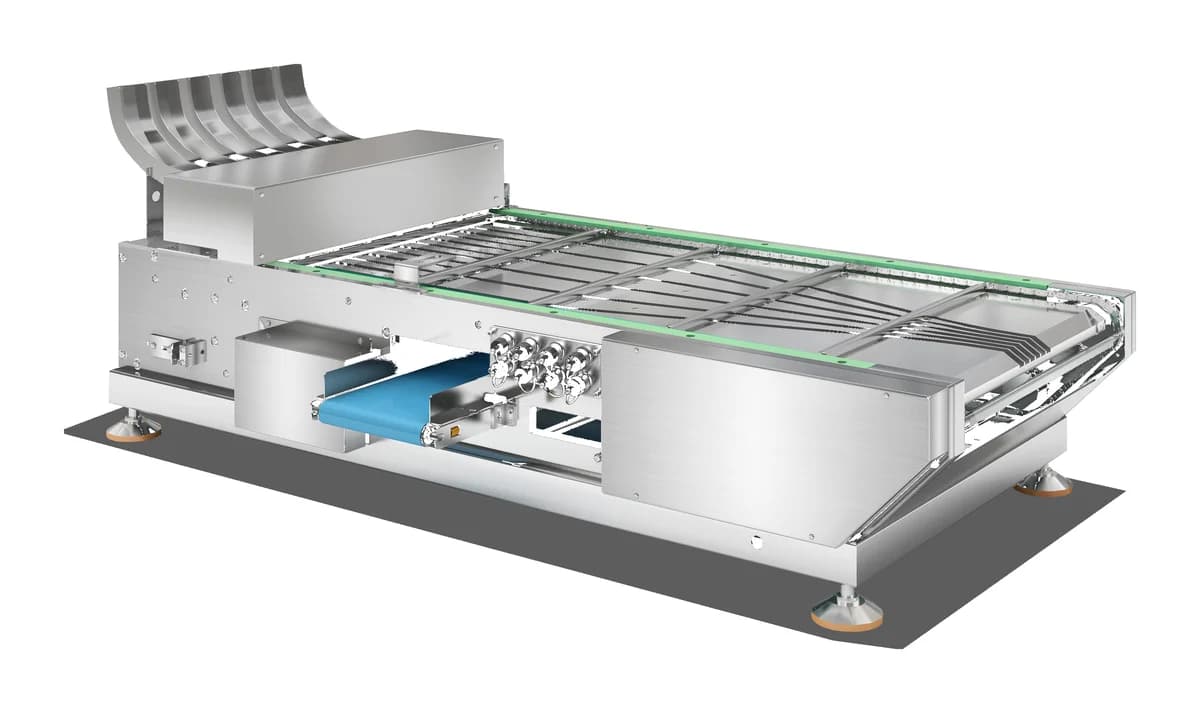
Scraper-Type High-Precision Multi-Lane Checkweigher
- Weighing range: 0.1-100g
- Weighing accuracy: ±0.02-0.05g
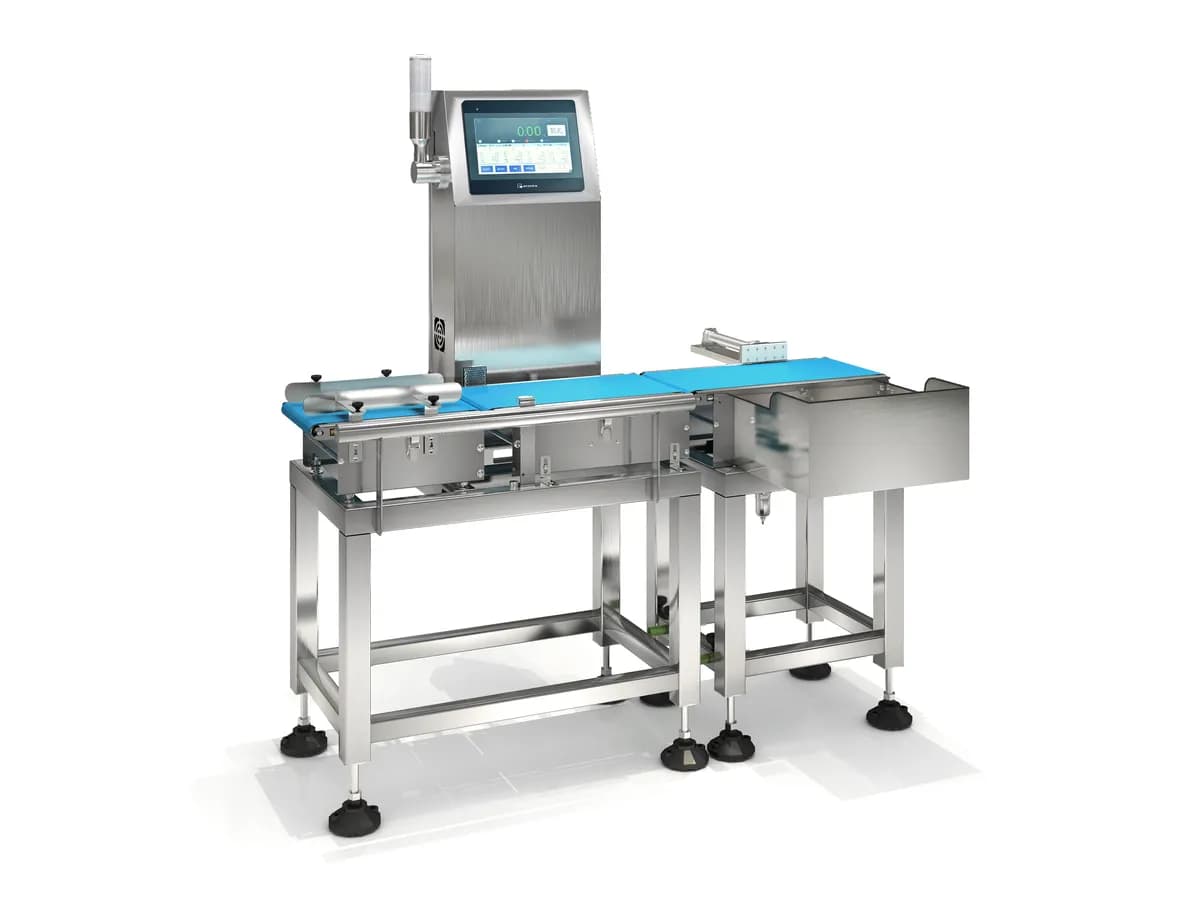
Food Missing and Extra Content Checkweigher
- Weighing range: 1-3000g
- Weighing accuracy: ±0.3-2g
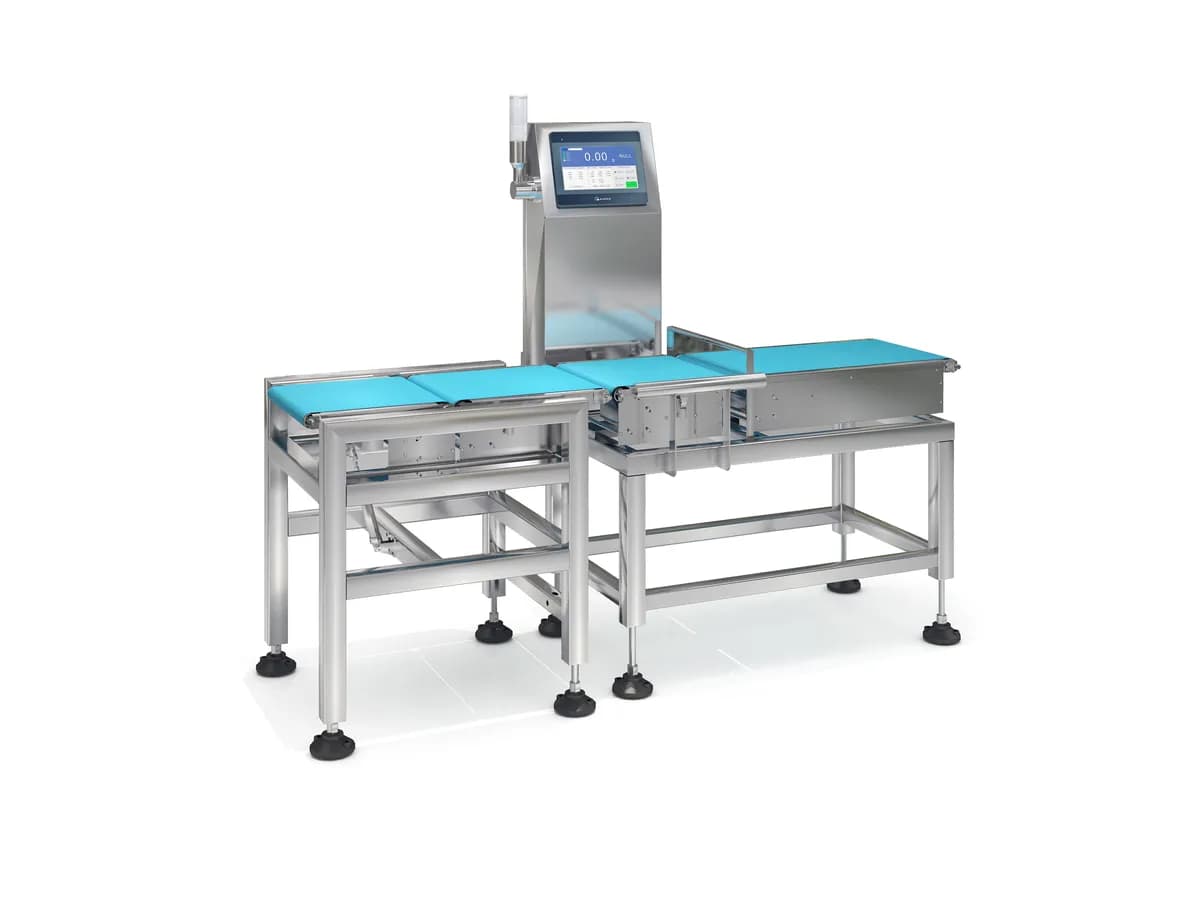
High-Speed Dynamic Book Checkweigher
- Weighing range: 1-5000g
- Weighing accuracy: ±0.5-3g
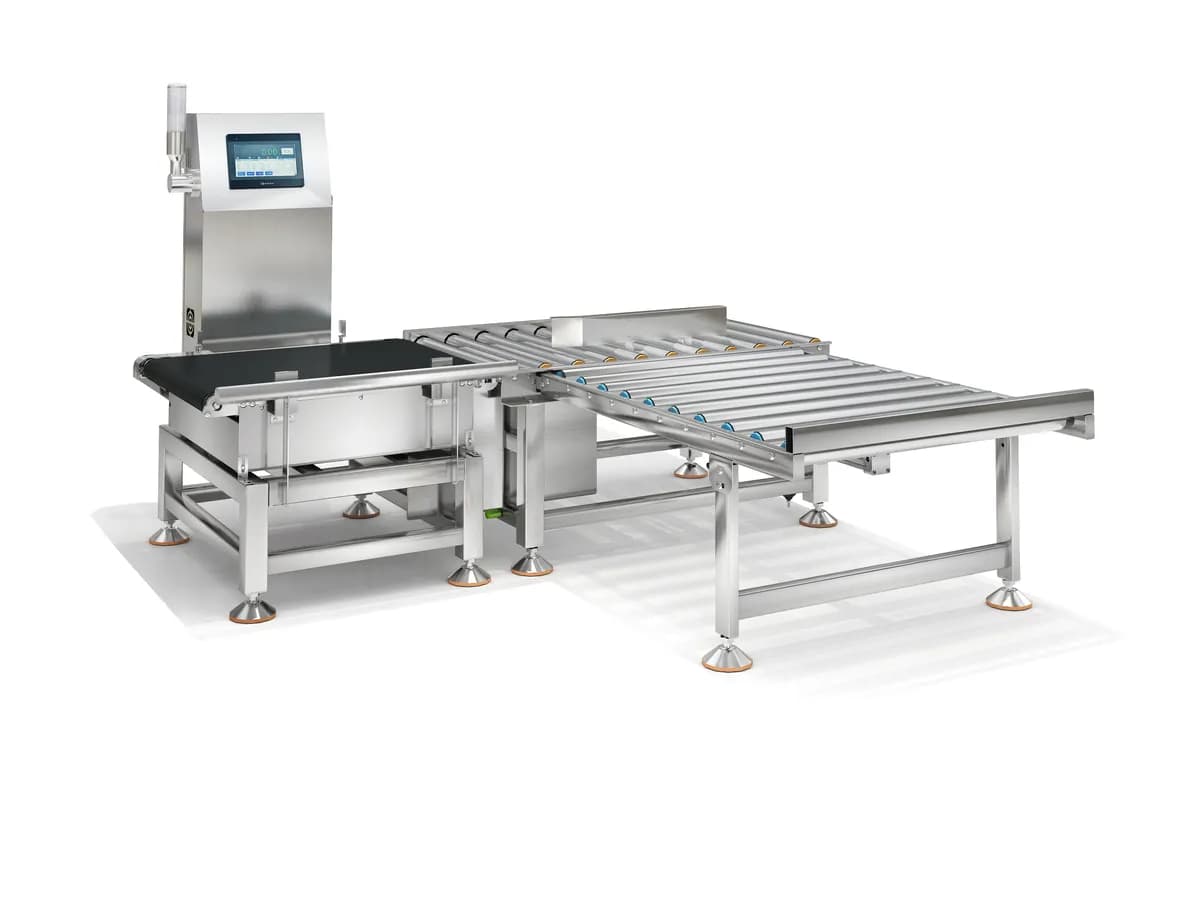
Automatic Checkweigher
- Weighing range: 0.05-30kg
- Weighing accuracy: ±3-10g
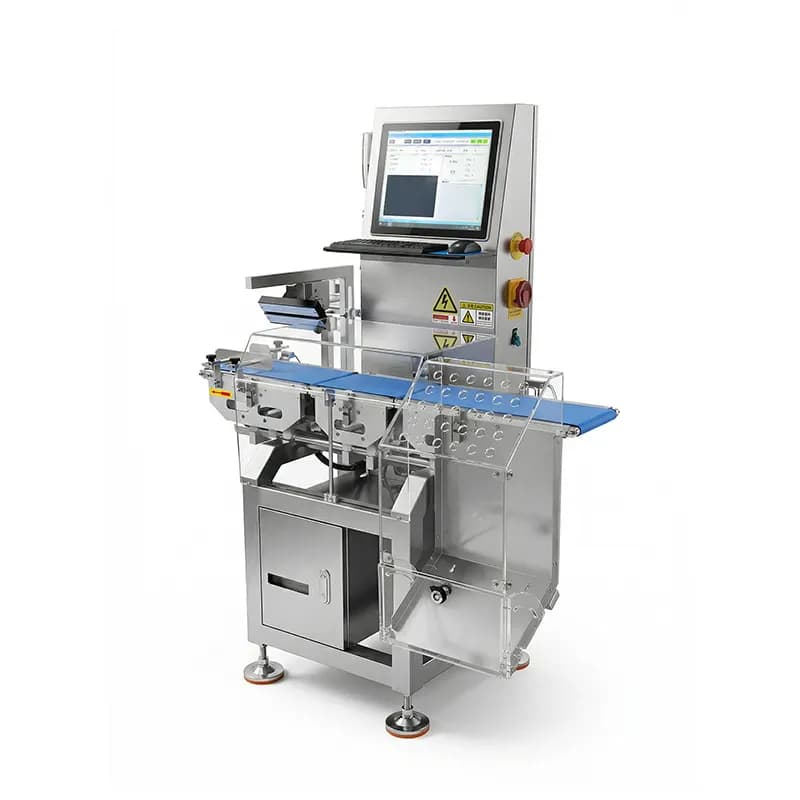
Integrated Vision Inspection and Checkweighing Machine
- Weighing range: 1-1000g
- Weighing accuracy: ±0.05-0.3g
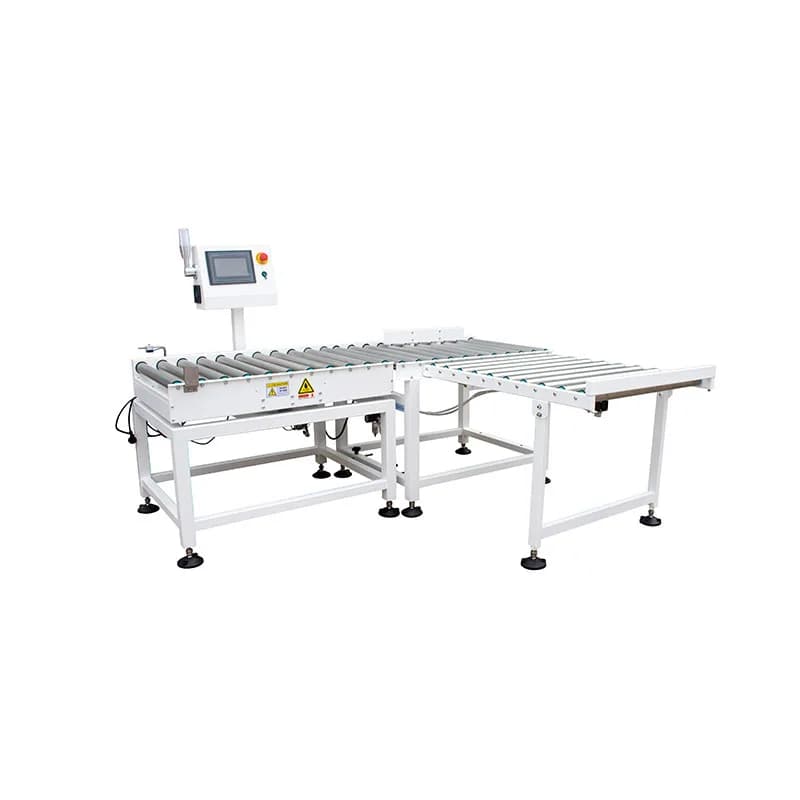
Powered Roller Checkweigher
- Weighing range: 1-30kg
- Weighing accuracy: ±15-30g
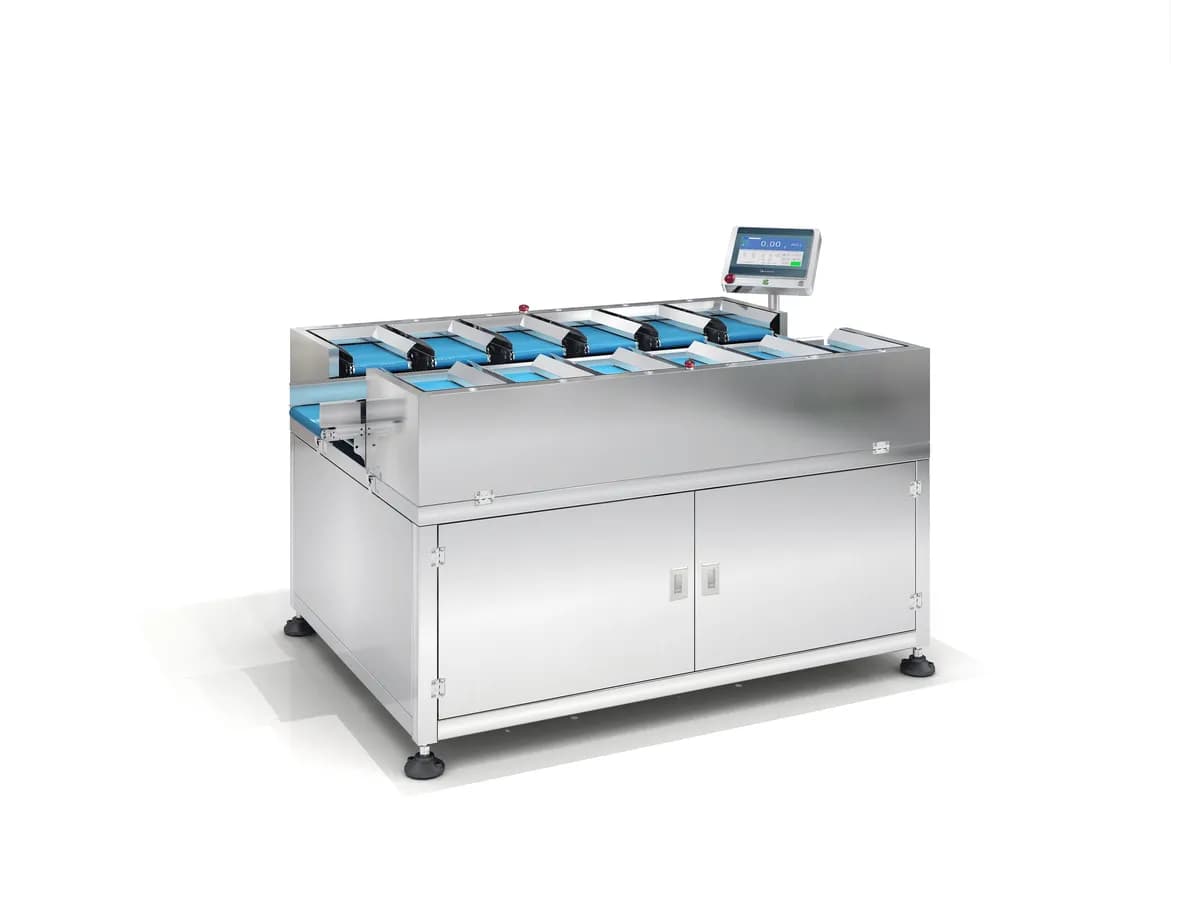
High-Precision Belt-Type Combination Weigher
- Combined weighing accuracy: ±0.1-3g
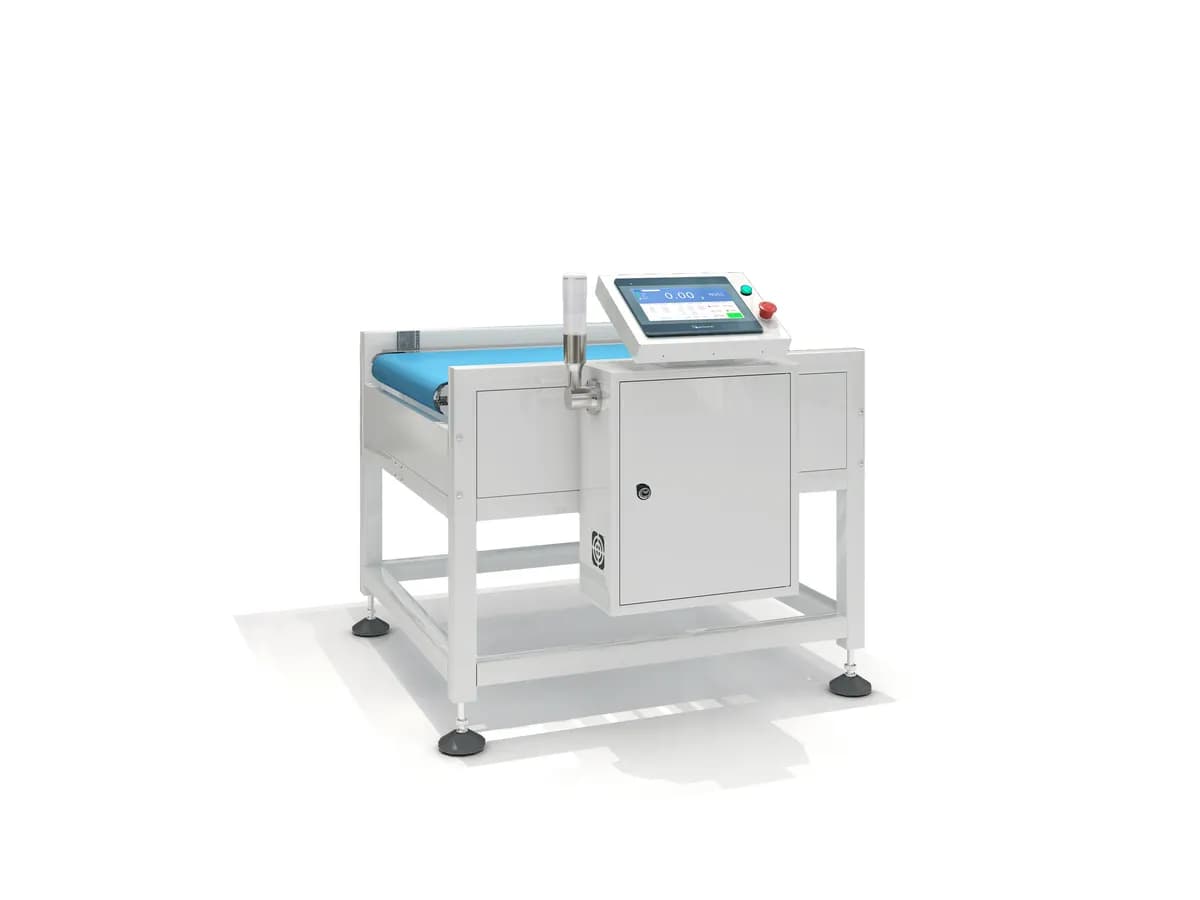
Home Appliance Carton Checkweigher
- Weighing range: 0.05-50kg
- Weighing accuracy: ±5-20g
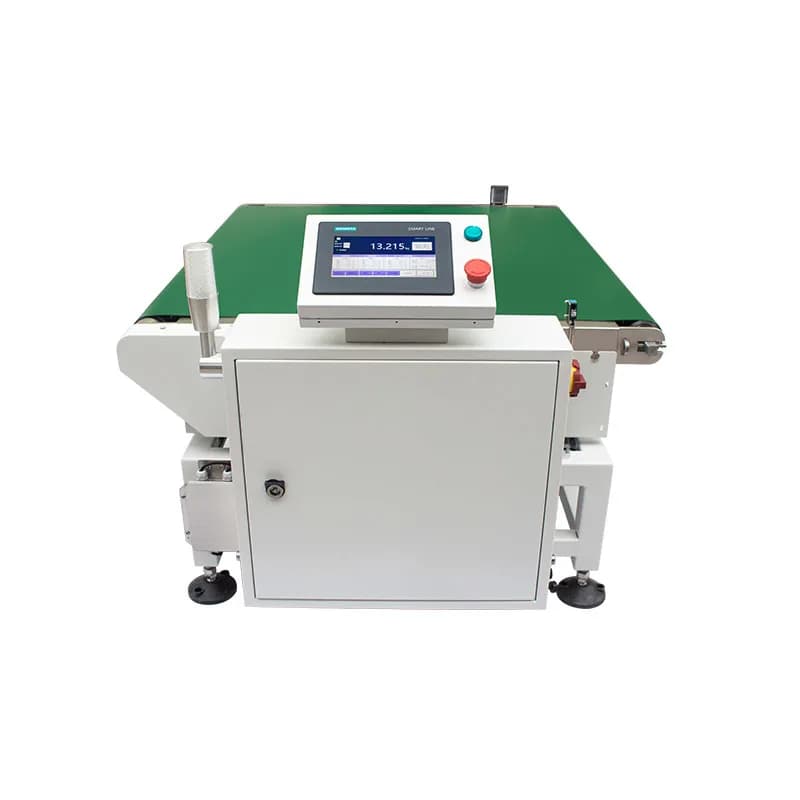
High-Precision Carton Checkweigher
- Weighing range: 1-80kg
- Weighing accuracy: ±10-30g
Dynamic Checkweigher Model Comparison
| Model | Weighing Range | Accuracy | Max Speed | Weighing Section |
|---|---|---|---|---|
| MQ-CWP6 | 0.1-100 g | ±0.02-0.05 g | 40-50 cuts/min per lane | Multi-lane, custom pitch |
| MQ-CWG6 | 0.1-100 g | ±0.02-0.05 g | 40-60 cuts/min per lane | Multi-lane, custom pitch |
| MQ-CW3512L1 | 1-1000 g | ±0.03-0.1 g | 5-90 m/min | L 350 × W 120 mm |
| MQ-CVW3253S1 | 1-1000 g | ±0.05-0.3 g | 5-90 m/min | L 350 × W 230 mm |
| MQ-MW2512B12 | 1-500 g (combined 10-2000 g) | ±0.1-3 g | 30 pcs/min | L 250 × W 120 mm, 12 heads |
| MQ-CW4523L3 | 1-3000 g | ±0.3-2 g | 5-90 m/min | L 450 × W 230 mm |
| MQ-CW6040L5 | 1-5000 g | ±0.5-3 g | 5-90 m/min | Products up to L 300 × W 400 mm |
| MQ-CW8050L30 | 0.05-30 kg | ±3-10 g | 5-90 m/min | L 800 × W 500 mm |
| MQ-CW10060L30 | 1-30 kg | ±15-30 g | 5-60 m/min | L 1000 × W 600 mm, powered rollers |
| MQ-CW10060L50 | 0.05-50 kg | ±5-20 g | 5-90 m/min | L 1000 × W 600 mm |
| MQ-CW10070L80 | 1-80 kg | ±10-30 g | 5-90 m/min | L 1000 × W 700 mm |
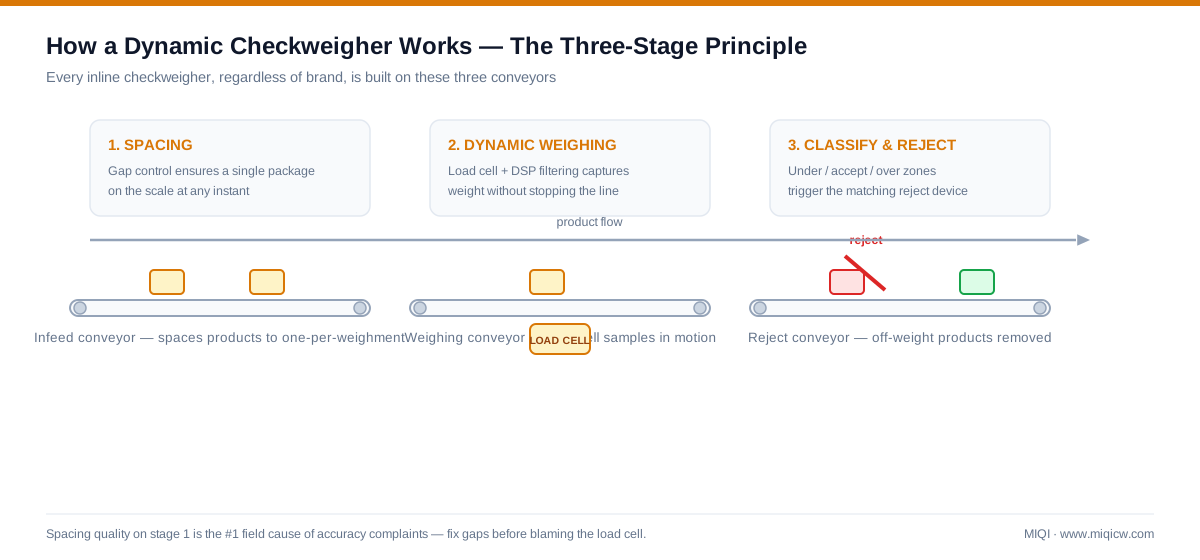
How a Dynamic Checkweigher Works
Infeed and product separation
An infeed conveyor accelerates incoming products so that a fixed gap opens between consecutive packs. Only one product may occupy the weighing section at a time; correct spacing is what allows the load cell to read a clean, single-product signal. On MIQI machines the belt speed is adjustable from 5 to 90 m/min via a variable-frequency drive, so the infeed can be matched to the upstream filler or packer without mechanical changes.
Dynamic weighing on the load-cell platform
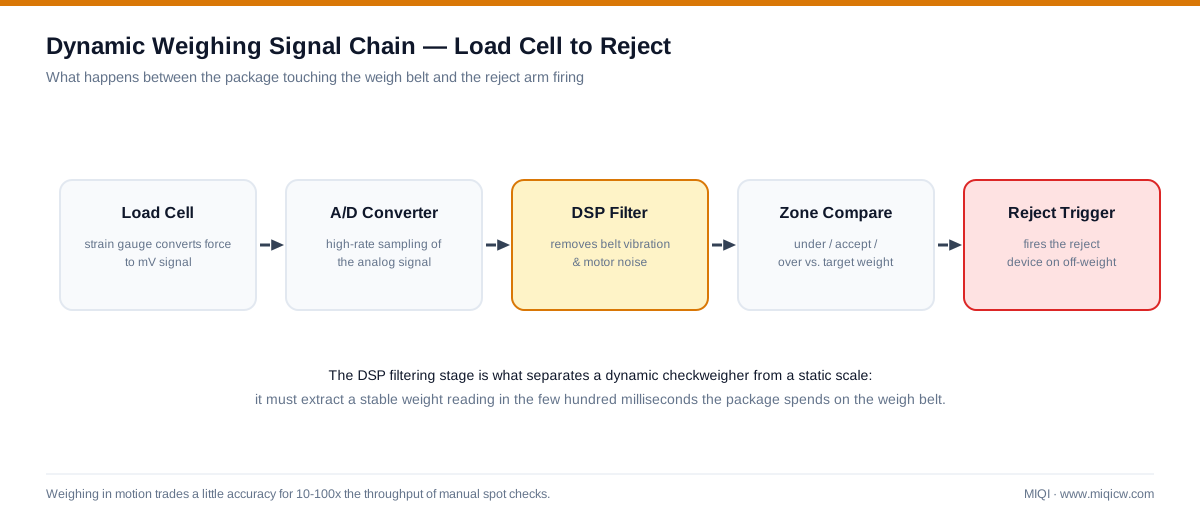
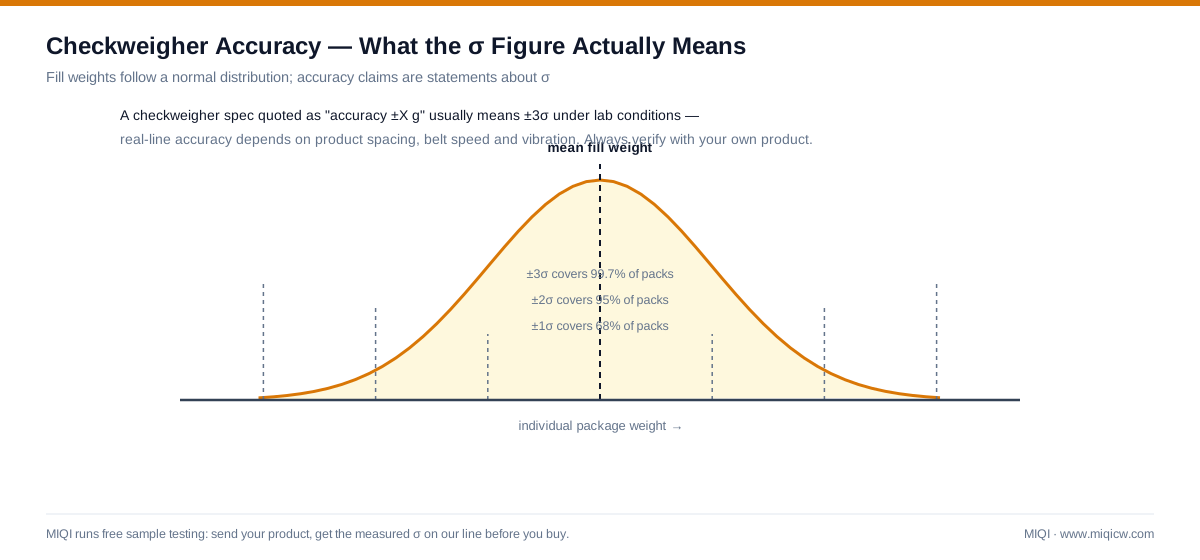
As the product crosses the weighing conveyor, a load cell beneath the belt samples the weight signal hundreds of times within the product's short transit window. Digital filtering strips out belt vibration and shock, and the controller computes a stable weight before the product leaves the platform. This is why dynamic accuracy, from ±0.02 g on MIQI's multi-lane models, is always quoted alongside the belt speed at which it was achieved.
Comparison and classification
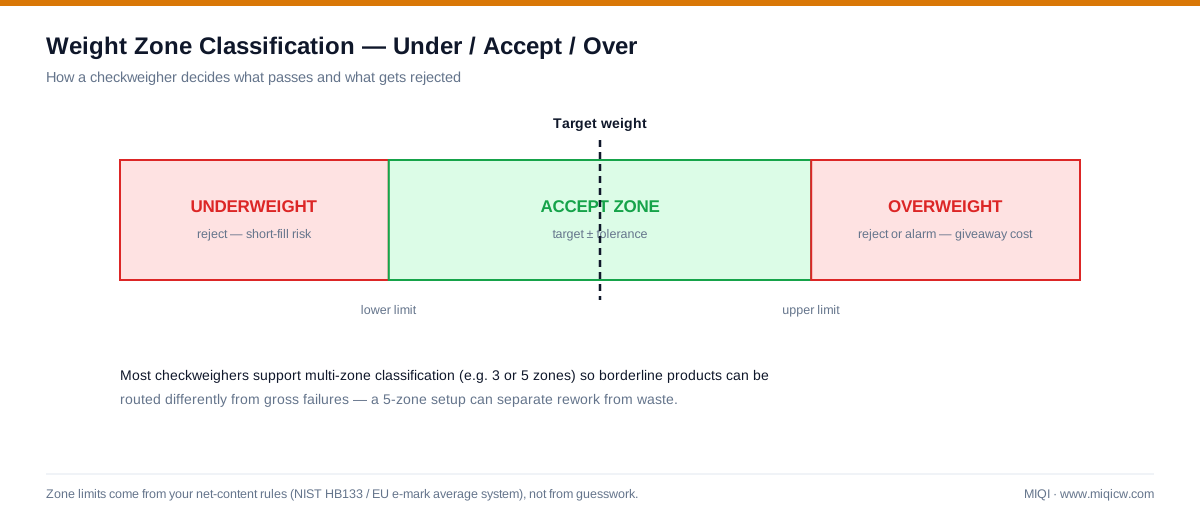
The measured weight is compared against the target weight and tolerance limits stored in the active recipe. Each pack is classified as under, accept, or over; MIQI controllers store up to 100 product recipes, so a changeover is a one-touch recall rather than a re-setup. Every result is logged with counts per class, and records can be exported by USB for batch reports and audits.
Rejection and data feedback
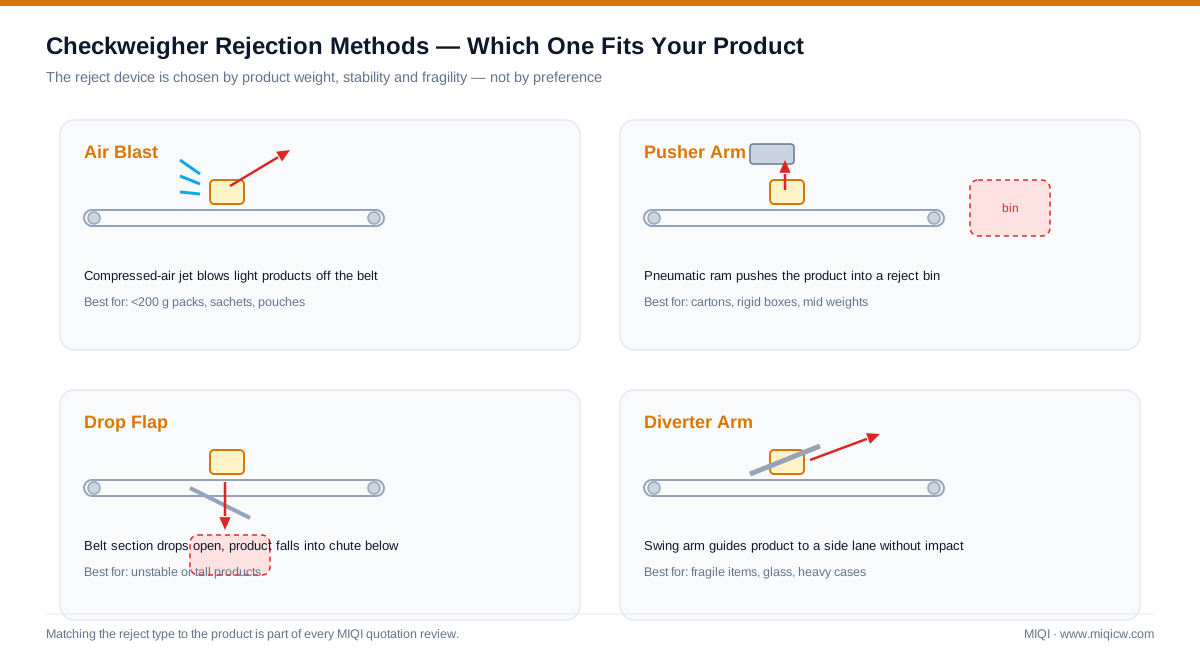
Out-of-tolerance packs trigger a reject device timed to the product's position: air blast for light sachets, push rod or swing arm for cartons and trays, drop-flap or flip plate where product handling must be gentle. Standard MIQI machines carry a 2-stage sorting section, optional 3-stage, so unders and overs can be separated. Reject counts feed back to the operator screen, exposing filler drift before it becomes giveaway.
Checkweigher Price & Quote Factors
Checkweigher price depends on the real inspection task: weighing range, product footprint, required dynamic accuracy at line speed, conveyor and reject layout, hygiene construction, data records and upstream/downstream integration. A low-cost configuration that cannot hold the required tolerance at production speed is not equivalent to a validated line solution. MIQI prepares a project quote after reviewing representative samples, target and tolerance, packs per minute, pack dimensions and the required reject response.
Checkweigher Selection by Line Type
Inline and Conveyor Checkweigher Systems
An inline checkweigher, in-line checkweigher, online checkweigher, check weighing machine or checkweigher conveyor all describe a moving-line weight inspection system in this catalogue. Checkweigher conveyor design must keep each product fully supported and separated during the valid weighing window; platform length, transfer gap and speed are selected together.
Food and Washdown Checkweigher Selection
A food-industry checkweigher should be selected from the actual product, cleaning method and environmental exposure. “Stainless steel” alone does not prove washdown suitability. Confirm enclosure rating, belt removal, drainage and chemical compatibility for the exact model.
Multi-Lane, Bottle and Carton Checkweighers
MIQI documents multi-lane stick-pack systems, a bottle checkweigher with clamping conveyors, a dual lane checkweigher project and carton checkweighers up to the listed 80 kg range. A capsule checkweigher is not claimed from the current MQ-CWG6 document; capsule projects require sample and handling review.
Checkweigher Software and Production Data
Checkweigher software is part of the controller and project interface rather than a standalone MIQI software product. Recipes, counters, USB export and agreed signals can support net-content control, missing-component detection and line records.
Manufacturer, Supplier and Price Comparison
Compare a checkweigher manufacturer or checkweigher supplier using the same product, tolerance, packs per minute, dimensions, reject method and data scope. A checkweigher machine price without those inputs does not describe equivalent equipment.
Dynamic Checkweigher Applications
Food and snacks
100% net-weight inspection of bagged snacks, candy, sauces, and multi-piece packs. The MQ-CW4523L3 targets multi-component foods, catching missing or extra contents across a 1-3000 g range at ±0.3-2 g.
Pharmaceuticals and nutraceuticals
Tablet and sachet lines use the MQ-CW3512L1 (±0.03-0.1 g) and multi-lane MQ-CWP6/CWG6 (±0.02-0.05 g) docked to stick-pack machines, with 100-recipe storage and exportable records for GMP audits.
E-commerce and appliance cartons
The MQ-CW10060L50 and MQ-CW10070L80 verify completeness of packed cartons up to 80 kg, flagging missing accessories or manuals before sealing and dispatch, with audible-visual alarm and automatic rejection.
Printing and publishing
The MQ-CW6040L5 book checkweigher detects missing signatures or inserts in books and printed sets up to 5 kg at ±0.5-3 g, running at line speeds up to 90 m/min.
Hardware and kit assembly
Weight-based completeness checks catch a single missing screw or fitting in blister sets and boxed kits, using high-resolution models with 0.01-0.02 g display divisions.
Personal care and daily chemicals
Bottled and pouched products are checked for fill level by weight; optional inline labeling, coding, and code-reading modules connect the checkweigher scale to serialization and traceability systems.
Related Inspection Equipment
Buyer Guides & Engineering Answers
Checkweigher & Packaging Line Machine Safety
Choose fixed guards, interlocked access or light curtains from the hazard and measured stopping performance.
How Does a Checkweigher Work?
Follow infeed spacing, dynamic weighing, recipe comparison and reject timing.
Calibration & Dynamic Verification
Build a repeatable test across weights, speeds and reject outcomes.
Checkweigher Reject Systems
Compare air, pusher, flap, arm, wheel and stop-alarm methods.
Checkweigher Accuracy Explained
Separate display division, bias, repeatability and dynamic accuracy.
Checkweighing vs Traceability Requirements
Separate weight verification and inspection from food traceability records.
FSMA 204 Timeline and Recordkeeping
Understand the timeline without treating equipment purchase as traceability compliance.
Frequently Asked Questions
How does a checkweigher work?+
A checkweigher works by weighing each product while it moves across a load-cell-mounted conveyor, comparing the result to preset limits, and rejecting out-of-tolerance packs. The working principle has four stages: an infeed belt spaces products apart; the weighing conveyor samples the load-cell signal during the product's transit and filters out vibration; the controller classifies the pack as under, accept, or over against the active recipe; and a reject device (air blast, push rod, swing arm, or drop-flap) removes failed packs without stopping the line. Because the weight is captured dynamically, in motion, throughput is limited only by belt speed and product length, with MIQI machines running at 5-90 m/min.
What accuracy can a checkweigher achieve?+
Dynamic checkweigher accuracy typically ranges from ±0.02 g for light products on precision machines to ±30 g for heavy cartons. Accuracy depends on the weighing range, belt speed, product stability, and environment: MIQI's multi-lane MQ-CWP6 achieves ±0.02-0.05 g over 0.1-100 g, the MQ-CW4523L3 achieves ±0.3-2 g over 1-3000 g, and the 80 kg MQ-CW10070L80 holds ±10-30 g. As a rule, accuracy is quoted as a band because it varies with product weight and speed within the machine's range. Vibration isolation, wind shielding, and correct product spacing are the practical factors that keep real-line accuracy close to the rated figure.
How do you calibrate a checkweigher?+
Checkweigher calibration has two parts: static calibration with certified test weights, and dynamic verification with real product. First, the weighing platform is zeroed and spanned using standard weights placed on the stationary belt, confirming the load cell reads correctly across the range. Then reference packs of known weight are run across the belt at production speed, and the dynamic reading is offset-corrected against the static value, because belt motion introduces a small systematic shift. Calibration should be verified at shift start, after product changeover, and after any mechanical adjustment. MIQI machines store per-recipe dynamic corrections in the 100-recipe memory, so a verified product setup is recalled rather than rebuilt at each changeover.
What reject systems do checkweighers use?+
The most common checkweigher reject systems are air blast, push rod, swing arm, drop-flap, and flip plate, chosen by product weight, shape, and fragility. Air blast suits light sachets and sticks below a few hundred grams; push rods handle cartons, trays, and bottles; swing arms sweep mid-weight packs continuously at higher speeds; drop-flap and flip-plate designs let delicate products fall gently onto a lower conveyor. Heavy-carton machines also offer powered-roller diverts and lift-and-transfer units. MIQI fits any of these as standard or customized options, with 1- to 3-stage sorting sections so under and over rejects can be separated, and each reject is confirmed against the count log so no failed pack passes unrecorded.
How do checkweighers support net content compliance (NIST Handbook 133 and the EU e-mark)?+
A checkweigher enforces net content rules by weighing 100% of packs and rejecting any that would fail the applicable underfill limits. In the United States, NIST Handbook 133 governs net-content testing: inspectors sample a lot, the average net weight must meet or exceed the labeled quantity, and no sampled package may be short by more than its Maximum Allowable Variation (MAV). In the EU average-weight system (the e-mark), three rules apply: batch average must be at least the nominal quantity, no more than 2.5% of packs may exceed the Tolerable Negative Error (TNE), and none may exceed twice the TNE. Setting checkweigher limits at the MAV or TNE thresholds, and using its logged records as evidence, lets a packer prove compliance while cutting overfill giveaway to the minimum the rules allow.
What is the difference between a checkweigher scale and a static scale?+
A static scale measures a product at rest and may be used in manual or automated workflows. A dynamic checkweigher measures products in motion and applies configured weight decisions. Choose by product handling, required inspection coverage, throughput and records. Both methods need an appropriate verification procedure; continuous inspection does not remove measurement uncertainty or guarantee a defect-free batch.
Ship us your product — free on-machine accuracy test with video proof
Free sample testing · OEM & custom design · 2-year warranty · Worldwide shipping