Checkweigher Reject Systems: Air Blast, Pusher, Flap, Arm, Wheel or Stop Alarm
The best checkweigher rejector is the one that removes the real product reliably at the real speed. Compare six mechanisms by product mass, stability, line rate, available air, hygiene and fail-safe confirmation requirements.
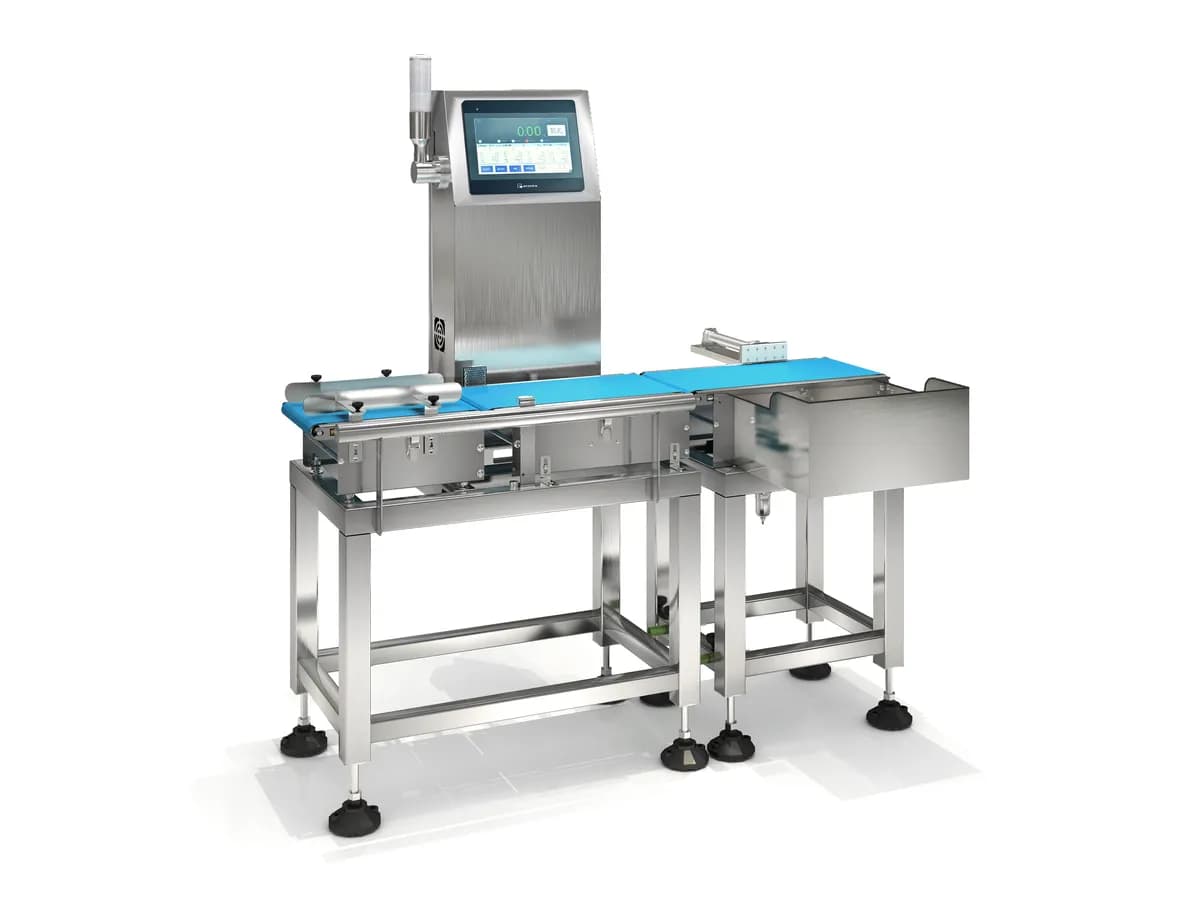
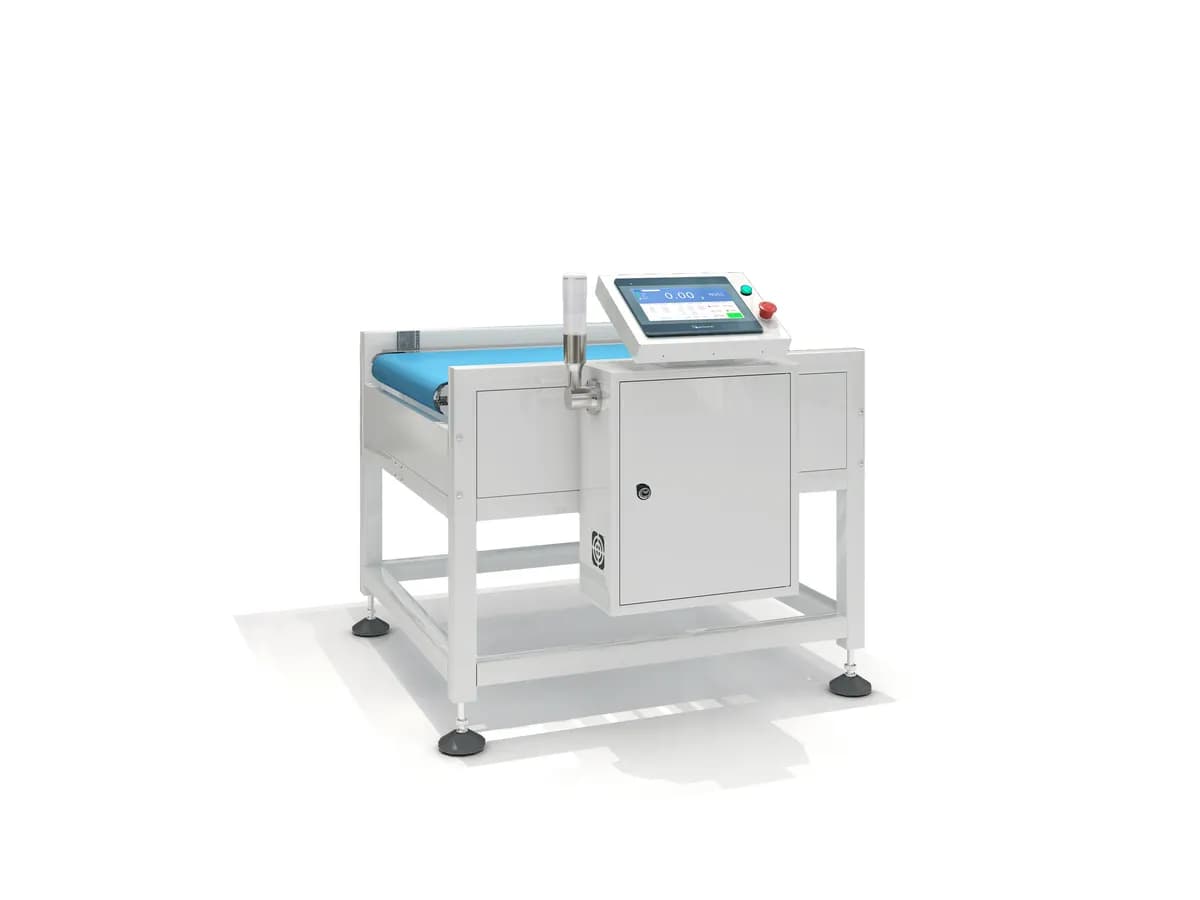
A checkweigher with rejector needs more than a fast actuator. The control system must track the failed pack from the weigh belt to the reject point, fire within a safe timing window and confirm that the pack entered a secure reject path. Product behaviour—not keyword popularity—decides which mechanism is suitable.
Specify the reject mechanism together with the dynamic checkweigher models, including pack spacing and confirmation signals. Review Checkweigher and Packaging Line Machine Safety: Guards, Interlocks or Light Curtains? wherever a pusher, flap or swing arm creates an accessible moving hazard.
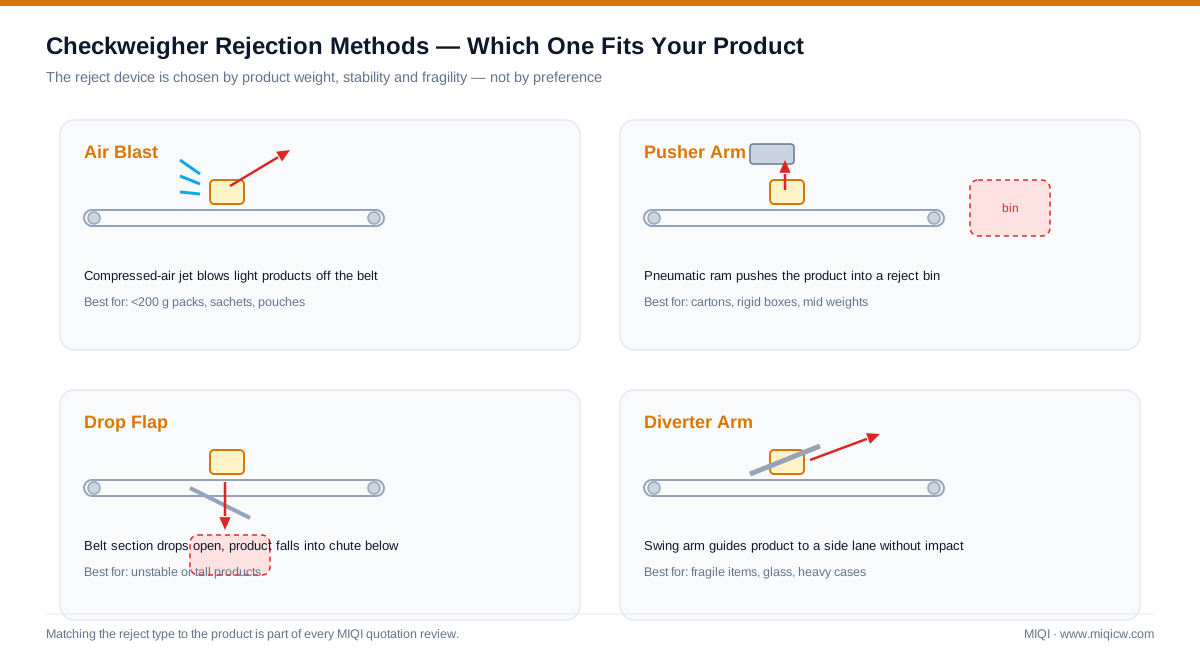
Six common reject methods
| Method | Often suitable for | Main limitation to test |
|---|---|---|
| Air blast | Very light, stable packs at high rate | Needs clean dry air; weak on heavy or porous products |
| Pusher | Cartons, trays and rigid packs | Side impact and reset time |
| Drop flap | Small packs that can fall safely | Vertical clearance and downstream recovery |
| Swing arm / diverter | Bags, cartons and moderate-to-heavy packs | Required lateral space and product stability |
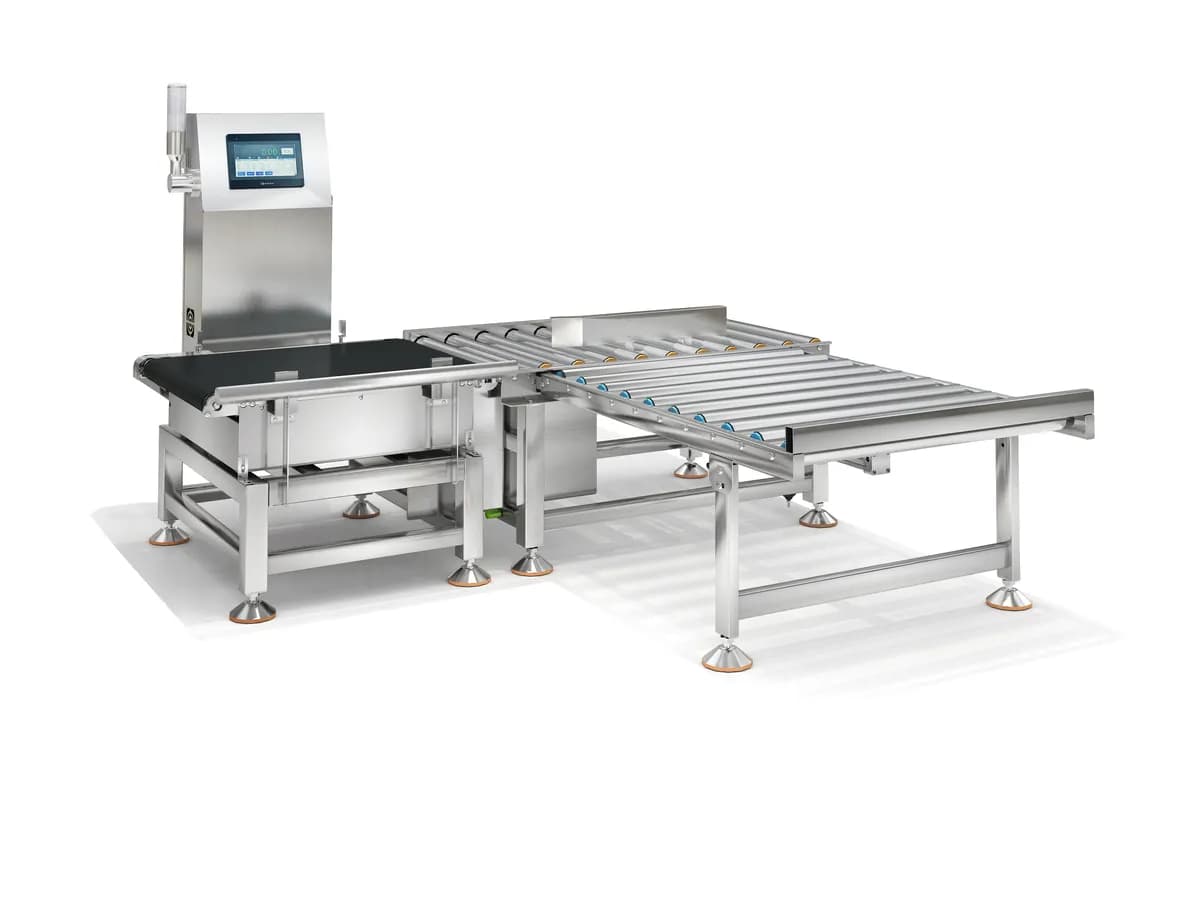
| Swing wheel | Parcel and carton routing | Contact area, wheel timing and line layout |
| Stop + alarm | Large, fragile or manually reviewed items | Stops production and depends on operator response |
Calculate the reject timing window
For an illustrative constant-speed conveyor, travel time t = d / v: with d in metres and v in metres per second, t is in seconds. If speed is in m/min, use t = 60d / v. This is not a ready-to-use reject delay. The configured sensing reference, pack length, controller and actuator latency, slip and changing speed must be included in commissioning. Test consecutive packs and the minimum gap, and confirm that the intended pack is physically rejected.
Fail-safe features to specify
- Reject confirmation sensor at the physical reject path.
- Full-bin or bin-present monitoring where rejected product is secured.
- Air-pressure monitoring for pneumatic devices.
- Alarm or line stop after a failed reject confirmation.
- Locked or controlled reject collection where the quality plan requires it.
- Counters that distinguish weight failures, reject events and reject faults.
Product trials prevent expensive mistakes
A flexible pouch may fold around a pusher, a bottle may tip, a light sachet may flutter under an air blast and a heavy carton may require more lateral energy than expected. Test minimum and maximum product weights, all pack materials, wet or dusty conditions, and the fastest line speed. Video the reject from above and from the side so timing and recovery are visible.
A reject method shown as an option is not automatically suitable for every model and product. Final compatibility belongs in the approved project specification.
Continue your equipment evaluation
Checkweigher working principle — see where the reject trigger originates
Compare checkweigher machines — review documented reject options by model
Parcel weighing and sort integration — for high-mass cartons and warehouse flows