No, Your Checkweigher Is Not "FSMA 204 Compliant" — Here's the Regulation That Actually Applies
A checkweigher can support operational records, but buying one does not establish FSMA 204 compliance. Separate Food Traceability Rule recordkeeping, 21 CFR Part 117 hazard controls, and 21 CFR 101.7/NIST Handbook 133 net-content testing when preparing an equipment specification.
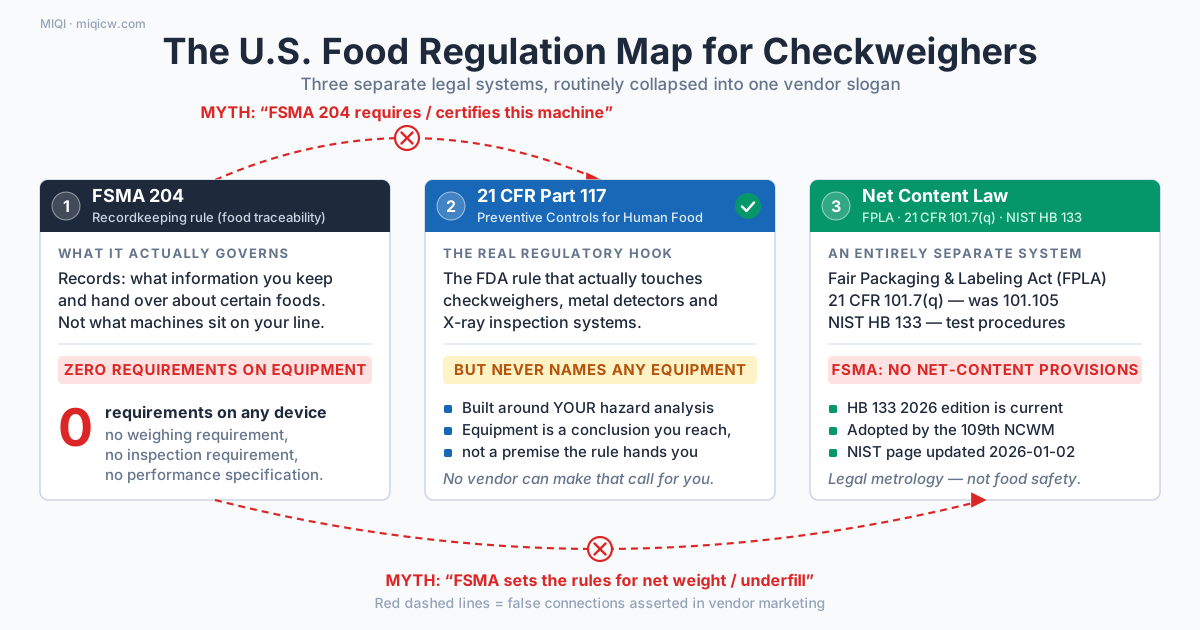
FSMA 204’s Food Traceability Rule concerns specified records for covered foods. It does not require a particular checkweigher, metal detector or X-ray machine. Equipment may support data collection when the configured records match the facility’s obligations, but a machine cannot make the entire traceability process compliant. Part 117 hazard controls and net-content requirements must be assessed separately.
Specify dynamic checkweigher models for a defined weight or completeness check, not as a substitute for a traceability system. Was FSMA 204 Really Delayed to July 2028? What Every Other Article Gets Wrong sets out the separate recordkeeping timeline so that the purchasing brief and compliance work stay correctly scoped.
Why This Article Exists
We build checkweighers. We would love to tell you a law requires you to buy one. We are not going to, because it isn't true, and because the buyers who get burned by that claim tend to remember who sold it to them.
Type "FSMA 204 compliant checkweigher" into any search engine and you will get equipment landing pages, LinkedIn posts, and trade-show copy asserting or implying that FSMA 204 mandates weight verification, foreign-object inspection, or some particular class of machine. Go read the rule itself on eCFR. The requirements are about records. That is the whole substance of it. A claim that a specific device is "FSMA 204 compliant" or "required by FSMA 204" is not a stretch or an exaggeration — it is a claim with nothing behind it, and it is unsupportable on the face of the regulatory text.
This matters beyond pedantry. When a buyer justifies a capital request with "FSMA 204 requires it," and the plant's regulatory affairs group or an auditor asks which section, the project stalls and the buyer's credibility takes the hit. Meanwhile the actual obligations — the ones that will get cited — go unaddressed because everyone was looking at the wrong rule.
Common Misconceptions vs. Facts
Myth 1: "FSMA 204 requires a checkweigher / metal detector / X-ray system."
Fact: FSMA 204 has zero requirements for equipment. It is a recordkeeping rule. It does not specify, mandate, recommend, or performance-rate any device. There is no sentence in it that a machine could be measured against.
Myth 2: "Our machine is FSMA 204 certified/compliant."
Fact: "Compliant" only means something relative to a requirement. Since the rule places no requirement on the device, the device cannot conform to it or fail to conform to it. The statement is void of meaning. When you see it on a spec sheet, treat it as a signal about the vendor's regulatory literacy — or their honesty — not about the machine.
Myth 3: "FSMA sets the rules for net weight / underfill."
Fact: FSMA contains no net-content provisions at all. None. Net content sits in an entirely different legal system: the Fair Packaging and Labeling Act, 21 CFR 101.7(q), and NIST Handbook 133 for the test procedures. This is one of the most common confusions in the industry, and it is the reason some plants run their giveaway-control program as if it were a food-safety program, and their food-safety program as if it were a metrology program. They are different laws, different enforcement bodies, different failure modes, different records.
Myth 4: "If a rule doesn't name my machine, my machine doesn't matter."
21 CFR Part 117 contains equipment and process requirements, including sanitary design and adequate measures against metal or other extraneous material in section 117.80(c)(8). It does not universally require every food line to buy a particular metal detector, X-ray system or checkweigher. Selection and validation depend on the applicable rules and the facility’s hazard analysis.
The Regulation That Actually Applies: 21 CFR Part 117
If you are asking "which FDA regulation touches my inspection and weighing equipment," the answer is 21 CFR Part 117, Preventive Controls for Human Food. That is the genuine hook.
21 CFR Part 117 contains equipment and process requirements, including sanitary design and adequate measures against metal or other extraneous material in section 117.80(c)(8). It does not universally require every food line to buy a particular metal detector, X-ray system or checkweigher. Selection and validation depend on the applicable rules and the facility’s hazard analysis.
This is deliberate, and once you understand why, the whole equipment-selection question gets easier. Part 117 is built around hazard analysis and preventive controls. It asks you to identify hazards that require a preventive control in your specific process, with your specific ingredients, in your specific facility — and then to establish and manage controls for them. Whether a metal detector or an X-ray system is one of those controls is a conclusion of your hazard analysis, not a premise handed to you by the regulation.
The practical consequence: nobody outside your plant can tell you whether you need a given machine. Any vendor who says "the FDA requires this" is either confused or is doing your hazard analysis for you from a booth at a trade show, having never seen your process flow diagram. A vendor's honest position is "if your hazard analysis concludes that a physical-hazard control is required at this step, here is equipment that can hold and evidence that control, and here is exactly what it can and cannot detect."
That reframing changes what you should be evaluating. Stop asking "is this machine compliant?" — an unanswerable question — and start asking "can this machine hold the control my hazard analysis identified, and can it produce evidence that it did?" That is answerable, and it is testable before you buy.
Net Content Is a Different Legal Universe
The other half of the confusion is weight. Buyers routinely bundle "we need a checkweigher for FSMA" into one sentence, when the reason they actually need a checkweigher — controlling underfill and giveaway on declared net content — comes from a completely different body of law.
Net content compliance runs through the Fair Packaging and Labeling Act and 21 CFR 101.7(q). Note that 101.105 was renumbered to 101.7 — if you are working from an old internal procedure or an old consultant deck that cites 101.105, your citation is stale, which is a small thing that looks bad in an audit.
The test procedures live in NIST Handbook 133. The 2026 edition is the current version, adopted by the 109th National Conference on Weights and Measures; the NIST page carries a 2026-01-02 update date. NIST positions it as a procedural guide for compliance testing of net-content declarations on packaged goods. That framing is the point: it is how a package is tested, by whom, under what sampling scheme — a metrology and legal-metrology instrument, not a food-safety instrument.
We are not going to reproduce Handbook 133's allowable-variation tables here, because we have not parsed the source document line by line and we are not going to hand you numbers we have not verified. Get the current edition and read the tables yourself, or have your weights-and-measures contact walk you through the ones that apply to your package type. What you should take away is structural: your checkweigher's job on the net-content side is defined by HB 133's procedures and your declared quantity — not by anything in FSMA.
Meat and Poultry: Check Your Own Jurisdiction
If you are in USDA-regulated meat and poultry, reporting suggests a separate net-weight framework applies under 9 CFR 442 rather than the FDA path described above. We flag this as a pointer, not a conclusion — confidence on this one is moderate and you should verify the current scope with the agency or your regulatory counsel before you build a procedure on it. The general principle holds regardless: know which agency owns your net-content obligation before you specify the equipment that will serve it.
One More Thing: The Compliance Date Itself Is Contested
Source review, 6 September 2026: FDA’s current page says it proposed a 30-month extension from January 20, 2026 to July 20, 2028. It also says Congress subsequently directed FDA not to enforce the Food Traceability Rule before that same date, and FDA intends to comply. A proposed extension and a non-enforcement directive are distinct. Follow FDA’s current statement and confirm applicable customer obligations; do not claim the 2028 date originated only with Congress.
Why raise it here? Because a vendor who tells you their machine is "FSMA 204 compliant" is, by construction, not someone who has read FSMA 204. Assume the rest of their regulatory claims got the same treatment.
A Five-Question Script for Auditing Any Compliance Claim
Print this. Use it on us, too — we would rather be tested than believed.
1. "Which section?" Ask for the citation down to the section, not the rule's nickname. "FSMA 204" is not a citation. If the answer is a marketing phrase instead of a section number, the claim is over.
2. "Read me the sentence." Ask them to quote the specific language that imposes the requirement on the equipment. Then open eCFR yourself and read the surrounding text. Requirements almost never survive being read in context by the buyer.
3. "Requirement on whom?" Nearly every food regulation places obligations on the operator — the facility, the record holder, the label declarer — not on a machine. Force the distinction. A machine can support your compliance; it cannot be compliant on your behalf.
4. "What would non-conformance look like?" If there is a real requirement, there is a way to fail it and a way to test it. If nobody can describe the failure mode, there was no requirement.
5. "What can it not do?" Ask directly for the limitations — the foreign-object types the technology structurally cannot see, the product presentations that degrade performance, the throughput at which accuracy claims stop holding. A vendor who cannot answer this has either never tested the edge or would prefer you find out after the PO.
How to Spec Equipment Against the Rule That Actually Applies
Once you drop the compliance-label theatre, the specification exercise becomes concrete. Two obligations, two different sets of questions.
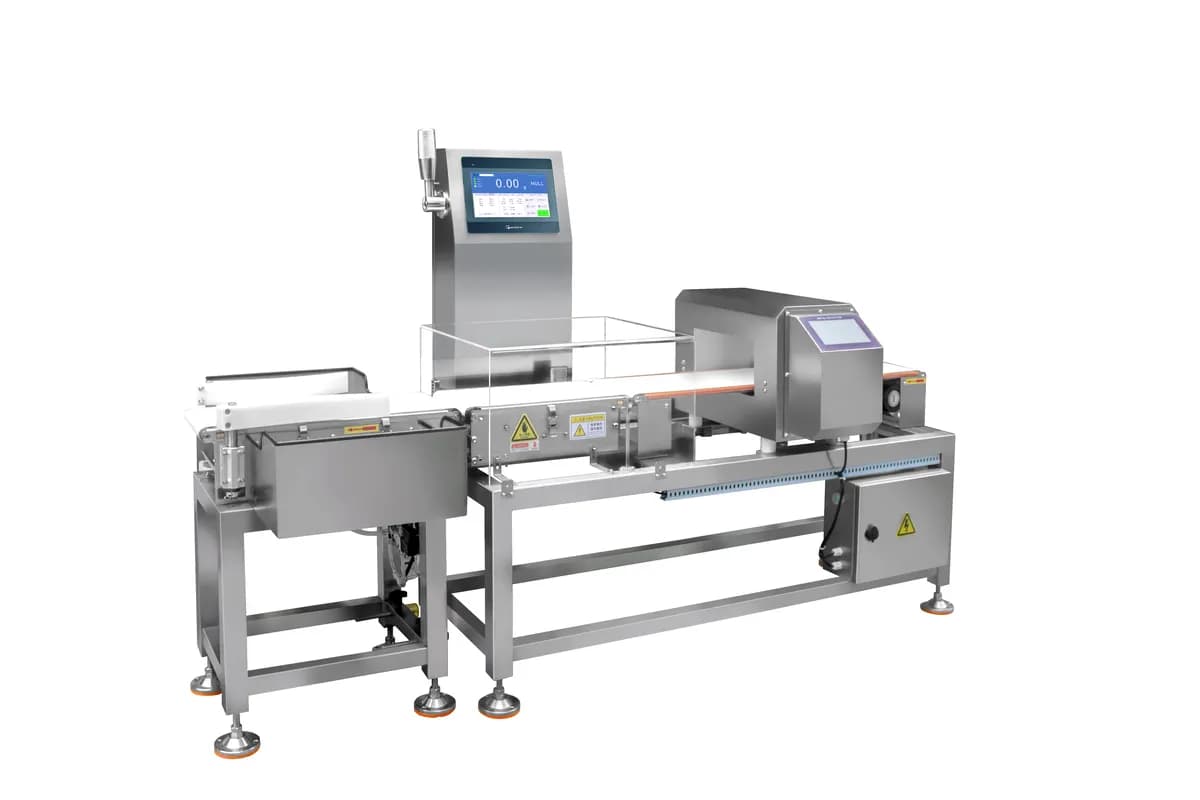
For the Part 117 side — physical hazards — the question is whether the machine can hold and evidence the control your hazard analysis identified. That means: monitoring you can perform at the frequency your plan requires; verification you can actually run on shift; reject confirmation you can prove happened; and records that survive an auditor's request. Where the hazard analysis points to both a physical-contaminant control and a fill control at the same step, a combination unit such as the MQ-MCL4530L2 metal-detection-plus-checkweighing system consolidates two control points into one footprint and one record stream, which matters more for the paperwork than most buyers expect.
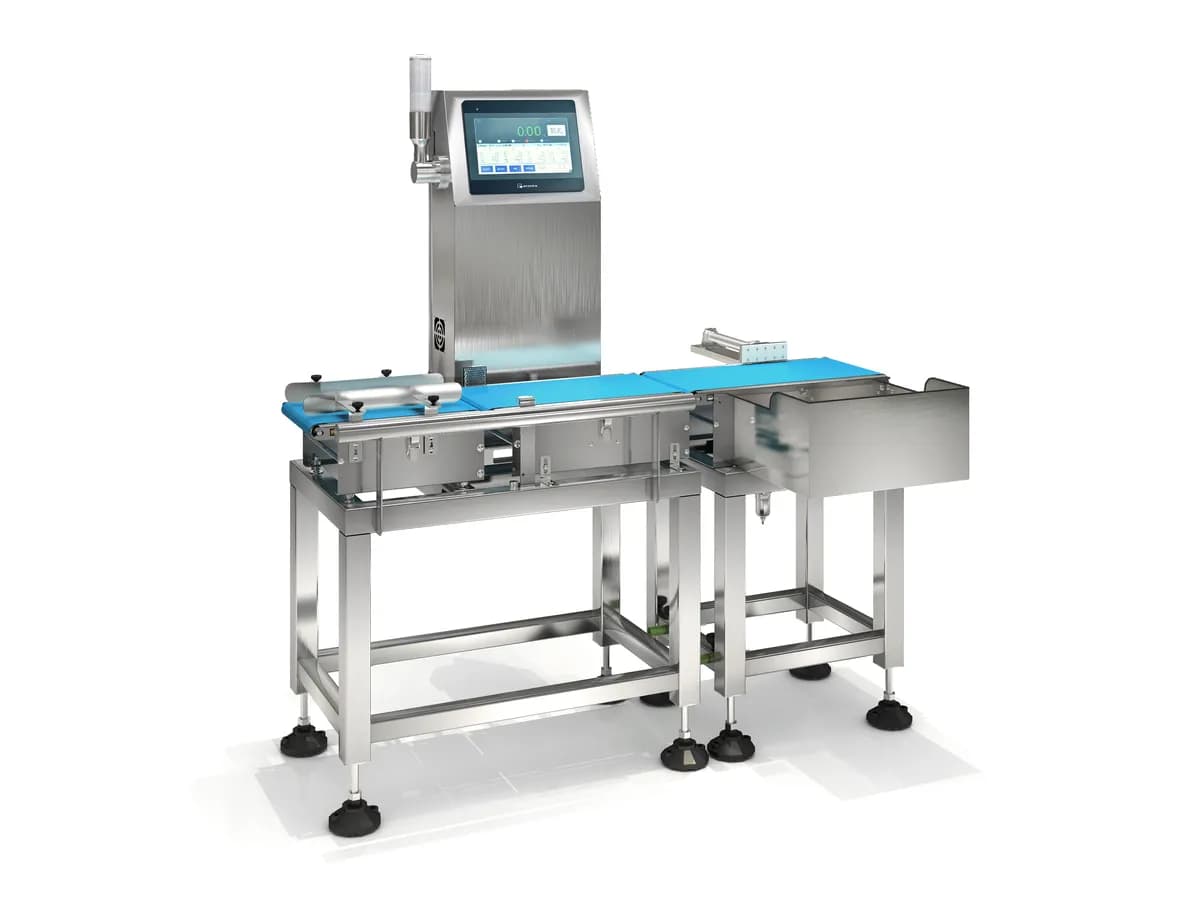
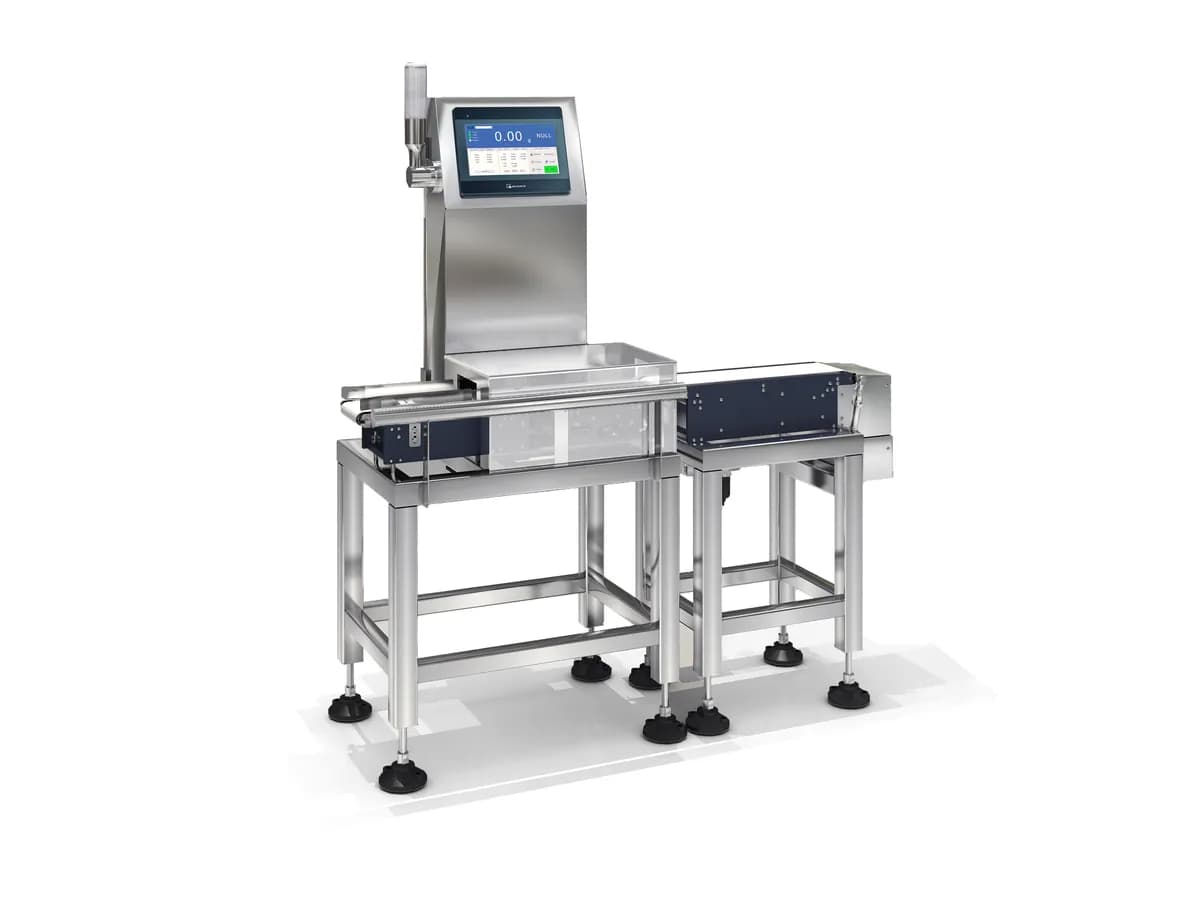
For the net-content side, the question is metrological: does the machine resolve the variation you are trying to control, at your line speed, on your package? A production checkweigher such as the MQ-CW4523L3 covers general packaged-goods duty. Where the declared quantity is small and the tolerance band is tight — tablets, sachets, high-value powders — the MQ-CW3512L1 is our high-precision unit: 0.02 g display division, 1–1000 g range, ±0.03–0.1 g weighing accuracy, 5–90 m/min belt speed, 304 stainless construction. Note that display division and weighing accuracy are two different promises; the first is what the screen can show you, the second is the interval you can actually trust. Cross-border buyers get caught by that gap constantly, and it is worth an article of its own.
One feature deserves a mention specifically because of the records point above: 100-recipe product storage and three-level operator access control. Neither is glamorous. Both are what turns "we ran the check" into "here is who ran it, on which product setup, and here is the record." If your hazard analysis makes a control real, the access control and the record are what make it defensible.
For transparency: MIQI has not obtained CE or ISO 9001 certification. We are an OEM factory with nine equipment series and 44 models, we support free sample testing on our own machines before you commit, and we build non-standard configurations. We would rather tell you that plainly than dress up a claim we cannot back.
The Bottom Line
FSMA 204 will not make you buy a checkweigher. Your hazard analysis might, under Part 117. Your net-content declaration probably will, under FPLA, 101.7(q) and the Handbook 133 procedures. Those are three different questions with three different answers, and any vendor who collapses them into one slogan has told you something useful about themselves.
Send us your product, your package, your line speed and your target tolerance, and we will run it on the actual machine and send you the data — including the cases where it does not work. WhatsApp +86 152 1890 9599, or email 897874196@qq.com. Ask for Engineer Cai. Bring the five questions.
Technical references
- FDA: Food Traceability Rule and current compliance-date statement
- 21 CFR 117.80: Processes and controls (2025 annual edition)
- 21 CFR 101.7: Declaration of net quantity (2025 annual edition)
- NIST Handbook 133: Current edition and package-testing procedures
- FDA final rule (2016): redesignation of 101.105 as 101.7