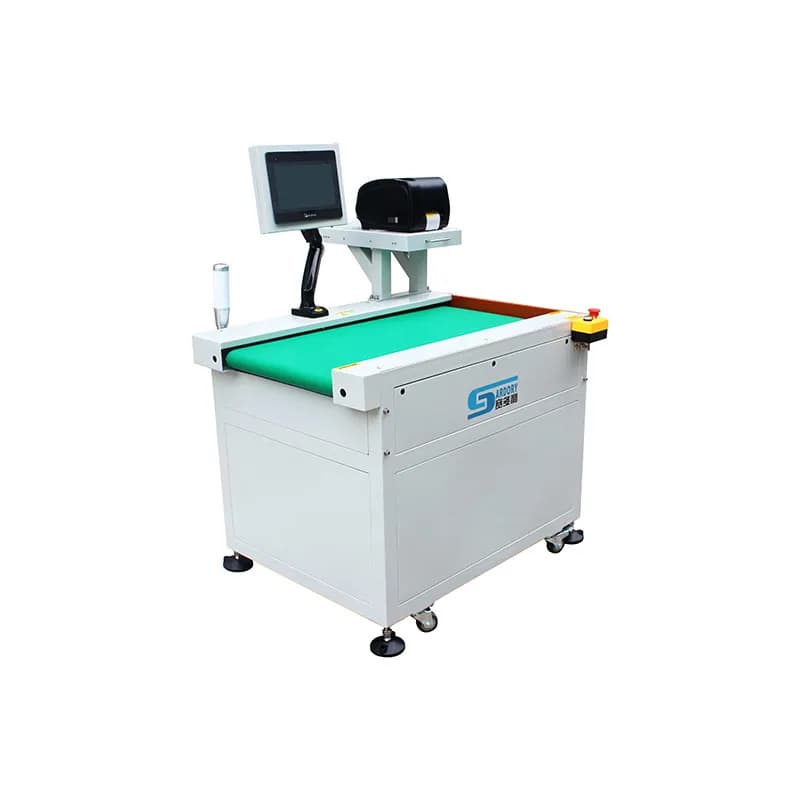
Automatic Weighing, Vision Positioning and Instant Print-and-Apply Labeling Machine
Weighing, vision positioning, and print-and-apply labeling in one machine — post-packaging recheck no longer relies on manual labor.
Custom-built model: This is a non-standard, made-to-order machine. Structure, dimensions, rejection method and configuration are engineered to your product and production line. Image for reference only — contact us with your application for a tailored solution and quote.
Automatic Weighing, Vision Positioning and Instant Print-and-Apply Labeling Machine (MQ-DZ01). Factory-direct from Guangdong, China. OEM & custom available.
Typical applications: Post-packaging re-inspection; integrated weigh-print-label production lines
Key Features
- ✓Handles post-packaging re-inspection in one multi-purpose machine
- ✓Vision camera precisely locates the labeling position
- ✓Automatically binds weight data to the label for instant print-and-apply
- ✓Effectively reduces manual workload and boosts production efficiency
Why Choose MQ-DZ01
Three processes in one — a single machine does the work of many
The old way needs one machine to weigh, another to label, and people in between to cross-check. This machine compresses dynamic weighing, vision positioning, and instant print-and-apply labeling into one station. A product passes over the conveyor once — weight captured, label printed, position applied accurately. You save on equipment and on floor stations.
Vision camera positioning — the label follows the product
Packages never sit in exactly the same posture and position on the conveyor, so fixed-coordinate labeling is bound to go crooked. This machine uses a vision camera to first identify each product's actual position, then guides the applicator head. Even if the incoming product is offset or rotated, the label still lands exactly where it belongs.
Weight auto-bound to the label — no more mix-ups
The measured weight is automatically written to that specific product's label and printed and applied on the spot, so weight and label match one-to-one. There is no manual mis-transcription and no risk of the previous item's weight ending up on the next one. For price-by-weight and traceable products, this is your last line of defense against customer complaints.
Post-packaging recheck, fully automated
This machine is built to solve the recheck step after packaging: verify weight, mark, and release in one pass. No need to station a dedicated worker at the end of the packaging line to reweigh every item on a bench scale and hand-apply labels. Labor drops for real, and line speed is no longer held back by how fast people can work.
Custom-built — configured to your product and line
Miqi is a source checkweigher factory, and the MQ-DZ01 belongs to our custom series: weighing range, conveyor height and width, labeling face (top-apply / side-apply), and label format are all set to your actual product dimensions and line speed. Send samples for trial runs first, confirm the solution, then place the order — we never make the customer bend their product to fit the machine.
Problems It Solves for You
At the end of the packaging line, workers reweigh and hand-write or hand-apply labels one by one. In peak season that's thousands of pieces a day — one lapse of attention and an item is mis-weighed or mislabeled. When the customer checks against the labeled weight and it doesn't match, you get returns plus claims.
Weighing, printing, and labeling are done in one pass by the machine. Each product's labeled weight is exactly the weight it was just measured at, with data auto-bound — cutting out transcription and mislabeling at the source.
Bagged and boxed products sit crooked on the belt, and an ordinary fixed labeler produces a batch of labels at uneven heights. During a customer factory audit they simply photograph it and issue a corrective action.
The vision camera positions each product individually and the applicator head acts on the actual position, so even inconsistent incoming postures get labels applied to a uniform spot — visual consistency that holds up to inspection.
Weighing, printing, and labeling are split across three stations and three people, with hand-offs between steps. The line speed gets stuck at the pace of the slowest person, and hiring only gets harder.
The three processes merge into one machine at one station, completed as the product passes through. What you cut isn't just labor, but also the waiting between steps and the chances for hand-off errors.
With many product specs and frequent changeovers, every new spec means readjusting the label position and rebuilding the label template — half a day of capacity lost to setup.
Vision positioning adapts to the product automatically, and label content is auto-generated in tandem with the weighing data. Multi-spec needs are configured during the custom-solution stage, so changeover adjustments are minimal.
Functions in Detail
Workflow: one pass, three steps
After the conveyor feeds in the product, it first passes the dynamic weighing section to capture real-time weight. The vision camera then photographs and identifies the product's position and posture; the system instantly generates the label content from the weight data and prints it, and the applicator applies the label to position by the coordinates the vision gives. The entire process is done inline — no line stop, no human intervention.
Vision positioning system
The camera images and positions each passing product individually, rather than relying on mechanical guides to force the product straight. This means high tolerance for incoming posture — soft bags, trays, cartons and other formats that are hard to position mechanically can still be labeled reliably, while avoiding the package damage caused by guide collisions.
Weight-data binding and label management
Label content is generated the instant weighing completes; weight, date, batch and other information are matched one-to-one with the current product, then printed and applied instantly, with no manual transcription anywhere in the data chain. If you need to interface with a line data system for record traceability, that can be planned together during the custom-solution stage.
Customization and delivery
The MQ-DZ01 is a Miqi custom-series model with no fixed spec sheet: weighing range, conveying speed, body dimensions, and labeling direction are custom-built to your product's actual measurements. The standard process is that the customer provides samples, the factory runs trials to confirm labeling effect and cycle time, then issues the solution. As a source factory, you deal directly with the engineers — changing requirements takes no detours.
Maintenance and daily use
The weighing section, print module, and applicator are laid out as independent units; label-roll changes and print-head cleaning can all be done from the front of the machine. Daily upkeep is just cleaning the belt surface each shift and checking label supply. Ordinary operators can handle it after training, with no need for a dedicated technician on watch.
Industries & Application Scenarios
Cut and chilled meat varies in weight per tray, requiring price labels printed by actual weight. After tray packaging and film sealing, the pack passes through the machine — weighing, price-label printing, and application done in one pass, with the labeled weight strictly matching the physical contents.
Frozen shrimp, fish fillets and the like are weighed and shipped by bag; manual reweighing is cold and slow. After packaging, the machine verifies weight and instantly applies a weight label, replacing the manual recheck station at the end of the workshop.
Bagged and boxed finished goods need production date, batch, and weight information applied before casing. Vision positioning ensures labels are applied to a consistent spot despite varied incoming postures, keeping the whole batch neat in appearance.
Outbound parcels are weighed on the machine, then a shipping label or weight label is instantly printed and applied. Weight data is bound to the parcel, giving billable weight a verifiable record and reducing freight disputes with carriers.
After bottled or drummed products are filled and capped, they enter the recheck section to verify net content and apply a pass mark. Weight-abnormal items don't flow into the casing step, meeting net-content spot-check requirements.
After parts are weighed and bagged by set, the label must state actual weight and batch for traceability. The machine automatically completes weighing and label binding, preventing mixed-material packages from getting out.
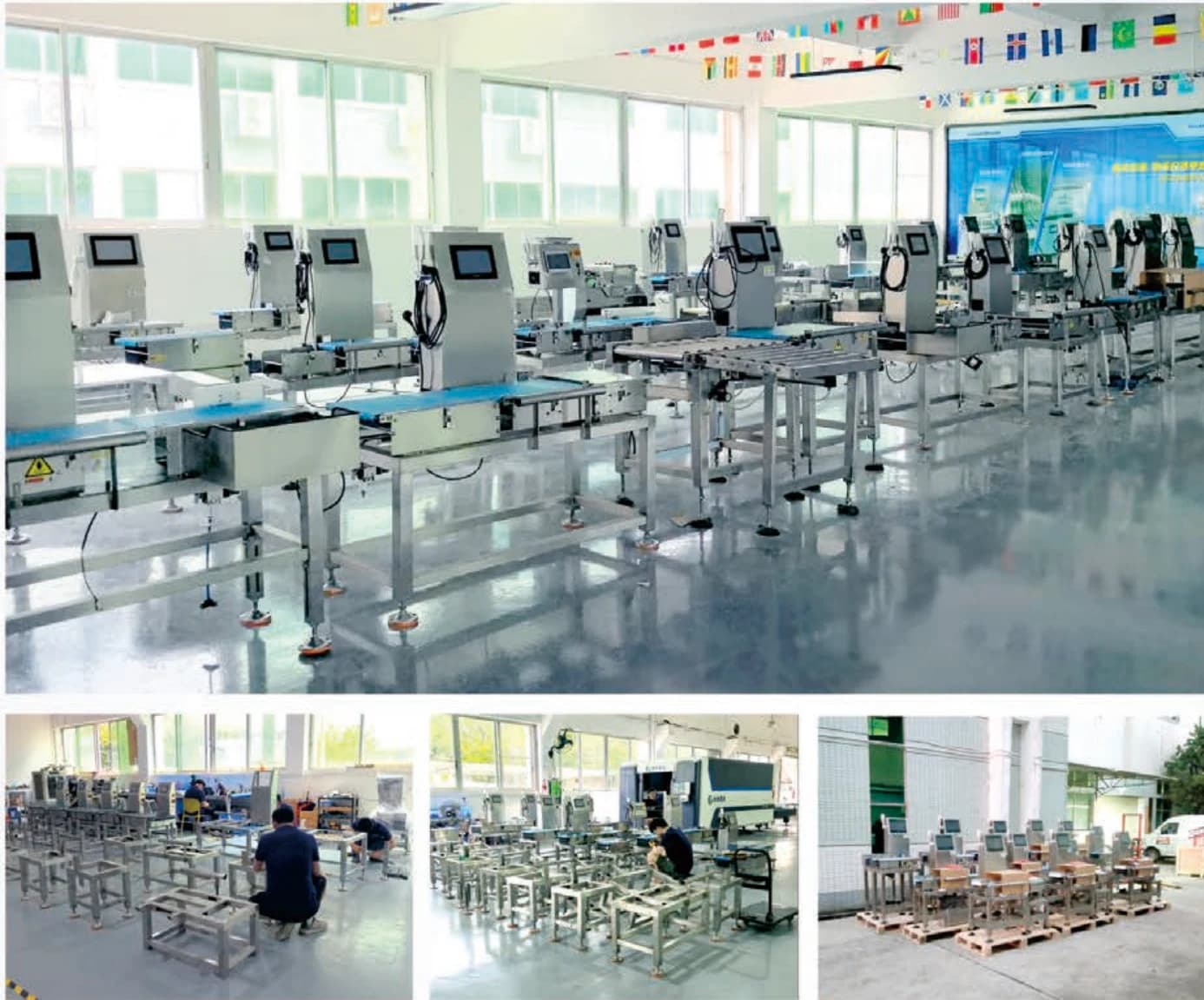
Own Factory · Seeing Is Believing
Guangdong Miqi designs, builds and tests every machine in-house — each unit is bench-tested before shipment. Free sample testing, on-site factory visits and live video of the running machine are all welcome.
Compare this model with other configurations in custom weighing and inspection systems.
Further reading
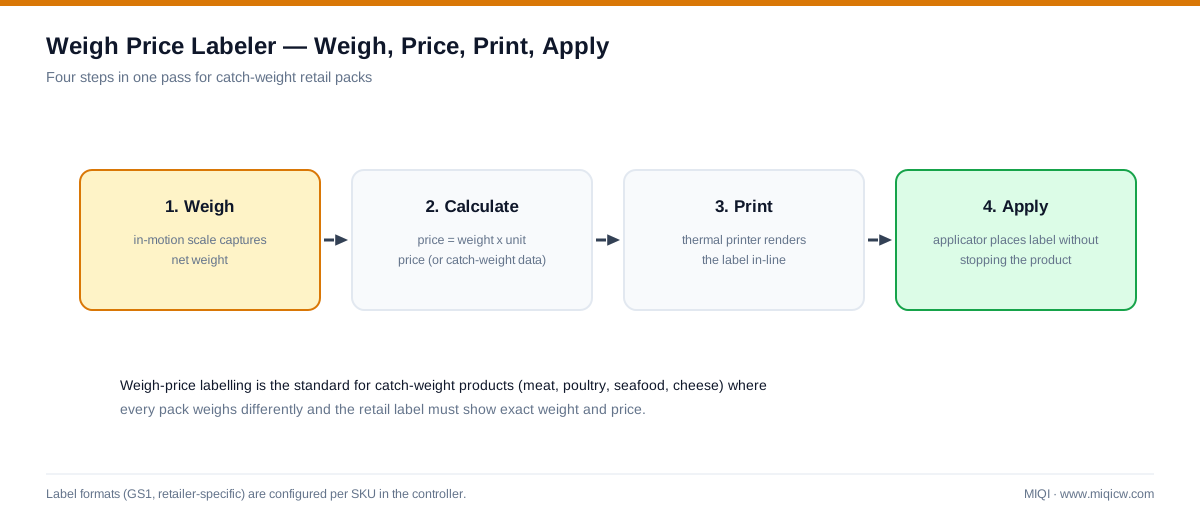
Weigh-Price Labeling vs Weigh-Print-Apply: Functions, Data and Compliance
A weigh-print-apply system captures weight and prints or applies configured data. A weight/price labeler also calculates selling price from weight and unit price, which can trigger legal-metrology requirements. Use this comparison to define the exact function before buying hardware.
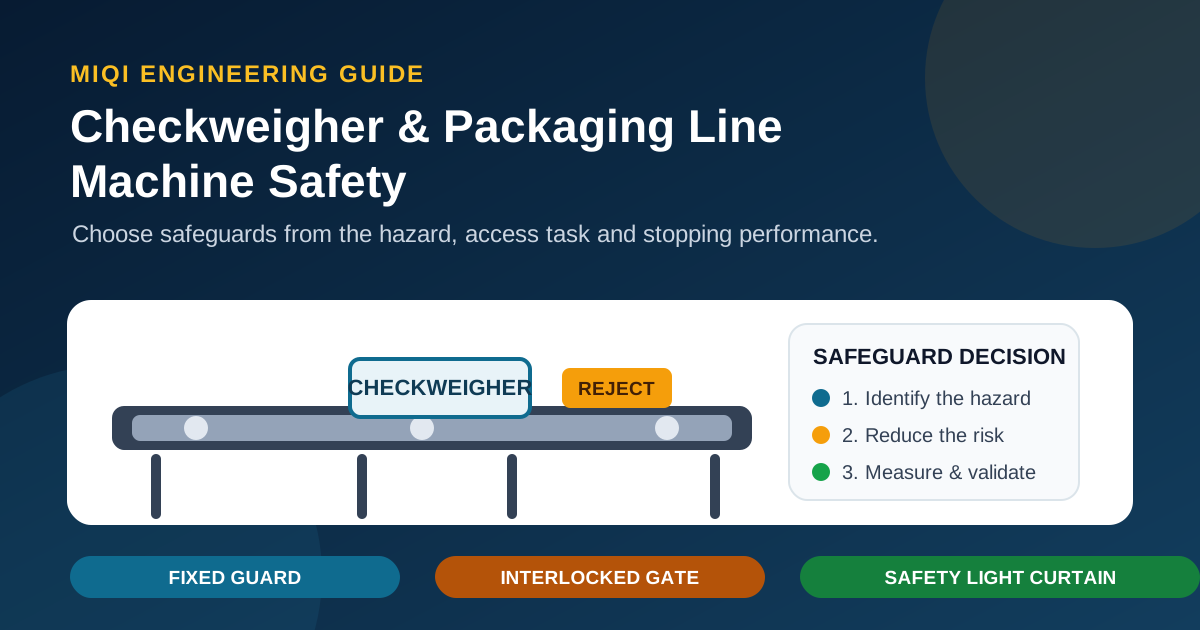
Checkweigher and Packaging Line Machine Safety: Guards, Interlocks or Light Curtains?
A practical risk-assessment guide for checkweigher conveyors, pusher and swing-arm reject stations, collection bins and packaging-machine interfaces. It explains when to use fixed guards, interlocked gates, guard locking, safety light curtains or area detection, and what must be measured before commissioning.
Frequently Asked Questions
What is the price of Automatic Weighing, Vision Positioning and Instant Print-and-Apply Labeling Machine (MQ-DZ01)?+
Pricing depends on the weighing range, rejection method, conveyor dimensions and selected options. Send the product weight, dimensions and line speed for a factory-direct quotation.
Does MIQI export Custom Solutions worldwide?+
Yes. MIQI ships worldwide with export packing, operating documents, configurable voltage and remote commissioning support. OEM branding and application-specific engineering are available.
Tell Us About Your Product
Share your product weight range, dimensions and line speed — our engineer replies within 24 hours with model recommendation and quotation.