Static Weighing and Printing System for Logistics
A logistics static weighing-and-printing station that finishes weighing and printing in one step — purpose-built for e-commerce warehouses running multi-SKU small-parcel dispatch.
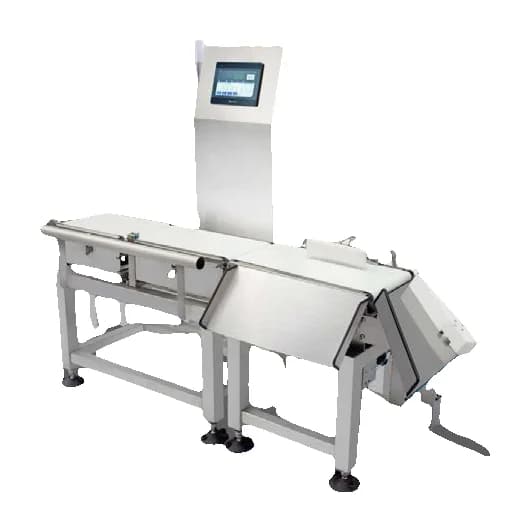
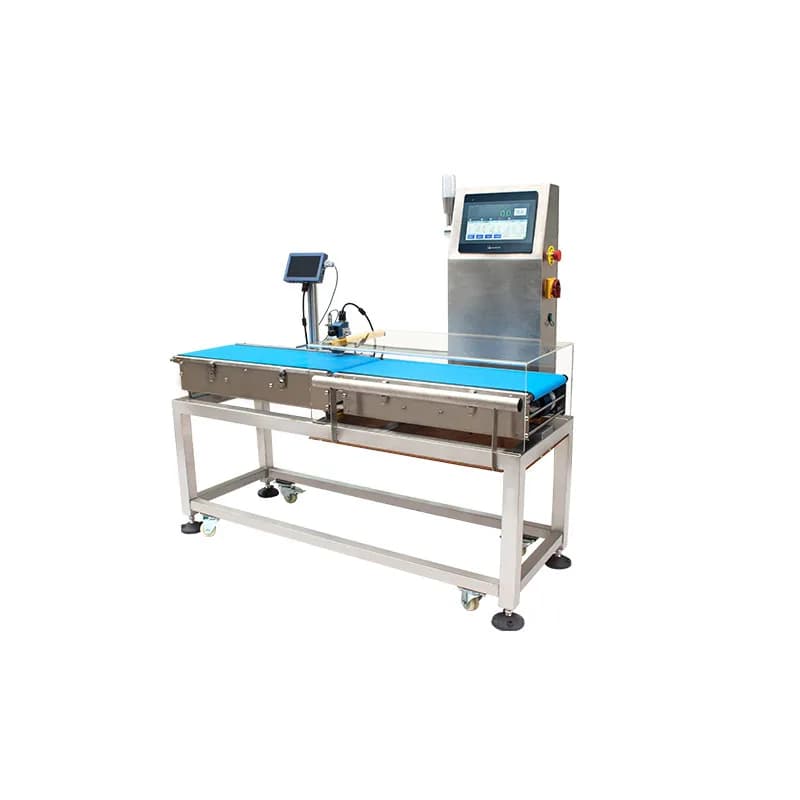
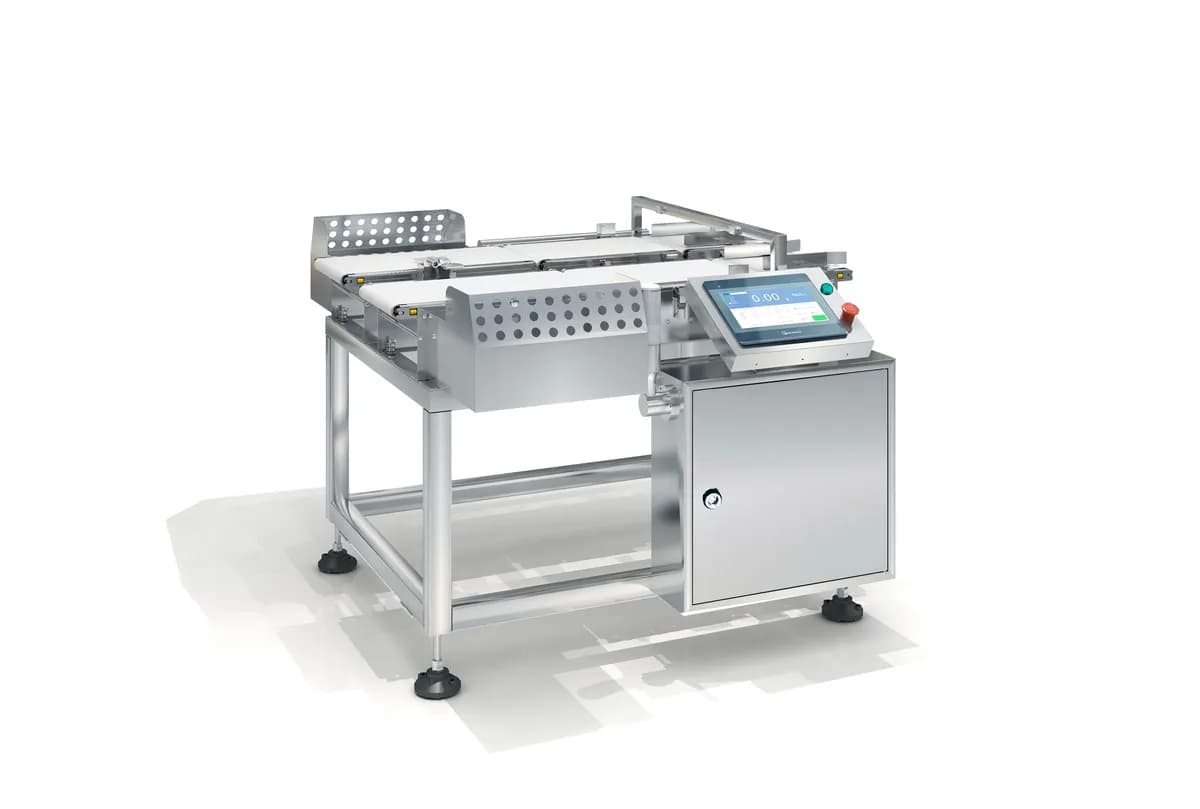
Custom-built model: This is a non-standard, made-to-order machine. Structure, dimensions, rejection method and configuration are engineered to your product and production line. Image for reference only — contact us with your application for a tailored solution and quote.
Static Weighing and Printing System for Logistics (MQ-DZ04). Factory-direct from Guangdong, China. OEM & custom available.
Typical applications: Small-parcel weighing in e-commerce warehouses; outbound logistics operations
Key Features
- ✓Designed for automatic weighing of small parcels in e-commerce warehouses
- ✓Ideal for outbound logistics operations with high-mix, non-uniform parcels
- ✓Equipped with an automatic printer; labels are applied manually
Why Choose MQ-DZ04
Weigh and print in one unit — one fewer step at dispatch
Set the parcel on the platform; once the reading stabilizes, the onboard automatic printer issues the label and the operator peels and applies it right away. Weighing and label generation close the loop at a single station — no writing numbers down, no going back to a PC to re-enter them. Each parcel stops on the platform just once, taking a round trip out of your dispatch flow.
Static weighing — a stable reading comes first
It uses static weighing: the parcel sits still on the platform and the value is captured and printed only once the display settles. Compared with weigh-in-motion methods, static capture is unaffected by conveyor speed or parcel sway. For e-commerce items — where size, rigidity and placement are never uniform — a stable reading is a trustworthy basis for freight charges.
Mixed, non-uniform SKUs? That is exactly its job
E-commerce dispatch means every order looks different: soft mailers, cartons and odd-shaped items arrive mixed together, with no specs to preset. This machine is built for exactly that high-variety, mixed, non-uniform outbound workflow. It is not fussy about parcel shape — weigh whatever comes, print the label the moment weighing finishes, and changing products needs no program change or line adjustment.
Manual labeling — no lost labels on odd shapes
The printer prints the label automatically; a worker applies it by hand. Keeping one manual step looks like a concession, but it is a practical choice for e-commerce goods: soft packs, round drums and creased surfaces that automatic applicator heads tend to apply crooked or miss are pressed on firmly by hand. The machine owns accuracy and speed in printing; the person owns flexibility in application.
A single-station footprint — affordable even for small warehouses
The whole unit is a standalone static station, with no dependence on long conveyors or sorting-system retrofits — set it beside the packing table, plug it in and start working. For small and mid-sized e-commerce warehouses whose daily volume cannot yet justify a fully automatic DWS line, it frees the weigh-and-print step from pure manual work first — the step where input and output match best.
Problems It Solves for You
Packers weigh on an ordinary bench scale, read the value by eye, hand-copy the weight and then print at a PC. In a rush they misread a decimal or copy onto the wrong line; the courier back-charges based on its own measured weight, and the loss only surfaces at month-end reconciliation.
Weighing and printing are linked — the label prints straight after the reading settles, so the weight never passes through a human hand between scale and label. Misreads and miscopies are cut off at the source.
During big sales, outbound volume doubles. Weighing, recording, printing and labeling are scattered across several stations with parcels changing hands; parcels queue at the packing table, and once the dispatch cutoff hits, orders get pushed to the next day — dragging down the store's fulfillment-timeliness score.
Weighing and printing merge into one action at one station; the parcel goes on the scale and the label comes out. Per-piece handling shrinks, so the same headcount clears more outbound volume during peak season.
The warehouse has mixed SKUs — soft mailers, cartons and odd-shaped items dispatched together. A fully automatic weigh-and-label line has to be tuned per spec, small soft packs often fail to label and jam the line, and the equipment ends up slower than doing it by hand.
This machine is built for high-variety, non-uniform dispatch: static weighing is indifferent to parcel shape, the machine prints and a person applies, so odd-shaped items and soft packs still flow through smoothly.
When customers claim missing items or the courier disputes the weight, the warehouse has no weight proof for that parcel at the moment of dispatch and can only accept the loss and pay up.
Every parcel is weighed at dispatch and a weight label is printed; the label on the parcel is the dispatch record. Evidence is on file, so disputes are no longer settled on your word alone.
Functions in Detail
Static weighing process
The parcel is placed on the platform and rested for the reading; once the display settles, the weight is locked and printing is triggered. Unlike dynamic checkweighing, which needs the parcel to pass the weigh section at a steady speed, the static method places no demands on parcel shape, rigidity or placement. The packer sets the pace, the reading is undisturbed by conveyor motion, and it suits piece-by-piece outbound handling.
Automatic printing with manual labeling
The onboard automatic printer is linked to weighing — the label comes out as soon as weighing finishes, sparing a second entry at a PC. Labeling is done by hand: the packer applies the label to a suitable spot on the parcel, and soft mailers, round-cornered boxes and odd-shaped items all get a firm, straight label — avoiding the skewed or dropped labels that automatic applicators commonly leave on irregular surfaces.
Fit for multi-variety dispatch
Designed for logistics outbound flows with many varieties and non-uniform quantities. There is no need to preset parcel specs by SKU; in mixed-shipping scenarios no program switching is required — one item comes, one is weighed, one is printed. Product changeover means zero waiting, which suits e-commerce warehouses whose order mix changes daily and one-warehouse-many-stores fulfillment operations.
Station-based deployment
The whole unit works as a standalone station: place it at the packing table or the dispatch exit and it is ready to run, with no conveyor connection required and no rework of the existing warehouse flow. For space-tight, budget-limited small and mid-sized warehouses, it is a low-threshold way to move from purely manual weigh-and-print to equipment-based work, with multiple stations able to run in parallel as you scale up later.
Industries & Application Scenarios
Small parcels are weighed piece by piece before dispatch and a weight label is printed, replacing the old bench-scale-plus-manual-copying routine. Multi-SKU shipping where every order differs is handled as usual — weigh, apply, ship.
A fulfillment warehouse serves several client stores at once with messy, batch-variable goods. Each item is weighed and labeled at dispatch, providing per-piece weight records for weight-based billing and courier reconciliation.
After loose items are collected, they are weighed and printed at a static station; the weight label travels with the item, so weights are clear at handover to line-haul transport, reducing downstream re-weigh disputes and surcharge friction.
Cross-border packets are priced by the gram. Before shipping, each is statically weighed for a stable reading and printed as proof, so the declared weight matches the physical item and courier re-check returns are reduced.
Add a standalone weigh-and-print station beside the existing packing table without touching the current flow or system — mechanizing the weigh-and-print step first as a first move toward automated dispatch.
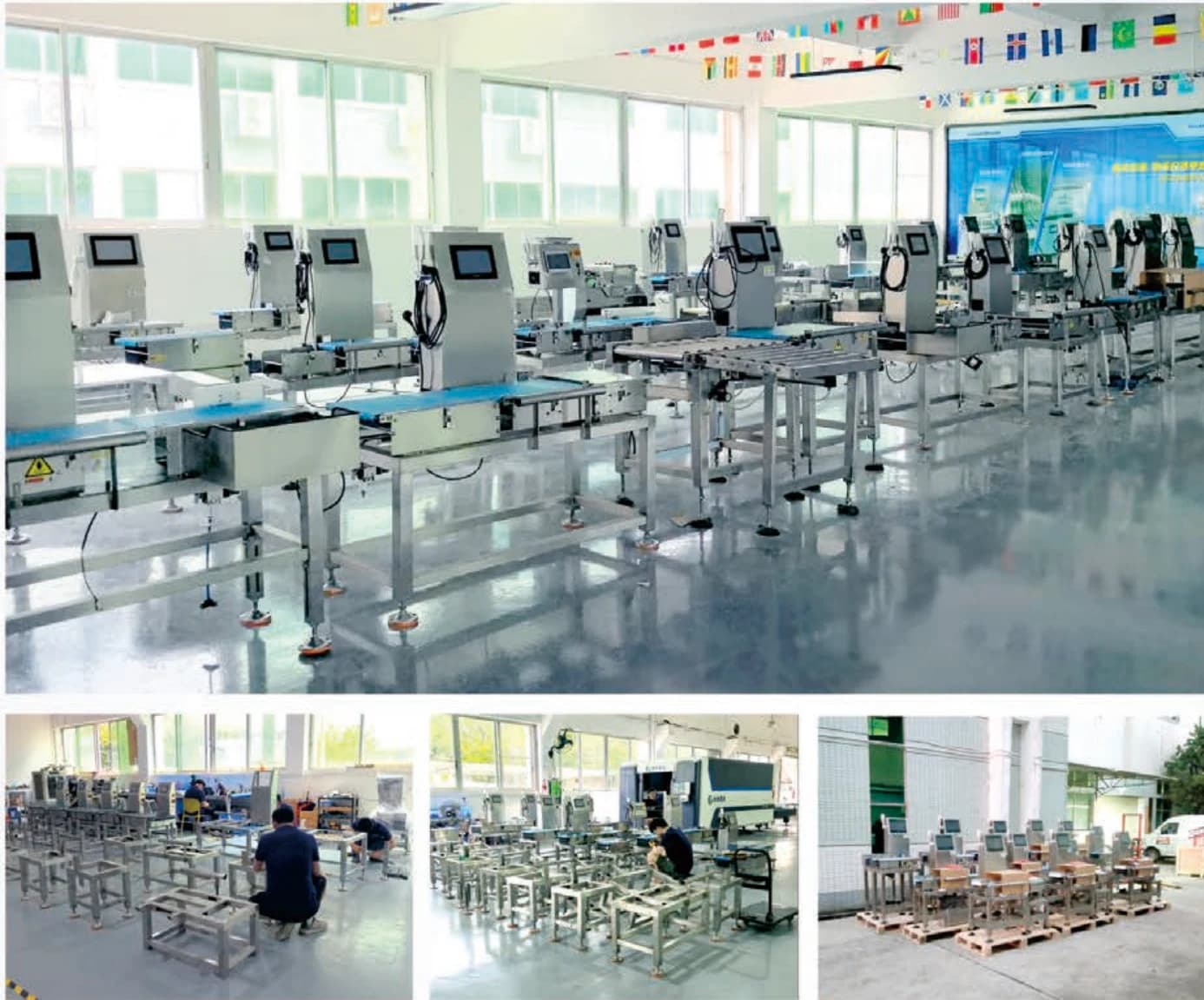
Own Factory · Seeing Is Believing
Guangdong Miqi designs, builds and tests every machine in-house — each unit is bench-tested before shipment. Free sample testing, on-site factory visits and live video of the running machine are all welcome.
Compare this model with other configurations in custom weighing and inspection systems.
Further reading
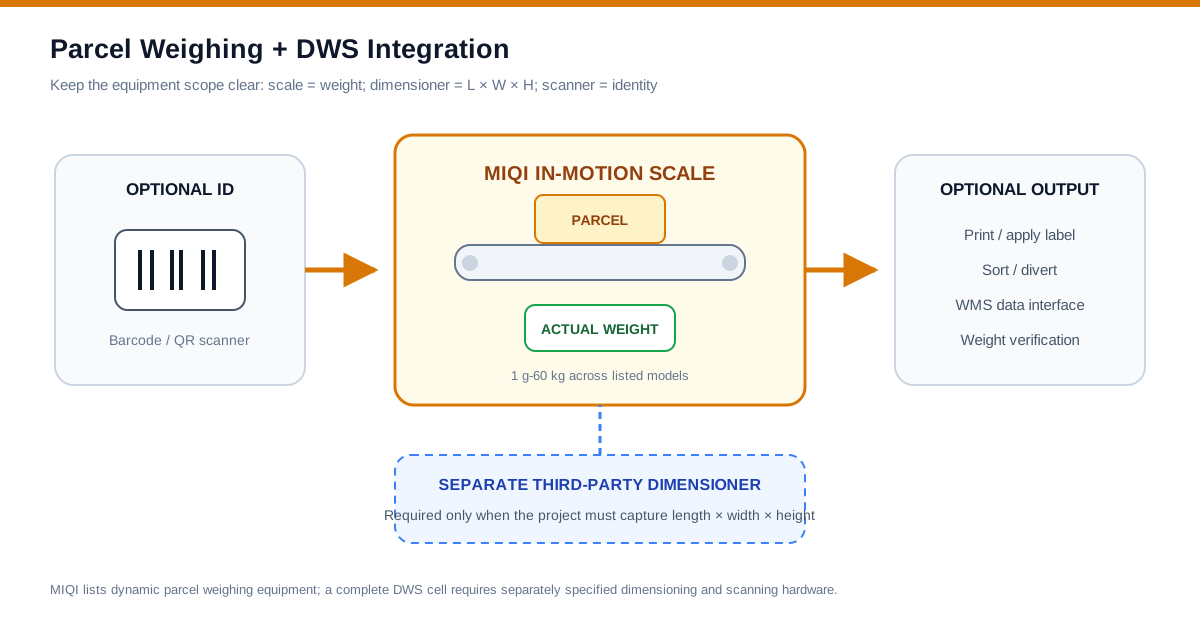
In-Motion Parcel Weighing and DWS Integration: What Each Module Does
A dynamic parcel scale captures actual weight; a dimensioner measures length, width and height; a scanner binds the record to a parcel ID. This guide shows how to specify the weighing conveyor, data interface and optional print, label and sort functions without confusing a scale with a complete DWS cell.
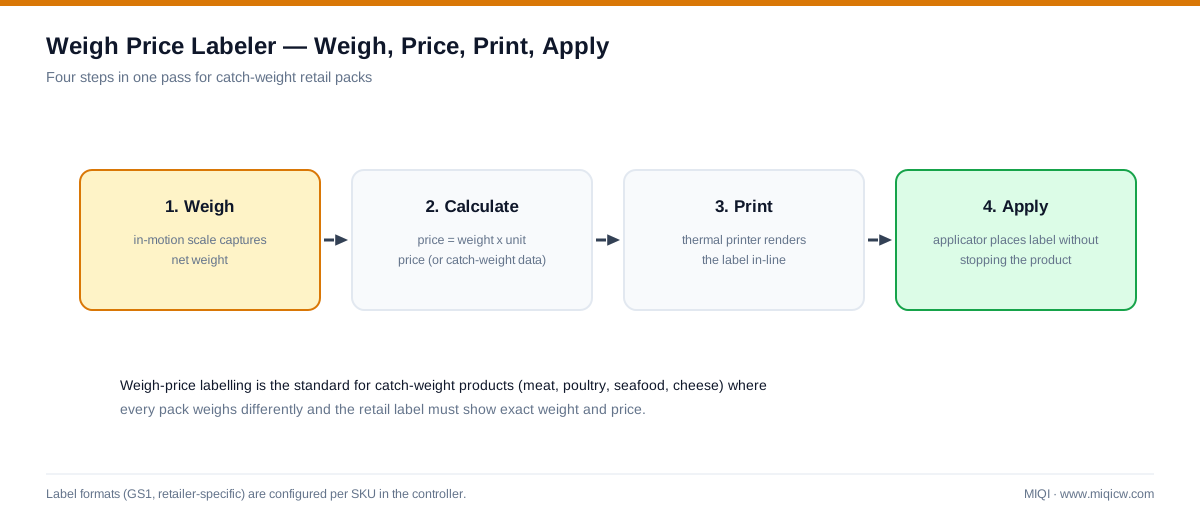
Weigh-Price Labeling vs Weigh-Print-Apply: Functions, Data and Compliance
A weigh-print-apply system captures weight and prints or applies configured data. A weight/price labeler also calculates selling price from weight and unit price, which can trigger legal-metrology requirements. Use this comparison to define the exact function before buying hardware.
Frequently Asked Questions
What is the price of Static Weighing and Printing System for Logistics (MQ-DZ04)?+
Pricing depends on the weighing range, rejection method, conveyor dimensions and selected options. Send the product weight, dimensions and line speed for a factory-direct quotation.
Does MIQI export Custom Solutions worldwide?+
Yes. MIQI ships worldwide with export packing, operating documents, configurable voltage and remote commissioning support. OEM branding and application-specific engineering are available.
Tell Us About Your Product
Share your product weight range, dimensions and line speed — our engineer replies within 24 hours with model recommendation and quotation.