Weight Grading vs Checkweighing vs Batching for Fish, Poultry and Seafood
A checkweigher decides whether a completed pack is within limits; a weight grader routes individual products into multiple weight classes; batching selects or combines pieces toward a pack target. Choosing the wrong function creates the wrong conveyor and yield strategy.
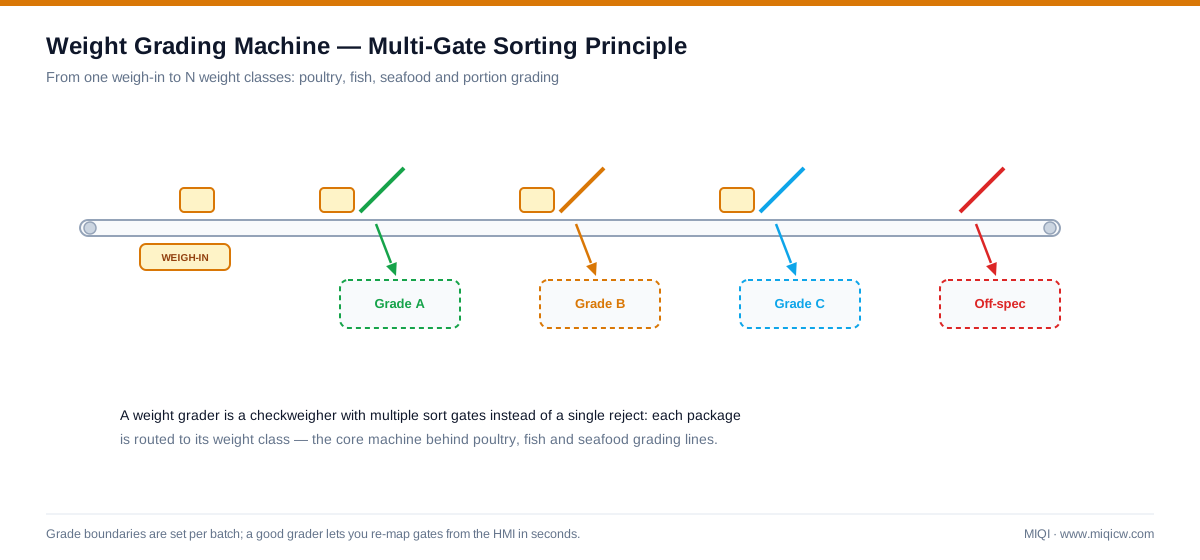
The three systems all use weight, but they solve different production problems. Checkweighing verifies compliance or completeness. Weight grading increases value by routing each piece to a class. Batching builds a group whose total approaches a target. Define the decision you need before comparing machine speed or accuracy.
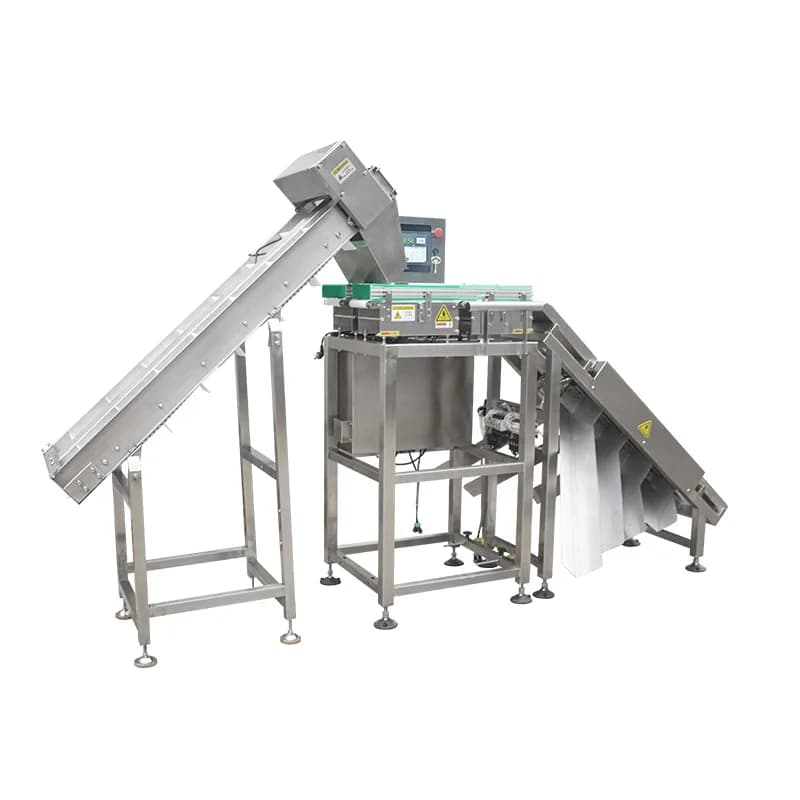
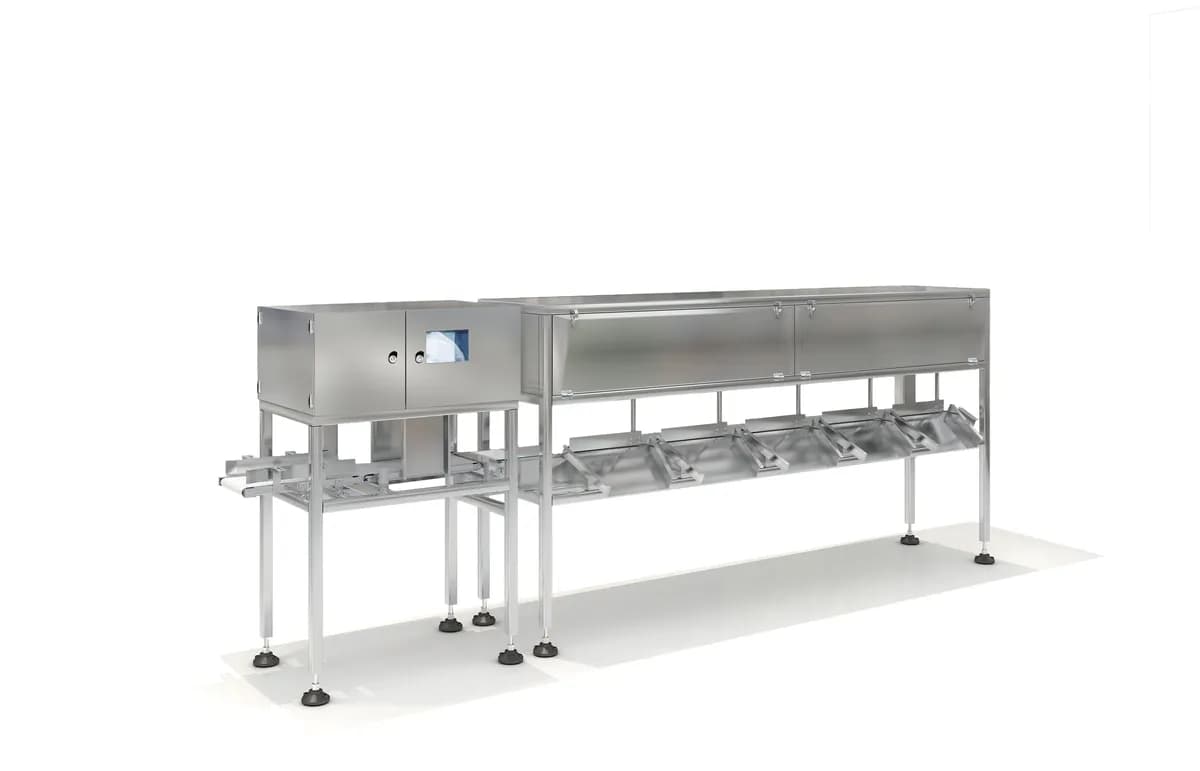
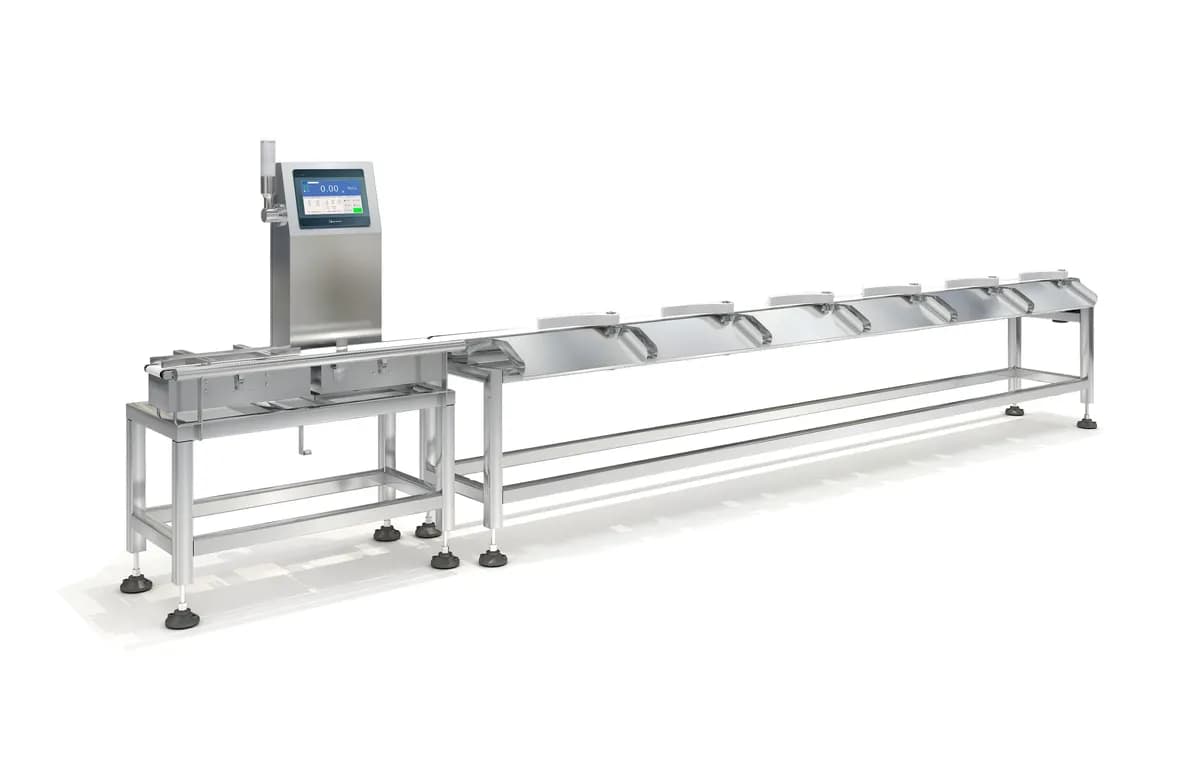
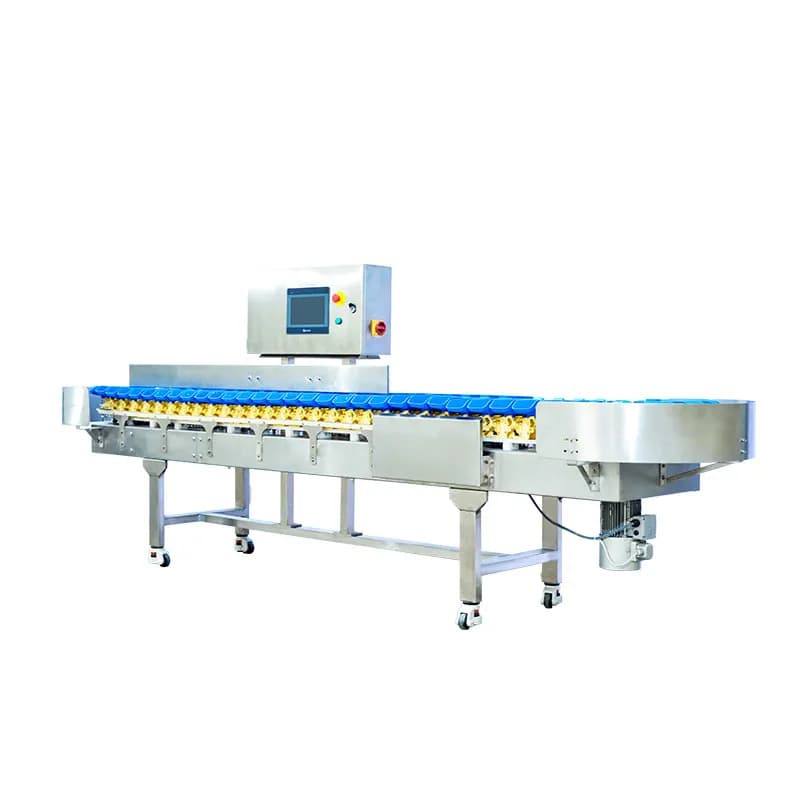
Use multi-grade weight sorters when each piece needs a weight grade, or forward/reverse sorting scales for a compact directional decision. For portions made from several pieces rather than one-piece grading, read Belt-Fed Multihead Weigher Guide for Sticky, Fresh and Irregular Products.
Three functions compared
The phrase types of sorting machines can also refer to optical, colour, size or robotic sorting. This guide covers only systems whose decision variable is measured weight: pass/fail checkweighers, multi-grade weight sorters and combination batching or portioning.
| System | Decision | Typical output |
|---|---|---|
| Checkweigher | Under / acceptable / over or missing-component result | Accept path plus reject or alarm |
| Weight grading machine | Which weight class owns this item? | Several grade outlets |
| Batching system | Which pieces form the best target total? | One completed group or portion |
Fish, poultry and seafood weight grading
Irregular natural products vary in mass even when appearance is similar. A fish weight grading machine or poultry weight sorter measures each spaced piece and routes it to the programmed class. The business result can be more consistent case weights, product allocation by customer specification and reduced manual weighing. Wet surfaces, tails, wings and touching pieces make feeding and transfer design critical.
Outlet count and grade boundaries
Start with the customer orders the plant must fill, not the maximum number of outlets advertised. List each grade boundary, expected product distribution and required destination. Too many narrow grades can reduce useful throughput or create mostly empty outlets. A representative product trial shows whether the selected accuracy is sufficient near the real boundaries.
When a checkweigher is enough
If acceptable packs share one destination and only weight exceptions require removal, consider a checkweigher. Compact forward/reverse sorting may suit small parts or medicine pouches after testing the handling cycle. For several separately collected weight classes, compare the multi-outlet weight sorter range and define the actual grade boundaries and collection paths.
Selection checklist
- Product species or type, minimum and maximum piece weight.
- Wet, sticky, delicate or live-product handling constraints.
- Required grade boundaries and outlet count.
- Pieces per minute and minimum separation at infeed.
- Cleaning, water and corrosion requirements.
- Container exchange and full-bin handling.
- Production records and recipe permissions.
Do not use the generic term food grading alone when specifying equipment: it can mean optical quality, colour or size. State weight grading when weight is the actual sorting variable.
Continue your equipment evaluation
Multi-grade food weight sorters — fish, poultry, shrimp, seafood and disc sorting
Forward-reverse sorting scales — compact limited-path weight decisions
Dynamic checkweigher machines — final-pack accept/reject inspection