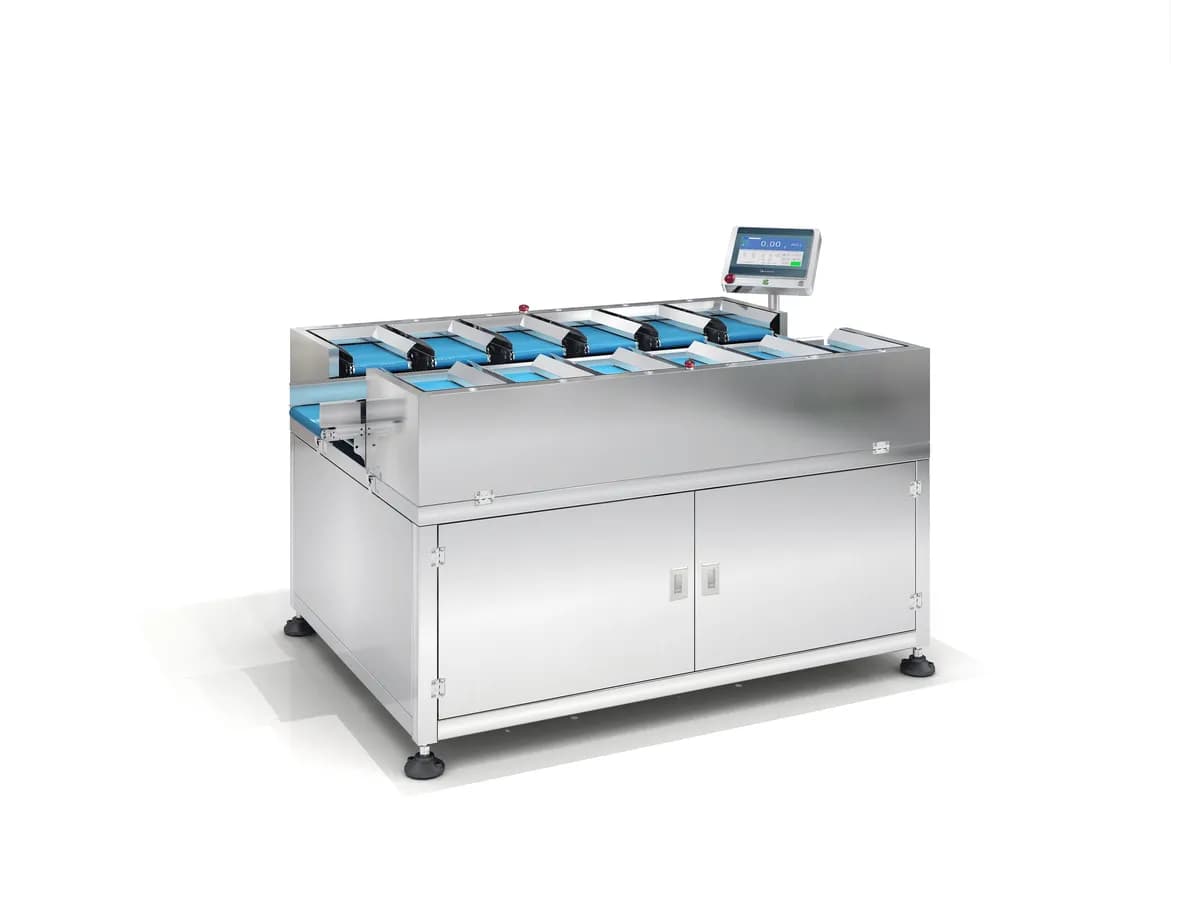
Belt-Fed Multihead Weigher Guide for Sticky, Fresh and Irregular Products
A belt-fed multihead weigher measures several small amounts and releases the combination closest to the target. It is useful when fresh, sticky, delicate or irregular pieces do not feed consistently by vibration, but product distribution and a sample trial remain decisive.
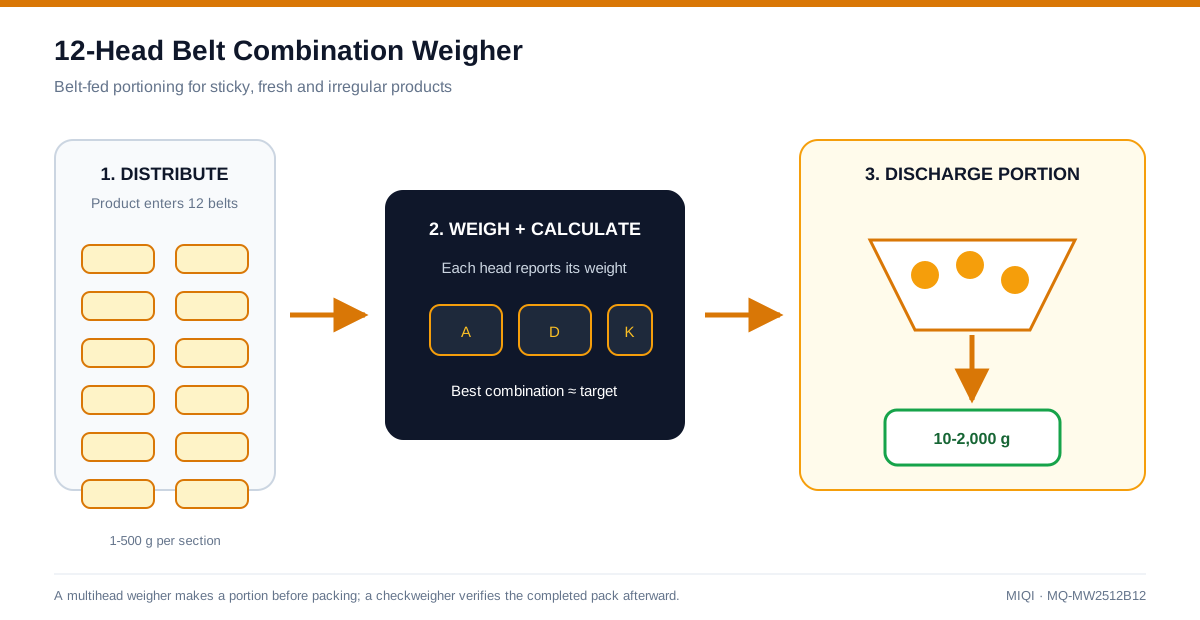
A belt-fed multihead weigher creates portions before packaging. Product is distributed across several belt-fed weighing sections, each section reports its current amount, and the controller selects the combination closest to the target. The selected sections discharge together. This is different from weighing one completed pack and rejecting it afterward.
Compare belt-fed combination weighers for pre-pack portion building and trial the actual product for feeding and discharge. Weight Grading vs Checkweighing vs Batching for Fish, Poultry and Seafood separates this batching task from grading individual pieces and checking finished packs.
Why belt feeding changes the application
Radial vibratory feeders work well for many free-flowing dry products. Fresh meat, seafood pieces, soft fruit and sticky or irregular items may bridge, cling, bounce or receive too much mechanical action. Small belts provide controlled movement and can be tuned by section, although they still require even product distribution and cleaning access.
MQ-MW2512B12 documented operating window
| Parameter | Documented value | Selection implication |
|---|---|---|
| Weighing heads | 12 belt-fed heads | Several simultaneous values are available for combination |
| Single section | 1-500 g | Piece size and loading per belt must fit |
| Combined range | 10-2,000 g | Do not assume higher portions without engineering review |
| Stated accuracy | ±0.1-3 g | Confirm at target weight and product condition |
| Maximum output | 30 portions/min | Upstream distribution and downstream clearance can reduce real rate |
| Construction | Stainless steel; IP65 listed | Confirm wash method and all contact-part requirements |
Multihead weigher vs linear weigher
A linear weigher usually fills one or a small number of weigh hoppers progressively and is simpler for suitable free-flowing products. A multihead combination weigher chooses among several simultaneous weights, which can reduce giveaway and improve speed for variable pieces. Belt feeding addresses product movement; it does not guarantee that every sticky material will run without testing.
Multihead weigher vs checkweigher
The multihead machine is a portion creator. The checkweigher is a final inspector. A line may use both: the combination weigher builds a portion, packaging seals it, and a downstream checkweigher verifies the completed pack and detects gross errors or missing components.
Send these samples and line details
- Representative product across normal size, moisture and temperature variation.
- Target portion and acceptable giveaway or tolerance.
- Required portions per minute and feeding method.
- Desired operator involvement and refill workflow.
- Downstream bagger, tray, collection or manual packing arrangement.
- Cleaning method, allergens and contact-material requirements.
- Available floor space, discharge height and utilities.
MQ-MW2512B12 is documented for sea cucumber, fresh meat, fruit and snacks. Other products should be treated as sample-test candidates, not guaranteed applications.
Continue your equipment evaluation
12-head belt combination weigher — commercial hub and documented model
MQ-MW2512B12 specifications — established product URL and images
How a checkweigher works — understand the downstream verification role