PPWR Compliance Calendar for Non-EU Exporters: What Actually Applies on 12 August 2026 (and What Doesn't Until 2030)
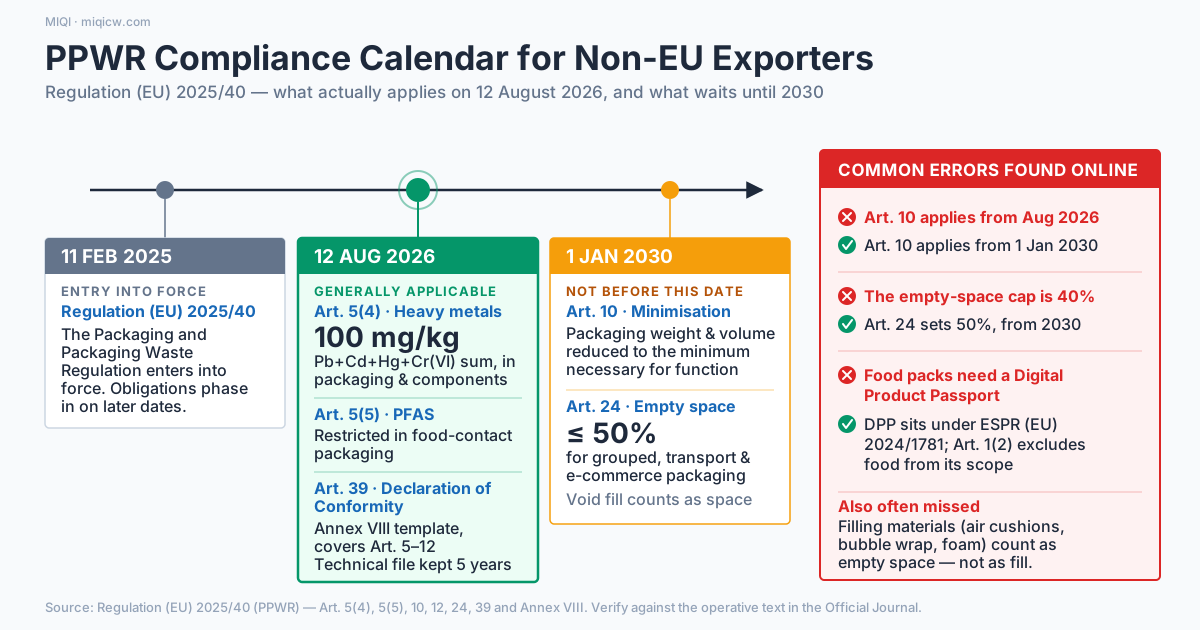
PPWR generally applies from 12 August 2026, but individual obligations have later dates. Article 12 material-composition labels generally start on 12 August 2028 or 24 months after the relevant implementing acts, whichever is later. Article 10 minimisation starts on 1 January 2030. Article 24’s 50% empty-space limit starts on 1 January 2030 or three years after its implementing acts, whichever is later. Confirm the applicable packaging type and operative acts.
PPWR generally applies from 12 August 2026, but individual obligations have later dates. Article 12 material-composition labels generally start on 12 August 2028 or 24 months after the relevant implementing acts, whichever is later. Article 10 minimisation starts on 1 January 2030. Article 24’s 50% empty-space limit starts on 1 January 2030 or three years after its implementing acts, whichever is later. Confirm the applicable packaging type and operative acts.
A label applicator implements an approved label design; it does not determine whether the packaging complies with PPWR. Compare weighing, printing and labeling systems for application and data handling, and use Weigh-Price Labeling vs Weigh-Print-Apply: Functions, Data and Compliance to distinguish weight, price and shipping-label functions.
Two dates, and why conflating them is expensive
PPWR entered into force on 11 February 2025 and became generally applicable on 12 August 2026. But "generally applicable" is not "every article is live". The legislator put design-of-packaging obligations on a later clock than substance and paperwork obligations: redesigning a pack takes tooling, line changes and qualification cycles. Swapping an ink or a label does not.
Getting this wrong costs you both ways. Believe minimisation hits in August 2026 and you burn budget against a deadline that does not exist, while de-scoping the testing and conformity file that genuinely do apply. Believe nothing happens until 2030 and you arrive at 12 August 2026 with no Declaration of Conformity and no Article 5 evidence — the first thing an importer or a market surveillance authority asks for. Different projects, different owners.
What actually applies on 12 August 2026
Article 5(4): a sum, and it covers components
From 12 August 2026, the sum of lead, cadmium, mercury and hexavalent chromium in packaging or packaging components is limited to 100 mg/kg. Two words carry the weight. It is a sum — four substances added together, not four separate limits. And it applies to components — inks, closures, labels, adhesives, printed films, any coloured plastic in the pack. If you buy printed film or coloured caps from a sub-supplier, this is a supply-chain evidence problem before it is a testing problem.
Article 5(5): PFAS in food-contact packaging
Article 5(5) restricts per- and polyfluoroalkyl substances in food-contact packaging from the same date. For exporters the exposure usually sits in grease-resistant paper and board — moulded fibre trays, bakery liners, wraps, coated cartons — where fluorochemical treatment has long been the cheap route to oil and grease resistance. If your pack has a grease barrier and you have never asked your converter what chemistry delivers it, that is this week's email.
Article 12: plan for the later labelling dates
The general 2026 start does not make the Article 12(1) harmonised material label mandatory that day. Its date is 12 August 2028 or 24 months after the relevant implementing acts, whichever is later. Reusable-packaging labelling under Article 12(2) uses 12 February 2029 or 30 months after the implementing act, whichever is later. Prepare artwork using the published specifications for the relevant obligation.
Article 39: the Declaration of Conformity is the deliverable
The EU declaration of conformity and technical documentation must address the requirements applicable to the packaging at the relevant date. Article 39 and Annex VIII describe the declaration. Article 15(3) requires manufacturers to retain the file for five years for single-use packaging and ten years for reusable packaging after placing it on the market. A declaration is not evidence that every later-dated requirement already applies.
Minimisation and empty space: 2030 and the later-date conditions
Article 10 — packaging minimisation — applies from 1 January 2030, not from 12 August 2026. Article 10(1) requires packaging to be designed so its weight and volume are reduced to the minimum necessary to ensure functionality. A design obligation on a 2030 clock.
Article 24 sets a maximum 50% empty-space ratio for relevant grouped, transport and e-commerce packaging by 1 January 2030 or three years after the implementing acts, whichever is later. Filling material counts as empty space. Apply the defined calculation method, scope and exceptions; adding filler does not by itself reduce the ratio.
Common misconceptions vs. facts
Article 10 minimisation starts on 1 January 2030. General application in August 2026 must be separated from Article 12’s later labelling dates and Article 24’s implementing-act-dependent timing. Assign an owner and source date to each requirement.
The specified empty-space limit is 50%, but the later-date condition in Article 24 matters as much as the percentage. Do not publish a deadline without checking the relevant implementing acts.
Misconception 3: "We'll add more air cushions to bring the ratio down." Fact: filling materials count toward the empty space — they do not solve the ratio, they are the ratio. The only real lever is a box that fits the goods.
Misconception 4: "PPWR means my food packs need a Digital Product Passport." Fact: the DPP sits under the Ecodesign for Sustainable Products Regulation (EU) 2024/1781, and ESPR Article 1(2) expressly excludes food from its scope. Do not let anyone sell you a DPP project for a food SKU on ESPR grounds.
Misconception 5: "Compliance is our EU importer's problem." Fact: the duty may formally sit with whoever places the packaging on the market, but the evidence lives in your factory and your sub-suppliers. Whoever holds the obligation, you produce the file.
EPR cost: use the relevant national fee schedule
PPWR establishes producer-responsibility obligations, but it does not provide one universal per-kilogram price for every EU country and packaging format. Confirm the national scheme, responsible producer, reporting units, material categories and any modulation before calculating fees.
When a scheme charges by material mass, reducing unnecessary packaging may reduce that fee component. Other charges and category rules may also apply. Build the cost model from the actual scheme and packaging bill of materials; a checkweigher’s gross pack weight is not automatically the packaging-material weight.
Why lighter packaging raises the bar on filling and checkweighing
Packaging exists partly to absorb variation. Headspace absorbs fill variation. Board thickness absorbs handling variation. Void fill absorbs the mismatch between what you packed and the box you had on the shelf. Strip weight and volume out of the pack — for Article 10, for Article 24, or because EPR is charging you by the kilo — and you remove the buffer that was quietly forgiving your process variation.
Concretely: a thinner film has less tolerance for overfill; a tighter e-commerce box has less tolerance for a mis-counted unit; a reduced-headspace jar means the giveaway you used to hide in the headspace now shows up as a non-conforming pack. Every gram you take out of the packaging is paid for upstream, in tighter process control. So the honest sequencing is the reverse of what most people assume: measure what tolerance your line holds today, then design the pack to that reality — or invest in the line first and design to what it will hold afterwards.
Where to look on your own line
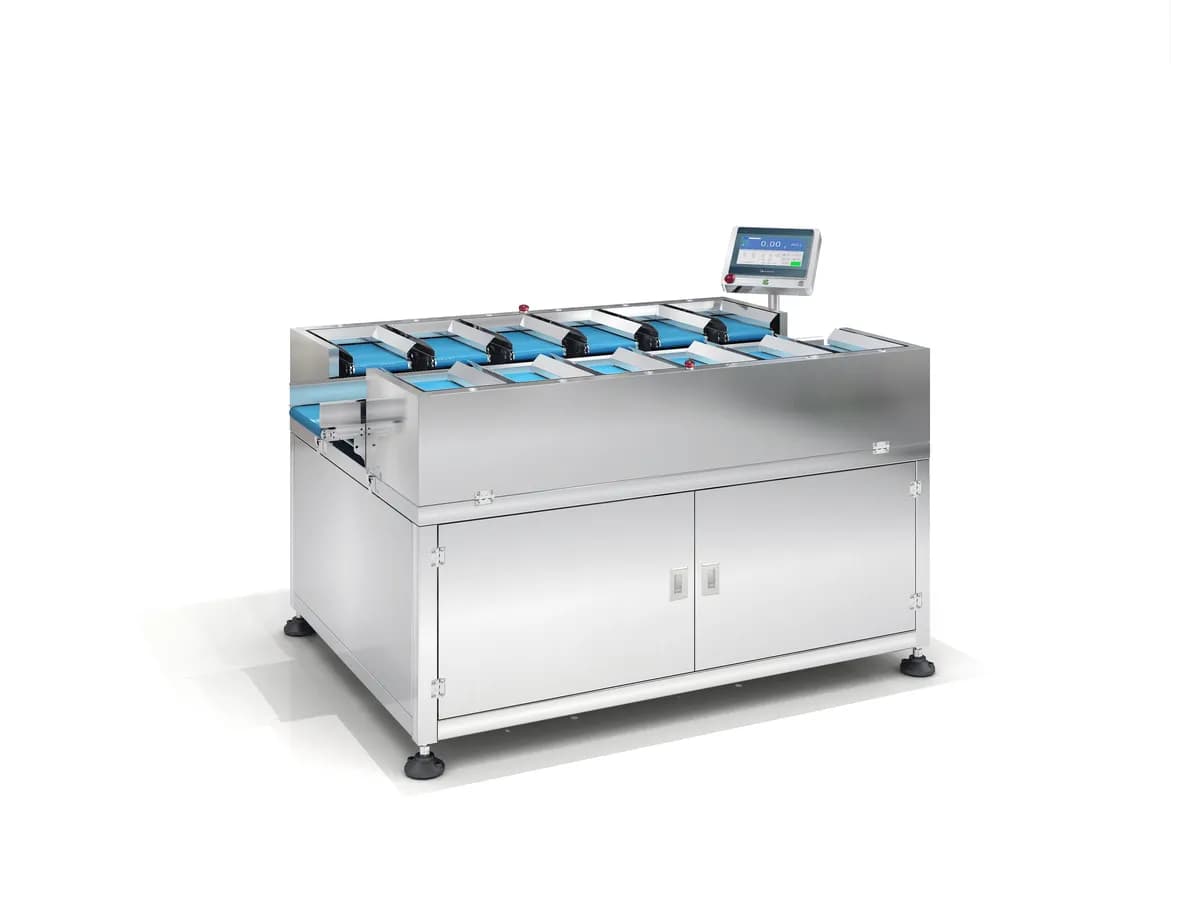
Start by characterising your filling distribution, not your setpoint. A multihead weigher such as the MIQI MQ-MW2512B12 exists to hit a target with a tight distribution rather than a generous average, and the width of that distribution — not the mean — dictates how much headspace and overfill your pack must carry. If you do not know your standard deviation per SKU, you do not yet know how far you can minimise.
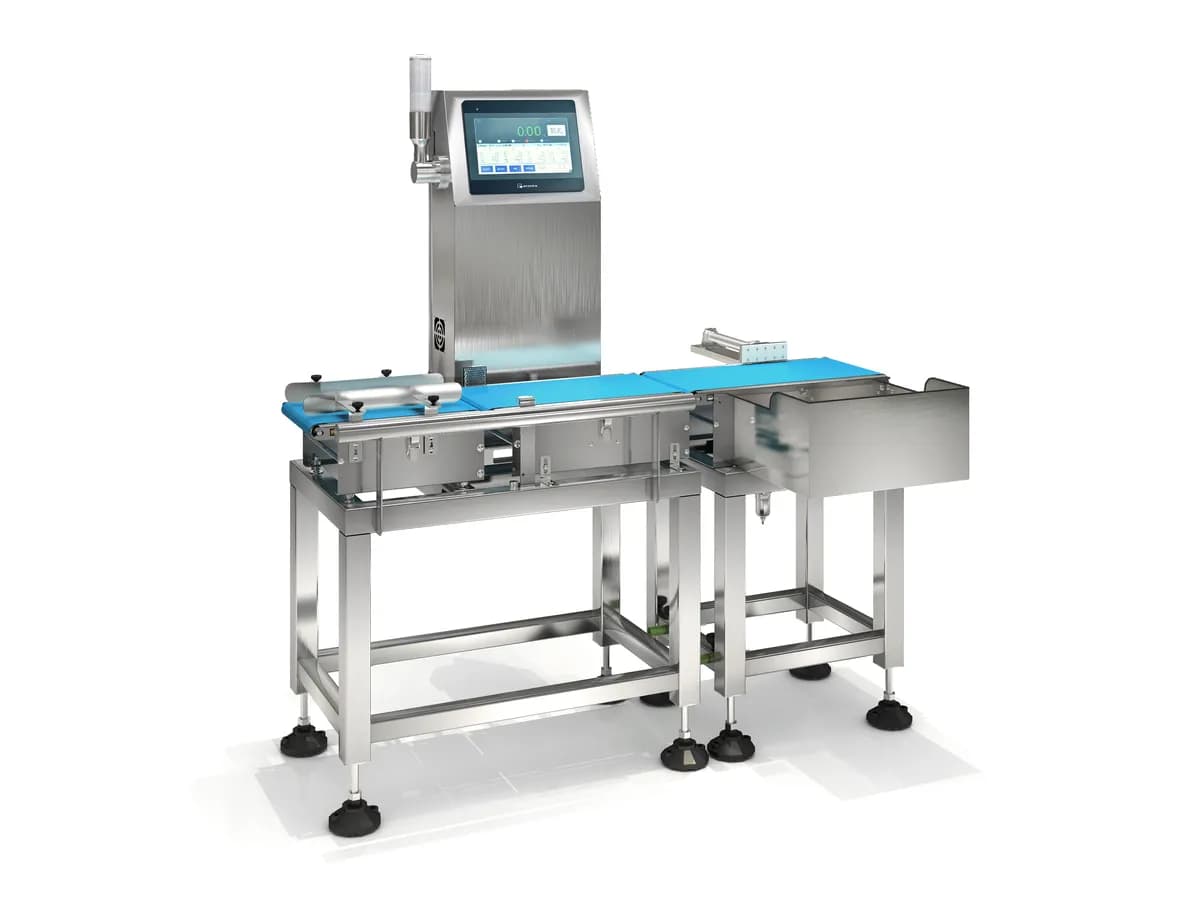
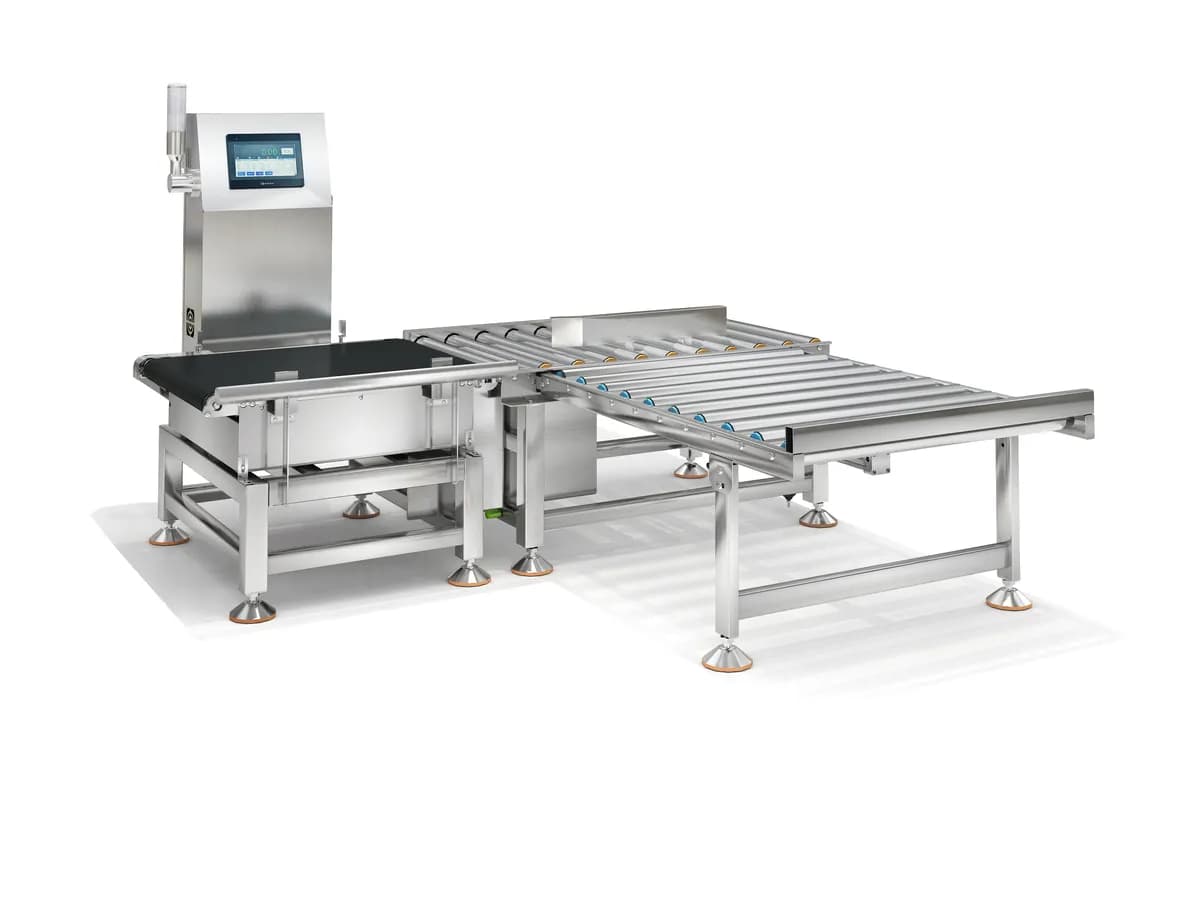
Then close the loop at the end of the line. A checkweigher such as the MIQI MQ-CW4523L3 for primary packs, or the MQ-CW8050L30 for heavier units and cases, turns that distribution from an assumption into a measured, recorded number — which is what lets you argue to a customer, an auditor or your own board that a lighter pack is safe to run. For grouped and transport packaging, case-level weight checking is a low-cost early warning that your pack-out is drifting from the geometry you designed.
One point of transparency, since this article is about not overstating things: Guangdong Miqi M&E Technology has not yet obtained CE or ISO 9001 certification. We are a source factory with nine product series and 44 models, and we support free sample testing and non-standard customisation. We would rather tell you what we do not hold than have you find out during a purchase order.
A practical PPWR checklist for non-EU exporters
1. List every EU-bound SKU and decompose each pack by component: substrate, ink, coating, adhesive, closure, label, secondary, transport.
2. Chase Article 5(4) evidence per component — material declarations or test data from every sub-supplier, not just your primary converter. Coloured and printed components are the usual gap.
3. Ask the PFAS question on every food-contact pack with a grease barrier; get the barrier chemistry in writing.
4. Scope the Article 12 labelling work by SKU count, not by artwork count, and book prepress capacity now.
5. Prepare the declaration and technical file for the requirements that apply to your packaging. Set retention according to the operator’s obligation: manufacturers retain five years for single-use and ten years for reusable packaging after market placement.
6. Agree in writing with your EU importer who declares what. Ambiguity surfaces at the border, the most expensive place to find it.
7. Clarify your Article 44 and 45 EPR position and confirm with your national scheme how fees are calculated. Do not budget off a blog post, including this one.
8. Measure your filling standard deviation per SKU before committing to any weight reduction — it is the input to the redesign, not an afterthought.
9. Re-verify the calendar quarterly against the Official Journal. The Commission has published guidance on (EU) 2025/40 in the OJ C series (reference OJ C_202603084), but read the operative text, not a summary.
Where PPWR ends and ESPR begins
PPWR is Regulation (EU) 2025/40 and governs packaging and packaging waste. The Ecodesign for Sustainable Products Regulation is (EU) 2024/1781; it entered into force on 18 July 2024, and the Commission adopted the first ESPR working plan on 16 April 2025. ESPR is where the Digital Product Passport lives — and ESPR Article 1(2) expressly excludes food from its scope. If someone says your food SKUs need a DPP under the EU ecodesign framework, they are wrong on the face of the regulation.
If this were our factory
Maintain three linked plans: current substance and conformity evidence; later labelling work tied to implementing acts; and packaging redesign with performance validation. Use the actual national EPR rules for any savings calculation. Assign dates by provision rather than treating all of PPWR as a single deadline.
If you want to talk through the measurement half — what your current fill distribution actually allows, whether a checkweigher earns its keep against your EPR exposure, or how to spec a line for a pack you have not designed yet — talk to Engineer Cai. WhatsApp +86 152 1890 9599 or email 897874196@qq.com. We are a source factory, we send real parameters rather than a brochure, and we support free sample testing on your actual product before you commit. If the answer is that you do not need new equipment, we will tell you that too.