USPS DIM Divisor Drops to 139 on July 12, 2026: What the 19.4% Billable-Weight Jump Means for Your Packing Line
USPS changed the DIM divisor to 139 on July 12, 2026. Learn the one-cubic-foot threshold, whole-inch and pound rounding, and how measured carton dimensions and actual weight support parcel packing decisions. A 19.4% formula increase is not a guaranteed postage increase.
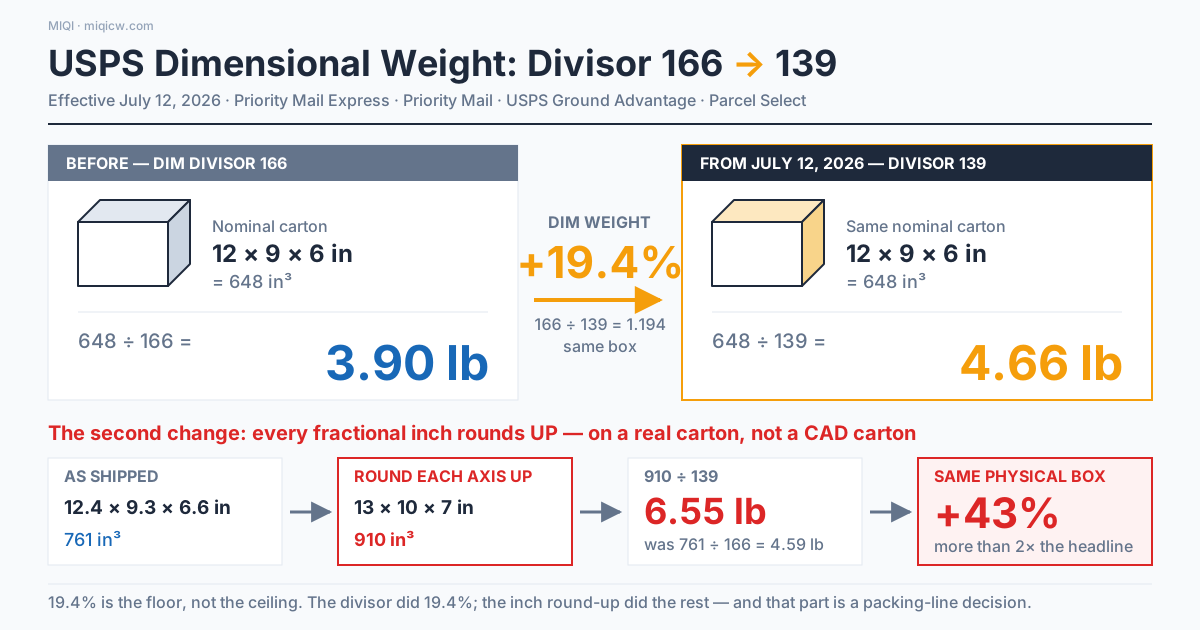
Effective July 12, 2026, USPS uses a DIM divisor of 139 for the affected services. For rectangular Priority Mail parcels, round each dimension up to a whole inch; DIM pricing applies when the resulting volume exceeds 1,728 cubic inches. Divide by 139 and round up to whole pounds, then compare with actual weight. Service exceptions, such as eligible Flat Rate packaging, still matter. The 166 ÷ 139 ratio is about 19.4% before rounding; it is not a guaranteed increase in postage.
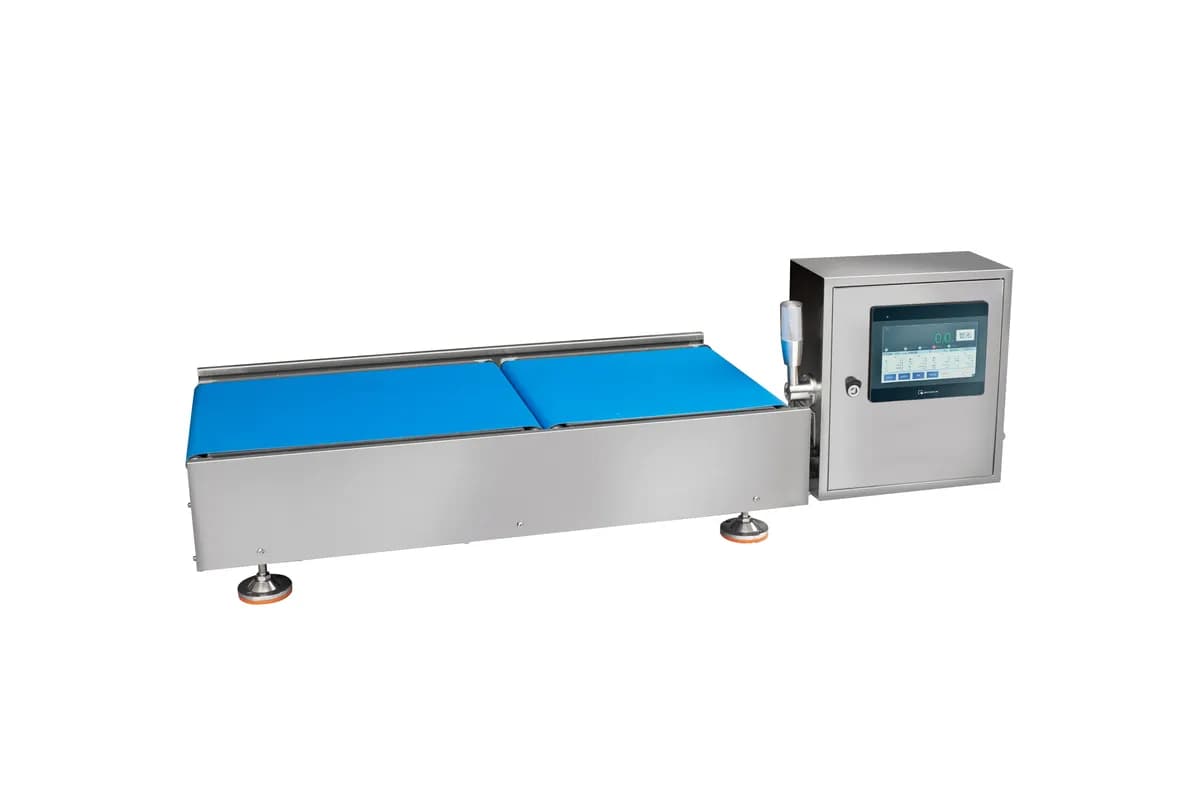
Actual mass and dimensional weight are separate inputs. Compare in-motion logistics weighing systems for the weighing stage, then use In-Motion Parcel Weighing and DWS Integration: What Each Module Does to specify which measurements come from the scale, scanner and separate dimensioner.
What actually changes on July 12, 2026
Dimensional weight is not a fee. It is a substitution rule. The carrier computes a notional weight from your package's cube (length × width × height, divided by a divisor), compares it with the actual scale weight, and bills the greater of the two. When your parcel is denser than the divisor implies, DIM never appears. When it is lighter — air, void fill, a right-sized-on-paper carton that isn't — DIM wins and you pay for volume, not mass.
1. The divisor: 166 to 139
The divisor sits in the denominator, which is why the headline number surprises people. Going from 166 to 139 is a 16.3% cut in the divisor — but a 19.4% increase in the resulting weight, because you are dividing by a smaller number. 166 ÷ 139 = 1.1942. Every cubic inch you ship now converts to more billable pounds, at that same fixed ratio, on every affected parcel.
2. The quieter change: every fractional inch rounds up
Whole-inch rounding is applied before the volume test and DIM calculation. A measured 18.4 × 14.3 × 10.6 in carton becomes 19 × 15 × 11 in. Use the appropriate service rules for nonrectangular parcels and Flat Rate products; do not apply this calculation indiscriminately to every shipment.
What 19.4% means before billing rules
Arithmetic example: for the same eligible carton volume of 18 × 14 × 10 = 2,520 in³, division by 166 gives 15.18 lb and division by 139 gives 18.13 lb. The unrounded ratio rises 19.4%. After rounding up, those DIM values are 16 lb and 19 lb. Actual weight, service and the applicable rate table determine the charge.
For the measured 18.4 × 14.3 × 10.6 in carton, the current whole-inch rule yields 19 × 15 × 11 = 3,135 in³. 3,135 ÷ 139 = 22.55 lb, rounded up to 23 lb DIM weight. This is a hypothetical calculation, not a customer saving claim. A small 12 × 9 × 6 in carton is below the one-cubic-foot threshold and must not be used as an example of DIM billing under this rule.
Common misconception vs. fact
The divisor fell by about 16.3%, which increases unrounded DIM weight by about 19.4% for the same eligible volume. Postage is a separate result: eligibility, inch rounding, pound rounding, actual weight, service and rate band all matter. Do not apply that percentage directly to every shipment invoice.
DIM eligibility comes before the comparison with actual weight. Apply the service-specific volume threshold and exceptions first. Among eligible parcels, the lower divisor can make dimensional weight exceed actual weight even when the product has not changed.
Misconception: my WMS has cube data for every carton, so I can model this from the database. Fact: your WMS holds the as-designed cube. The carrier bills the as-shipped cube — bulge, tape ridge, proud flaps, a label-side lump. With fractional inches now rounding up, the gap between as-designed and as-shipped is exactly the gap between the 19.4% you budgeted and the number you actually get. As-designed data is a planning input, not a billing prediction.
Invoice auditing and upstream measurement serve different purposes. Audits can detect rating discrepancies after shipment and support a dispute under the carrier’s procedure. Measuring sealed cartons before dispatch can reveal avoidable volume or data errors earlier. Compare their costs and benefits using actual shipment records rather than assuming either service always pays back.
The context: this lands in a market already reshuffling
The Pitney Bowes 2026 US Parcel Shipping Index reports 23.1 billion US parcels in 2025, up 3.3% from 2024, and 6.9 billion parcels carried by Amazon Logistics. These are industry-level estimates, not evidence of the cost impact on a particular shipper. Use your own shipment mix to evaluate a packing or dimensioning investment.
These market estimates provide context, not proof of why USPS chose its divisor. For an equipment decision, use your own measured cartons, service mix and rated shipment records. Do not assume a future divisor or a fixed percentage saving.
Legal metrology: it is NIST Handbook 44 Section 5.58, not 5.57
NIST Handbook 44 Section 5.58 covers multiple dimension measuring devices. It is a model technical reference; applicable state adoption, device approval and carrier acceptance must be checked for the intended use. A Handbook citation alone does not certify a device or settle a billing dispute.
The engineering consequence: measurement in a billing context is not a hobby. Resolution, rounding behaviour, verification interval and the traceability of your reference standards all matter, because the number your device produces is the number you argue from. Ask your supplier which sections they build to, and how they expect the device to be verified in your jurisdiction.
Why the pack bench beats the invoice
The argument in one line: while the box is still open, dimensions are a decision; once it is sealed and manifested, they are a fact you pay for. At the pack bench, an oversized carton is a five-second correction. Downstream, it is a rated shipment, a dispute, a credit request and a cash-flow hole that stays open until it is resolved. Under the old divisor you could absorb a fair amount of that slack. At 139, with fractional inches rounding up, the tolerance band has narrowed on all three axes at once.
This is also why just buy smaller boxes is incomplete advice. Most operations only have as-designed cube in the WMS plus a scale that reports mass — joined, those two still cannot tell you which SKUs crossed the threshold, because neither contains an as-shipped dimension.
Run the number yourself: a seven-step checklist
1. Pull 30 days of rated shipments from before July 12, 2026, with actual weight and billed dimensions per parcel. Rated data, not manifest data — you want what the carrier decided, not what you declared.
2. Build the historical baseline using the service and rounding rules that applied to each shipment, including the DIM volume threshold and any Flat Rate exception. Then compare the applicable DIM weight with actual weight.
3. Recompute with cube ÷ 139 and re-flag. The delta between the two flag sets is your crossover population: SKUs that were billed on mass and now bill on volume.
4. Recalculate eligible shipments with the current service rules: round dimensions as specified, test the volume threshold, divide the applicable cube by 139, round pounds up, and compare with actual weight. Apply the current rate table to estimate cost.
5. Physically measure as-shipped cartons, not as-designed. Take your 20 to 30 highest-volume SKUs, gauge the real box after sealing, compare against WMS cube. The gap is your systematic error.
6. Rank SKUs by (new billable weight − old billable weight) × monthly volume. That is your action list, ordered by money. A small number of SKUs usually carries the majority of the increase, and they are rarely the ones people expect.
7. For the top of that list, work the cheap levers first: carton size, then void fill. Product or kit geometry is the third lever — slow, but permanent. Only after those do you talk about rates. Steps 1 to 4 are a spreadsheet exercise you can finish this week; step 5 is where you find out whether the spreadsheet was ever telling you the truth.
What equipment actually helps — and where MIQI fits
All of the above depends on one capability: capturing an as-shipped weight, and ideally a dimension, at the point where a correction is still cheap. If your line ends in a scale that reports mass and nothing else, you are structurally blind to the variable that now drives your bill.
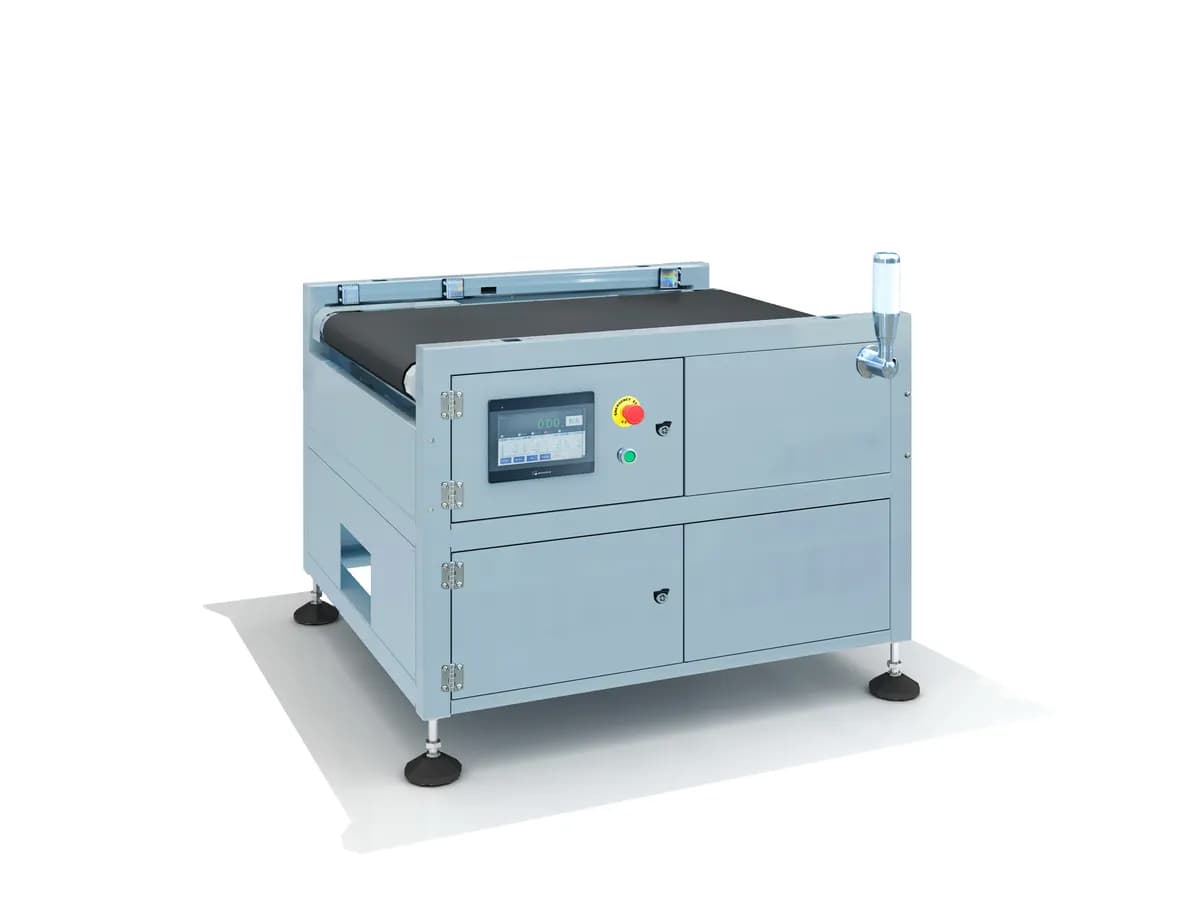
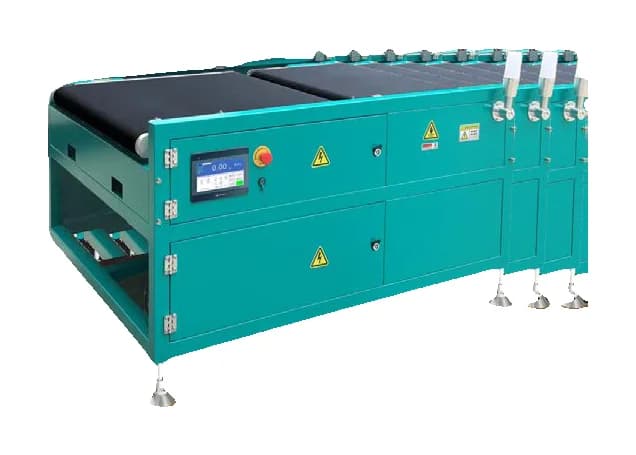
MIQI is a source factory building nine series and 44 models of weighing and inspection equipment. For parcel work, three models cover most of the footprint range: MQ-CW12080S60 for large cartons and heavier parcels, MQ-CWS90100L50 for the mid-range, and MQ-CW6055L5 for small, light parcels and polybags where throughput matters more than capacity. Which fits depends on your actual carton footprint, weight band and target rate — ask for the spec sheet against your numbers rather than picking from a model name. A conveyor height or indexing scheme that does not match a catalogue frame is a normal conversation here; we build non-standard.
Two things we will say plainly, because you will not hear them from everyone. First: no scale, dimensioner or checkweigher makes you compliant with a carrier's DIM rule — DIM is a billing rule, not an equipment standard. Any vendor claiming their machine makes you compliant with a rate change is selling you a story. What equipment does is hand you a measured number early enough to act on. That is enough. Second: MIQI has not yet obtained CE or ISO 9001 certification — we would rather write that here than have you discover it during the RFQ. We do offer free sample testing: send your actual cartons or products, we run them on the real machine and send you the data, including the cases where the answer is that you do not need what we sell.
The bottom line
The actionable change is the 139 divisor plus the current rounding rules, subject to DIM eligibility. Measure the finished carton, retain its weight and shipment reference, and compare real rated costs. The 19.4% divisor ratio describes the unrounded calculation; actual postage may change by a different amount or not at all.
If you want a second engineer's eye on your SKU data or your line layout, message Engineer Cai on WhatsApp at +86 152 1890 9599 or email 897874196@qq.com. Send the carton dimensions and weight band and we will tell you what fits — including if the answer is nothing we make.