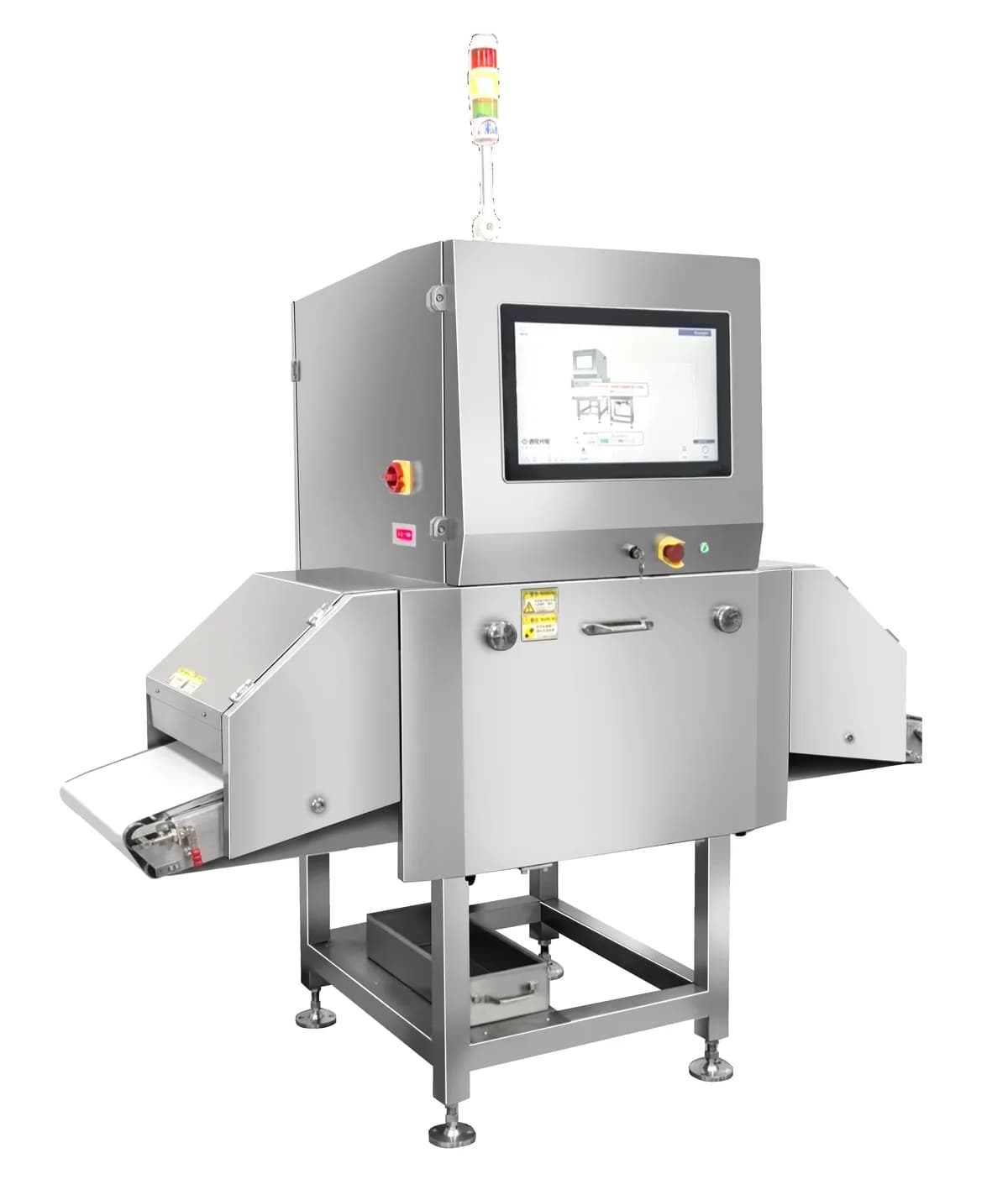
Standard X-Ray Inspection System for Bagged Products
X-ray inspection system with 0.4mm SUS-ball detection sensitivity — catches glass, ceramic and stone contaminants in-line, right where metal detectors go blind
Standard X-Ray Inspection System for Bagged Products (MQ-XR) — accuracy 0.4mm. Factory-direct from Guangdong, China. OEM & custom available.
Typical applications: Bagged snacks, flexible-packaged foods, sachet beverages and milk, and other bagged products
Key Features
- ✓Detects foreign objects inside packaged products and verifies seal integrity (product trapped in seal or damage); multiple rejection options to meet customized requirements for all product types
- ✓Custom foreign object detection solutions for all types of packaged products, built on Sooview's proprietary ZeroShot-SvDetector deep learning algorithm
- ✓4G wireless and wired network connectivity for fast remote technical support and operation
- ✓AI instantly identifies foreign objects, product-in-seal, and broken bags with automatic rejection of defective products; stable performance and easy maintenance for small and medium packages
- ✓Detects a wide range of foreign objects: metal, glass, ceramic, stone, rubber, hard plastic, and more
Why Choose MQ-XR
See Through Non-Metal Contaminants
Empty-machine detection sensitivity: 0.4mm SUS ball, 1.0mm glass, 1.0mm ceramic, 0.2×5mm SUS wire. Glass shards, stones, hard plastic and rubber that slip past any metal detector are all visible to X-ray imaging — one machine covers every contaminant type, regardless of material.
Deep-Learning Image Judgment
Our in-house Sooview inspection software runs the ZeroShot-SvDetector deep-learning algorithm, with detection recipes customized per packaged product. AI instantly flags foreign objects, product trapped in seals and torn bags — no operator staring at images, and the judgment standard stays identical across all three shifts.
Contaminants and Seals, One Scan
Beyond foreign-object detection, the same X-ray image verifies seal integrity — product-in-seal and damaged packs are identified and rejected automatically. That eliminates a manual seal-inspection station and stops defective bags before they ever leave the plant.
Five Models, Right-Sized Selection
The MQ-XR series offers five models covering product sizes from 240×50mm up to 700×300mm, X-ray sources from 210W to 350W and belt speeds of 10-60m/min. For bagged products up to 10kg, pick by bag format and throughput — no paying for a big machine to inspect small pouches.
4G Remote Support, No Waiting
Dual connectivity comes standard: 4G wireless plus wired Ethernet. When the line hits a problem, our engineers dial in remotely to diagnose and assist with setup online. Most software issues are resolved without an on-site visit, cutting downtime to a minimum.
304 Stainless, Washdown-Ready
The catalogue distinguishes IP66 protection for the conveyor from IP54 for other parts; do not apply the conveyor cleaning procedure to the entire machine. Confirm permitted cleaning pressure, temperature and chemicals, and protect the electrical enclosure. Listed operating conditions are 0–45°C and 30–85% RH without condensation; verify the actual environment before installation.
Problems It Solves for You
Metal detectors only find metal. Glass shards, ceramic fragments and stones mixed into bagged snacks sail straight to market — one complaint with compensation and a recall costs far more than the machine itself.
X-ray imaging doesn't care whether a contaminant is magnetic. Empty-machine sensitivity reaches 1.0mm glass, 1.0mm ceramic, stones, hard plastic and 0.4mm SUS balls — metallic and non-metallic contaminants intercepted in one pass at the end of the line.
Seal contamination and torn bags are checked by eye. Long shifts mean tired eyes and inevitable misses — leaky bags reach distributors, whole batches come back, and nobody can pin down who's responsible.
AI verifies seal integrity in the very same scan that checks for foreign objects, auto-rejecting packs with trapped product or damage. The judgment criteria live in the algorithm — day shift and night shift apply exactly the same standard.
Every product changeover means re-tuning detection parameters. Get it wrong and the line over-rejects good product; get stuck and the line idles for half a day waiting for a technician to arrive.
A 21.5-inch touchscreen runs our Sooview software, whose ZeroShot deep-learning algorithm builds a detection recipe per product. And via 4G or wired network, our engineers connect remotely to walk you through changeover and tuning online.
Food plants are humid and hosed down daily. Ordinary equipment gets moisture in its electricals and faults every few days — the inspection step itself becomes the line's bottleneck.
The catalogue distinguishes IP66 protection for the conveyor from IP54 for other parts; do not apply the conveyor cleaning procedure to the entire machine. Confirm permitted cleaning pressure, temperature and chemicals, and protect the electrical enclosure. Listed operating conditions are 0–45°C and 30–85% RH without condensation; verify the actual environment before installation.
Technical Specifications
| Product model | MQ-XR-2410; MQ-XR-4016; MQ-XR-6030; MQ-XR-6040; MQ-XR-7040 |
|---|---|
| X-ray source power (W) | MQ-XR-2410:210; MQ-XR-4016:240; MQ-XR-6030/MQ-XR-6040:240/350; MQ-XR-7040:350 |
| Detector resolution | 0.4mm under no-load conditions; actual accuracy depends on the inspected material and test result |
| Empty-machine detection accuracy | SUS ball: 0.4 mm; glass: 1.0 mm; ceramic: 1.0 mm; SUS wire: 0.2 × 5 mm |
| Operating software | In-house Sooview inspection software |
| Human-machine interface | 21.5-inch touchscreen |
| Conveyor speed | 10-60 m/min |
| Inspected-product weight | <10Kg |
| Inspected-product dimensions | MQ-XR-2410:240*50mm; MQ-XR-4016:400*120mm; MQ-XR-6030:600*200mm; MQ-XR-6040:600*300mm; MQ-XR-7040:700*300mm |
| Power supply | AC 220 V; 2.0 kW; 50 Hz |
| Operating temperature and humidity | Environmental temperature 0~45°C, relative humidity 30~85%, no condensation |
| Ingress protection | Conveyor: IP66; other parts: IP54 |
| Machine material | Brushed 304 stainless steel |
Functions in Detail
Rejection Options
Multiple rejection mechanisms are available, configured to your bag format, pack weight (up to 10kg) and line takt. Once a contaminant, seal defect or torn bag is judged, the defective pack is ejected from the main line automatically — no manual picking that risks secondary contamination or stoppage, while good product passes through untouched.
Sooview Inspection Software
Our in-house Sooview software is built around the ZeroShot-SvDetector deep-learning algorithm, with contaminant-detection recipes tailored to each packaged product type. The 21.5-inch touchscreen displays the X-ray image and judgment result directly; operators follow a guided changeover wizard — no algorithm expertise required.
Connectivity & Remote Support
The machine ships with both 4G wireless and wired network connections, each backing up the other. Even where factory networking is restricted, 4G keeps it online — MiQi engineers connect remotely to deliver technical support and hands-on operating assistance, shortening both fault response and changeover-tuning wait times.
Cleaning & Maintenance
The catalogue distinguishes IP66 protection for the conveyor from IP54 for other parts; do not apply the conveyor cleaning procedure to the entire machine. Confirm permitted cleaning pressure, temperature and chemicals, and protect the electrical enclosure. Listed operating conditions are 0–45°C and 30–85% RH without condensation; verify the actual environment before installation.
Model Selection Guide
Five models tiered by product size: MQ-XR-2410 handles 240×50mm, stepping up to MQ-XR-7040 at 700×300mm. Single-pack weight up to 10kg, X-ray source power 210W to 350W, belt speed 10-60m/min, and the whole machine runs on AC 220V at 2.0kW — standard workshop power is all you need.
Industries & Application Scenarios
Full in-line inspection at the end of chip, nut and snack lines: stones and shell fragments carried in with raw material, plus product trapped in seals, are all rejected — the final checkpoint before case packing.
For vacuum-packed braised meats, pickles and preserved vegetables, X-ray sees straight through aluminum foil and laminate films to the contents — metal, glass and hard-plastic contaminants stopped before cartoning.
On high-speed lines for pillow-pack and sachet milk and small pouched drinks, foreign-object detection and seal-damage/product-in-seal judgment happen in the same scan — keeping leaky pouches out of the channel and whole-batch complaints off your desk.
Dumplings, glutinous rice balls and meatballs in bags: bone fragments, stones and other hard contaminants detected in-line. The machine runs normally in cold, humid workshops within 0~45°C and up to 85% RH.
Merged-lane inspection after packing compound seasoning powders and sauce sachets. The compact model for 240×50mm product sizes fits these small formats, judging contaminants and seal defects simultaneously without eating line space.
For pet food and snack exporters, customer audits demand a documented foreign-object control point. In-line X-ray inspection paired with rejection records provides hard evidence for exactly that requirement.
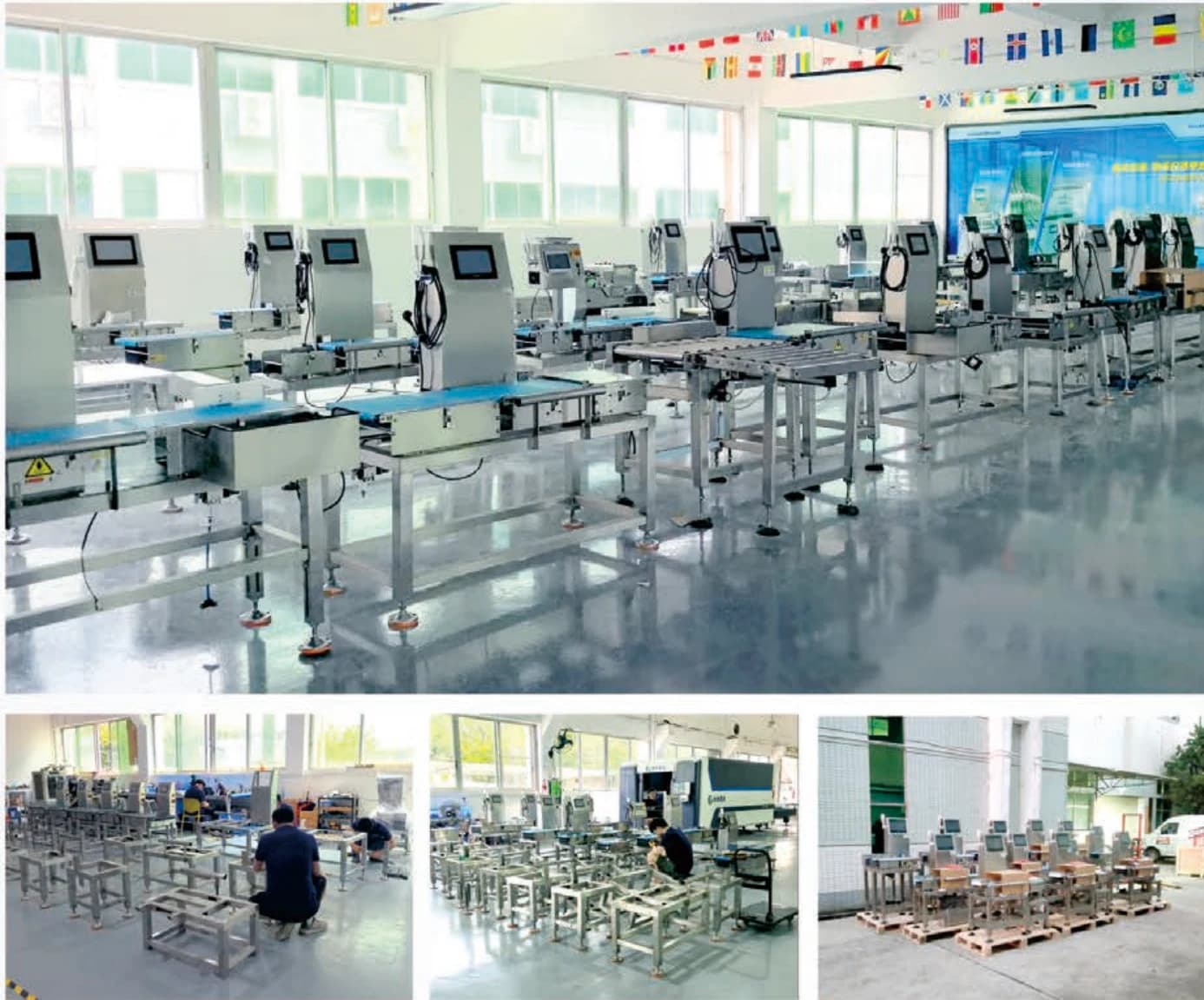
Own Factory · Seeing Is Believing
Guangdong Miqi designs, builds and tests every machine in-house — each unit is bench-tested before shipment. Free sample testing, on-site factory visits and live video of the running machine are all welcome.
Compare this model with other configurations in food X-ray inspection systems.
Further reading
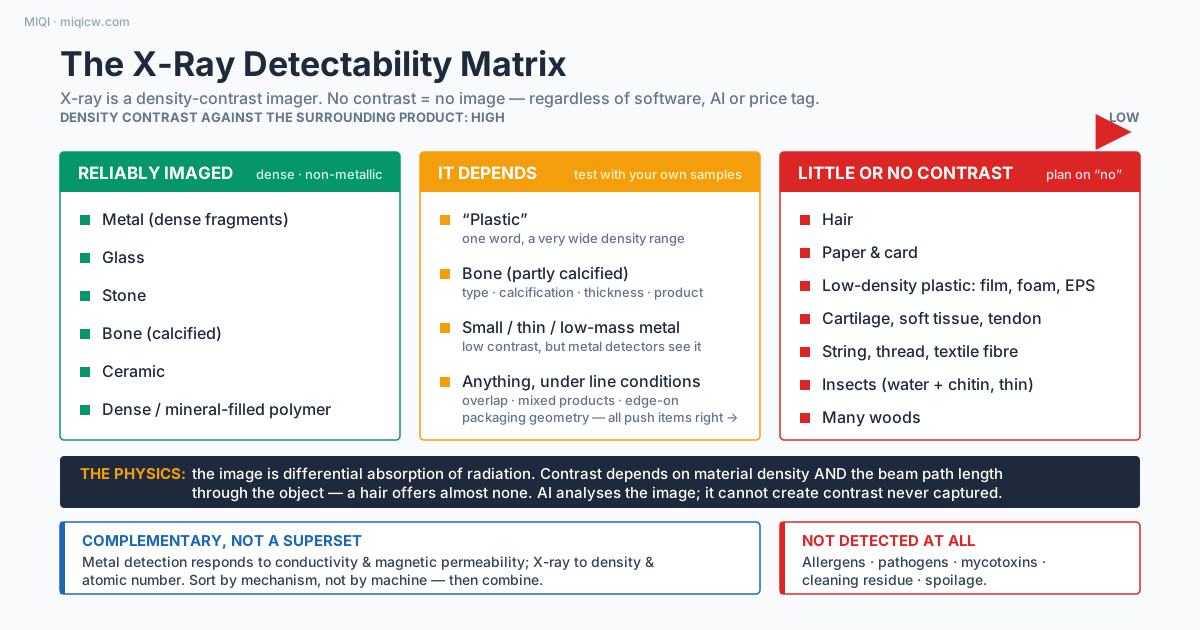
What X-Ray Inspection CANNOT Detect: An Honest Limitations Guide
Food X-ray inspection depends on measurable attenuation contrast, product thickness, material composition and system configuration. Review difficult contaminants, packaging and product geometry, then define controlled sample tests. Low-density materials need product-specific evidence rather than a blanket detection promise.
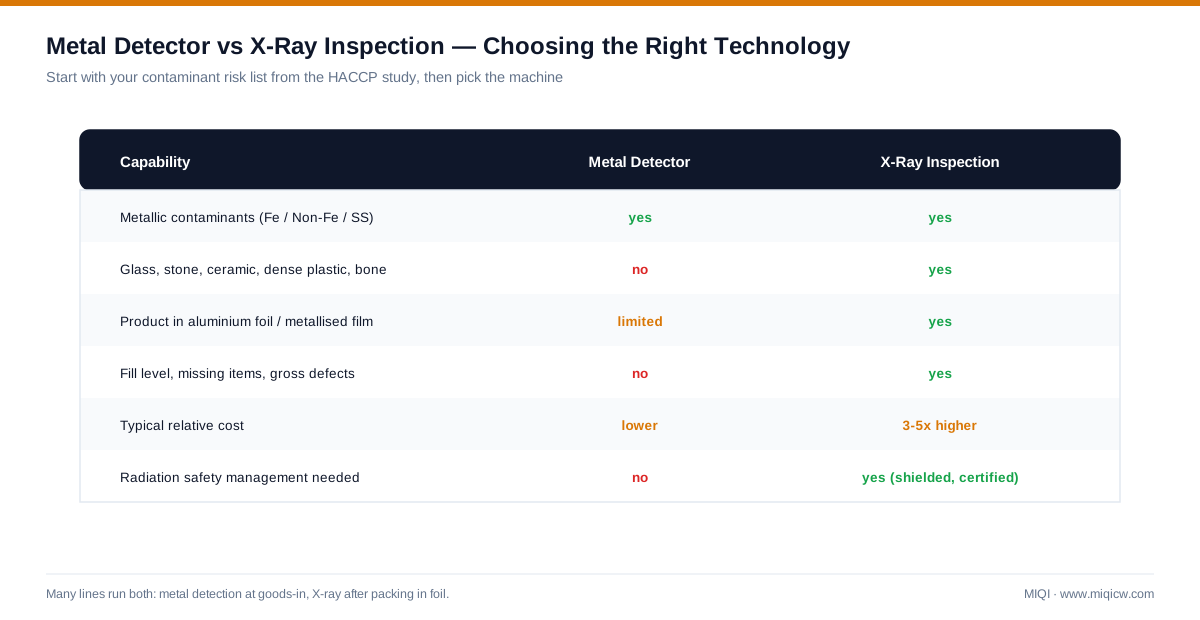
Metal Detector vs X-Ray Inspection: Which Food Inspection System Fits?
Metal detection is highly effective for metallic contaminants, while X-ray inspection responds to density contrast and may find glass, stone, ceramic and some dense plastics as well as metal. Packaging, product effect, contaminant risk, product thickness and required secondary checks decide the better technology.
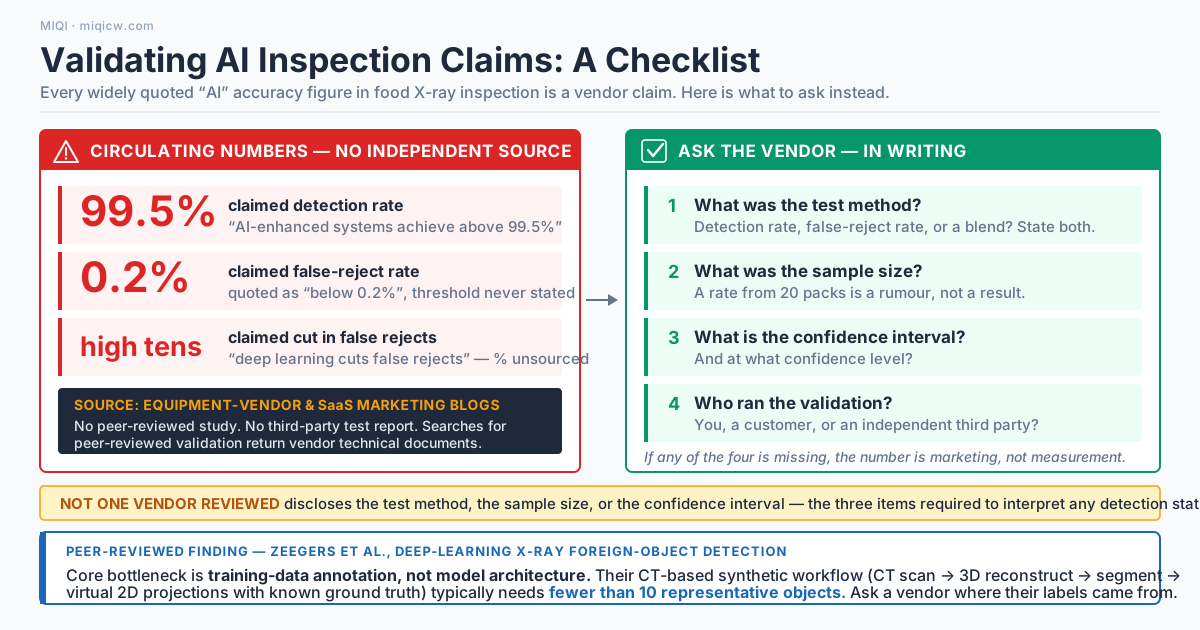
How to Validate a Vendor's AI Inspection Claims: The Questions Nobody Wants You to Ask
Evaluate AI food-inspection claims using a defined test method, representative samples, detection and false-reject results, and stated uncertainty. Learn what CT training-data research can and cannot prove, and prepare a product-specific acceptance test for an X-ray inspection supplier.
Frequently Asked Questions
What is the price of Standard X-Ray Inspection System for Bagged Products (MQ-XR)?+
Pricing depends on the weighing range, rejection method, conveyor dimensions and selected options. Send the product weight, dimensions and line speed for a factory-direct quotation.
Does MIQI export X-Ray Inspection worldwide?+
Yes. MIQI ships worldwide with export packing, operating documents, configurable voltage and remote commissioning support. OEM branding and application-specific engineering are available.
Tell Us About Your Product
Share your product weight range, dimensions and line speed — our engineer replies within 24 hours with model recommendation and quotation.